
Understanding Container House Categories
Container houses have evolved from basic shipping container conversions into four distinct categories, each designed for specific project needs. The primary types—detachable, flat pack, folding, and expandable container houses—differ fundamentally in their structural design, transport efficiency, and assembly methods. Understanding these differences helps buyers select the right solution for mining camps, construction sites, or resort accommodations.
Modern container housing technology addresses two critical challenges: reducing shipping costs and accelerating on-site installation. A standard 40ft container can transport either 2 fully assembled units or up to 8 flat pack units, directly impacting project budgets. According to industry data from 2025, transport costs typically represent 15-25% of total project expenses for international container house projects.
Detachable Container Houses
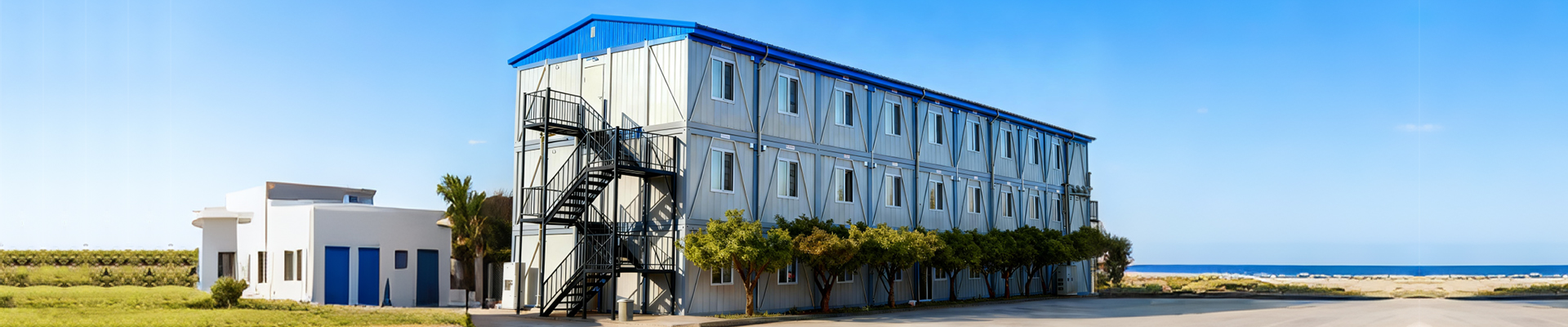
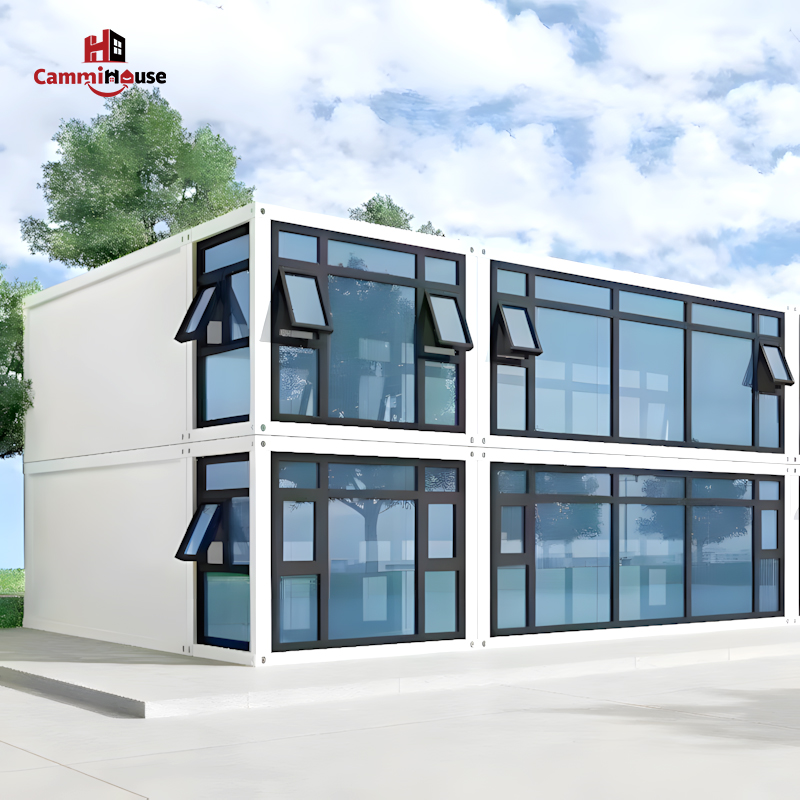
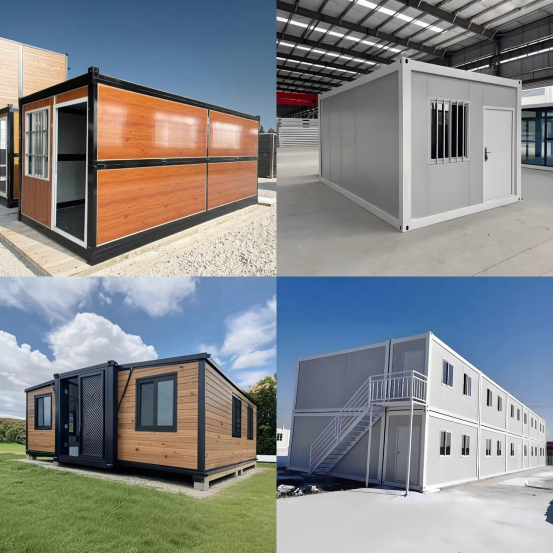
Detachable container houses feature bolt-connected components that can be disassembled and reassembled multiple times. Each unit consists of a steel frame, wall panels, roof sections, and flooring that connect through standardized bolt systems. This modular approach allows a 3-person crew to assemble one 20ft unit in approximately 4 hours.
The key advantage lies in reusability for temporary projects. Mining companies frequently relocate camps as extraction zones shift—detachable units can be dismantled, transported, and reinstalled at new sites without material waste. At Cammi House, our detachable models use 2.5mm steel frames with 50mm rock wool insulation, maintaining structural integrity through 5+ relocation cycles.
Transport efficiency remains moderate: one 40ft high cube container holds 2 complete detachable units (compared to 8 flat pack units). Installation requires basic tools—no welding or specialized equipment. Total assembly time for a 50-unit camp: 8-10 working days with proper crew sizing.
Flat Pack Container Houses
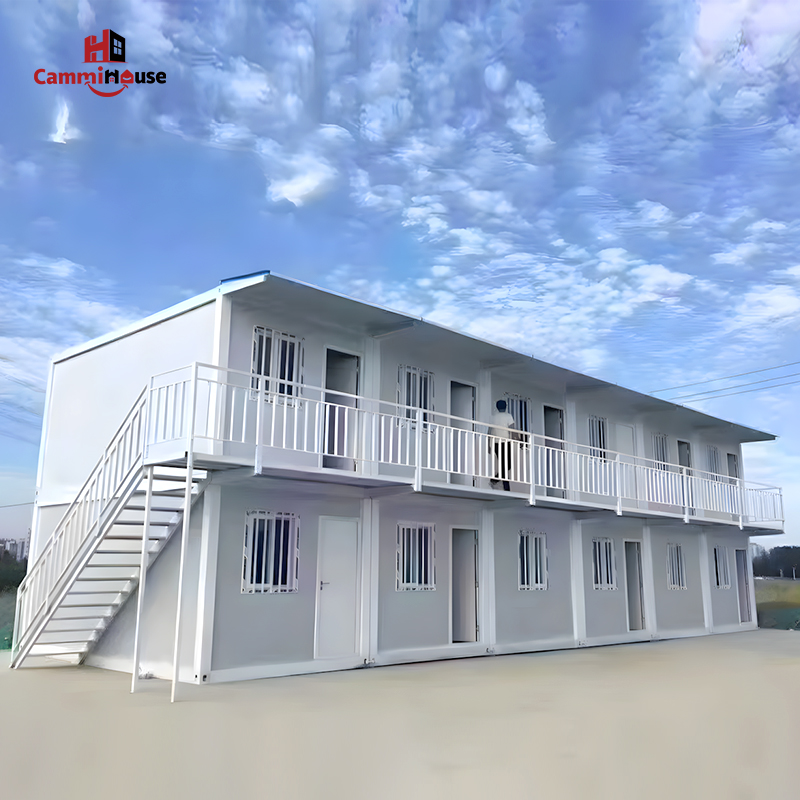
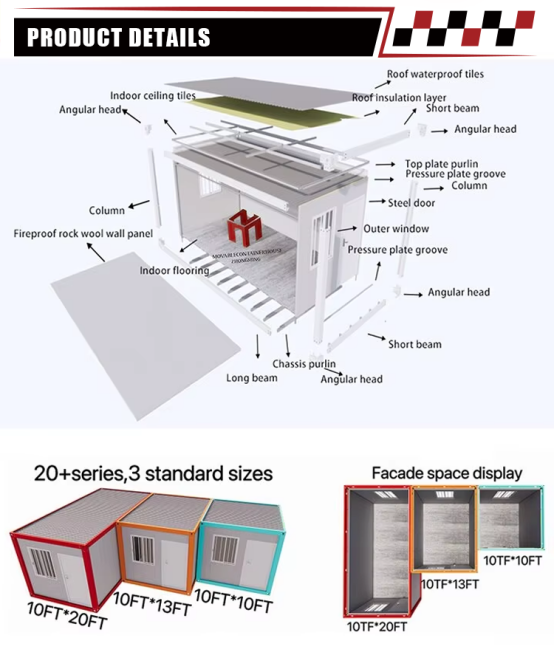
Flat pack systems ship components in compressed packages, maximizing container loading capacity. Wall panels, roof trusses, floor sections, and structural frames pack flat, reducing shipping volume by 70-75% compared to assembled units. This design proves most cost-effective for large-scale projects requiring 100+ units.
A 40ft container loads 6-8 flat pack houses depending on size specifications. For a 500-unit mining camp project, flat pack reduces shipping from 250 containers to approximately 70 containers—saving $180,000-220,000 in international freight costs at current rates. Assembly requires more on-site labor: one 20ft unit needs a 4-person team working 6-8 hours.
Cammi House flat pack models include pre-cut, pre-drilled components with numbered assembly sequences. Wall panels integrate electrical conduits and window frames during factory production. Quality control occurs before packaging, ensuring all components meet specifications. The trade-off: higher labor costs offset by dramatic transport savings on projects exceeding 50 units.
Folding Container Houses
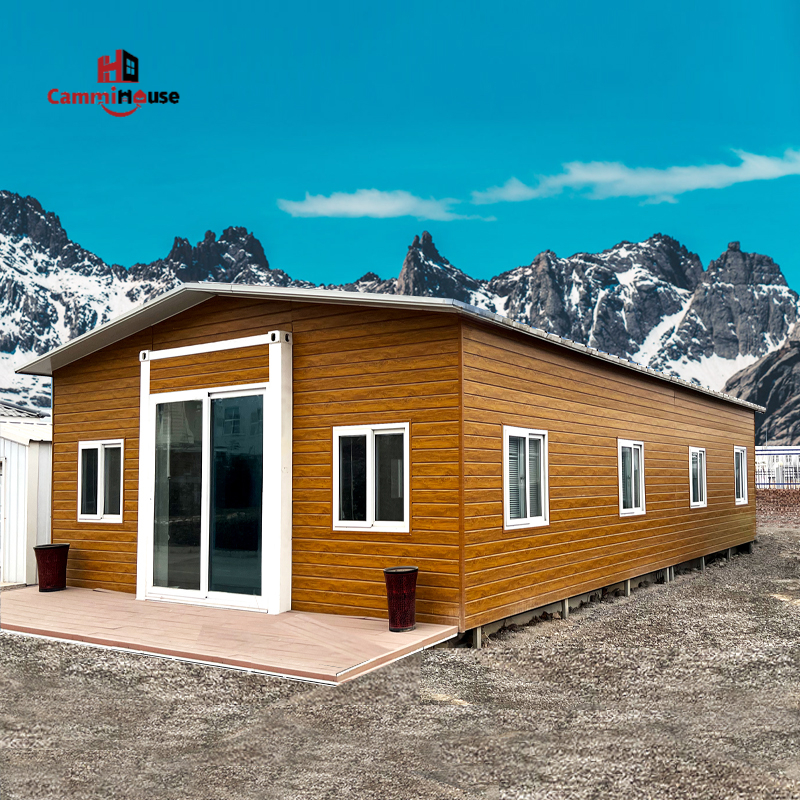
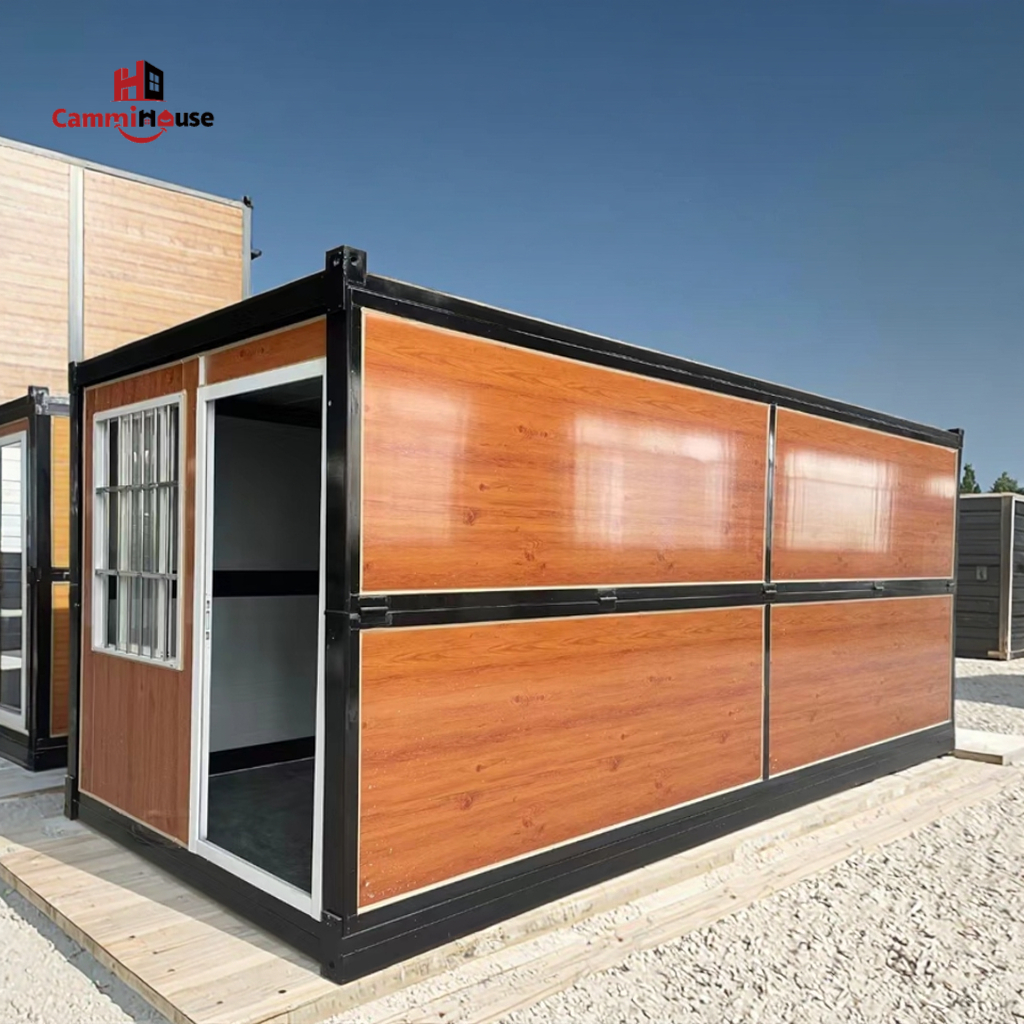
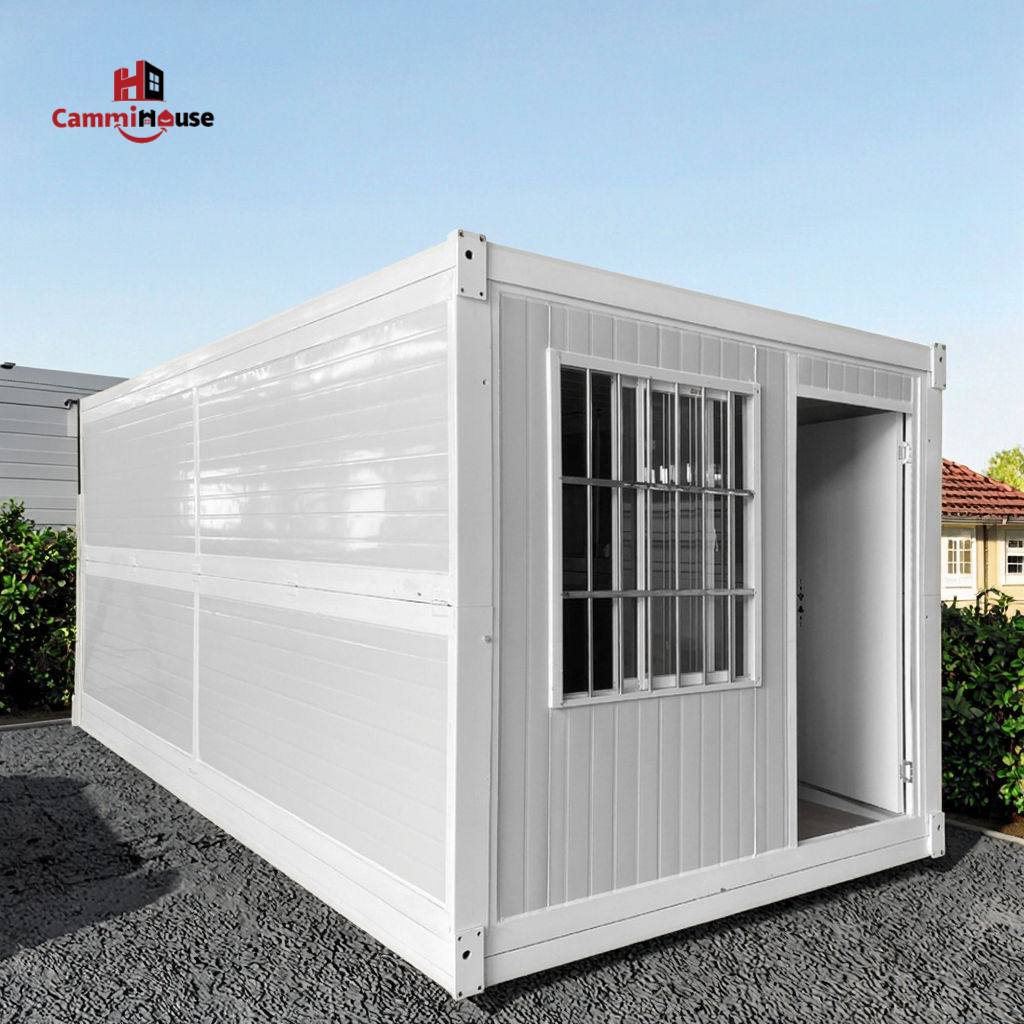
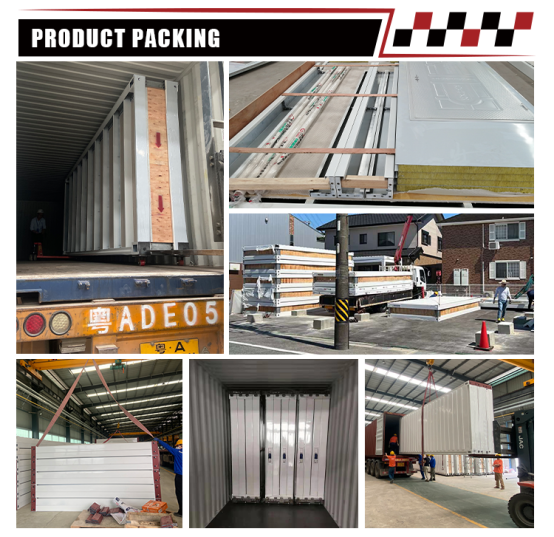
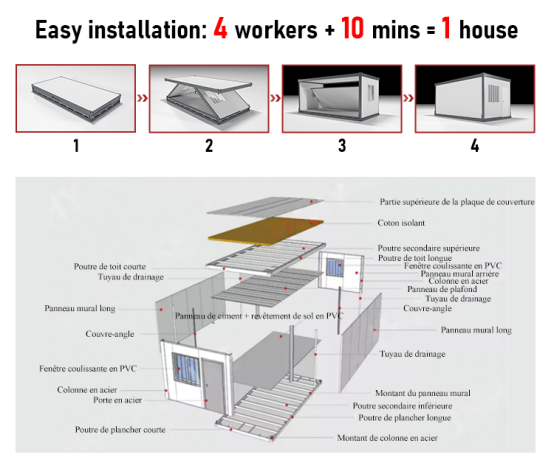
Folding container houses employ a hydraulic or manual folding mechanism that collapses the structure to one-fifth its erected size. Side walls, roof panels, and end walls fold inward around a central steel frame. One person can deploy a folding unit in 10-15 minutes using the integrated hydraulic system (manual systems require 2 people and 25-30 minutes).
Transport capacity reaches 4-5 folding units per 40ft container—balancing between assembled and flat pack efficiency. The primary advantage: minimal on-site labor and instant deployment capability. Emergency housing projects, temporary construction camps, and rapid-response scenarios benefit most from folding technology.
Structural limitations exist. Folding units typically max out at 20-30ft length due to mechanical stress on folding joints. Cammi House folding models use reinforced corner posts (4mm steel) and dual-axis folding systems for enhanced durability. After 100+ fold/unfold cycles, hinge components require inspection and potential replacement. Cost per unit runs 15-20% higher than equivalent detachable models due to mechanical complexity.
Expandable Container Houses
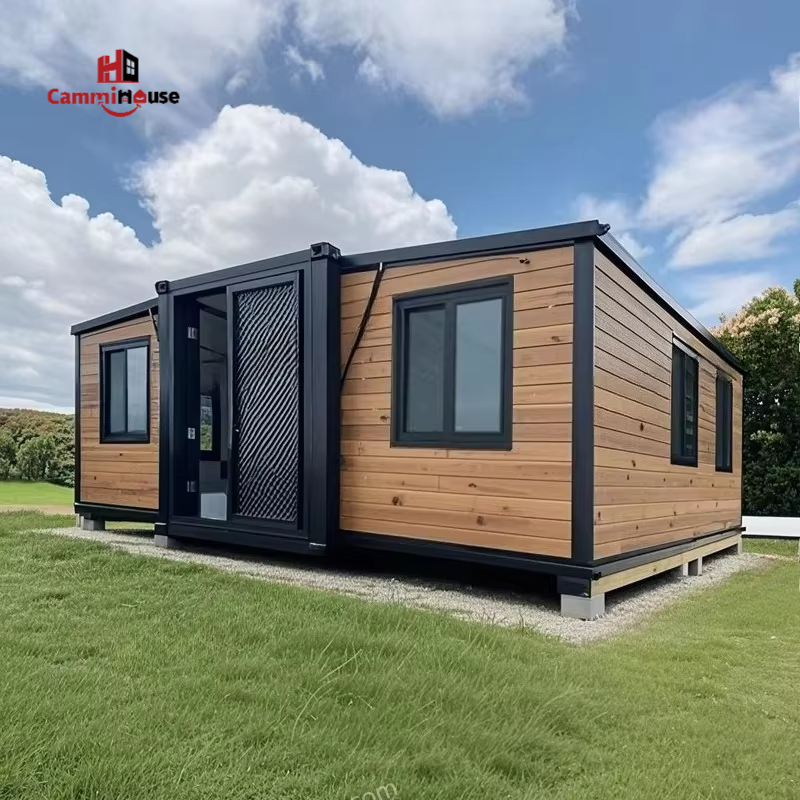
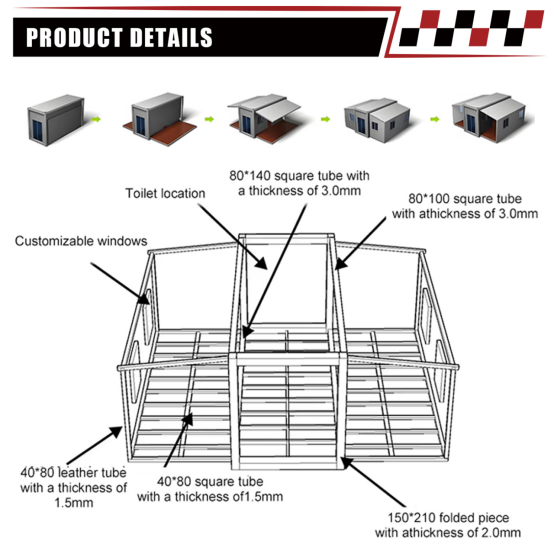
Expandable container houses feature telescoping side sections that slide outward after placement, increasing interior floor space by 100-200%. A standard 20ft base unit (160 sqft) expands to 320-400 sqft once deployed. Expansion mechanisms use steel rail systems with manual or hydraulic assist, requiring 2-3 people and 30-45 minutes per unit.
This category addresses space constraints without sacrificing transport efficiency. Three expandable units fit in one 40ft container when collapsed. Upon delivery, the base container maintains structural integrity as the fixed core while expanded sections create additional living or working areas. Ideal applications include site offices requiring meeting space or accommodation units needing separate sleeping and living zones.
At Cammi House, our E-series expandable models (E20, E40) incorporate waterproof expansion seals and reinforced floor supports where sections meet. The expanded areas use the same 50mm insulation as the base unit, maintaining thermal performance across the entire structure. Installation requires crane or forklift for initial placement, then manual expansion once positioned on foundations. Cost positioning: 25-30% premium over standard detachable units due to expansion hardware.
Performance Comparison: Which Type Fits Your Project
Selection criteria depend on three primary factors: project scale, site accessibility, and duration. Flat pack systems optimize costs for orders exceeding 100 units with good site access and available labor. Folding units suit rapid deployment scenarios with limited labor resources. Detachable containers balance versatility and reuse potential for multi-phase projects. Expandable models maximize space in location-constrained environments.
Transport Efficiency Data (units per 40ft container):
· Assembled: 2 units
· Detachable: 2 units
· Flat Pack: 6-8 units
· Folding: 4-5 units
· Expandable: 3 units (collapsed)
Assembly Time (20ft unit, experienced crew):
· Detachable: 4 hours (3 workers)
· Flat Pack: 6-8 hours (4 workers)
· Folding: 15 minutes (1 worker, hydraulic)
· Expandable: 45 minutes (2 workers, manual expansion)
Budget planning must account for total installed cost—not just unit price. A $15,000 flat pack unit becomes $17,500 after factoring assembly labor, while a $19,000 folding unit requires minimal installation expense. For a 200-unit project, flat pack saves approximately $140,000 in shipping but adds $80,000 in labor, creating net savings of $60,000 versus folding units.
Making the Right Choice
Project-specific requirements drive selection more than unit cost alone. Mining camps operating 18-24 months before relocation prioritize detachable systems for reuse value. Construction site accommodations needing 500+ beds favor flat pack economics. Emergency response teams stock folding units for immediate deployment. Resort developments seeking unique guest experiences invest in expandable models for enhanced space and comfort.
Cammi House has delivered 10,000+ container houses across 100+ countries, with project sizes ranging from 5-unit security checkpoints to 2,000-unit mining villages. Our engineering team provides load calculations, foundation specifications, and installation training for all four categories. Most clients combine types within a single project—using flat pack for worker dormitories (large quantity), detachable for offices (relocatable), and expandable for management quarters (extra space).
Climate considerations affect material specifications regardless of type. Arctic regions require upgraded insulation (75mm rock wool vs. standard 50mm) and reinforced heating systems. Desert environments need enhanced UV-resistant roof coatings and superior ventilation systems. Coastal installations use galvanized steel frames with marine-grade protective coatings. These adaptations apply equally across detachable, flat pack, folding, and expandable categories.
Frequently Asked Questions
Q: Can I mix different container house types in one project?
A: Yes, combining types optimizes project economics. Use flat pack for high-quantity dormitories (lowest cost per unit), detachable for offices that may relocate, and expandable for management quarters needing extra space. Cammi House provides unified design standards ensuring all types integrate aesthetically and structurally within mixed projects. This approach reduces total costs by 12-18% compared to single-type procurement.
Q: How many times can detachable container houses be reassembled?
A: Quality detachable units withstand 5-8 complete disassembly and reassembly cycles when following proper procedures. Critical factors include bolt torque specifications during reassembly, careful handling of panel edges, and replacing wear components (gaskets, sealants) every 2-3 relocations. Cammi House detachable models use industrial-grade bolts rated for 10+ cycles, with detailed reassembly manuals and optional technical support for relocation projects.
All data references current as of January 2026. Container house specifications and pricing subject to project requirements and destination location.Contact Cammi House engineering team for site-specific recommendations and load calculations.
