
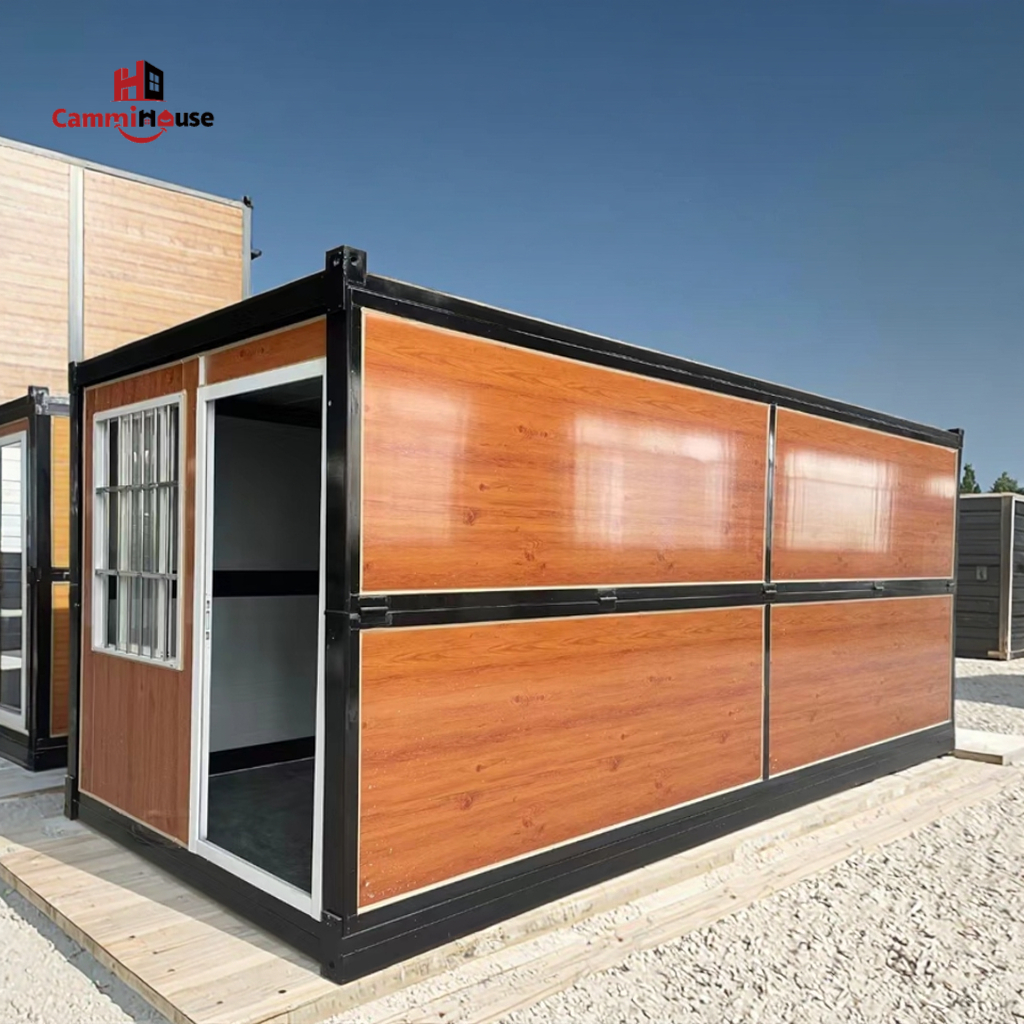
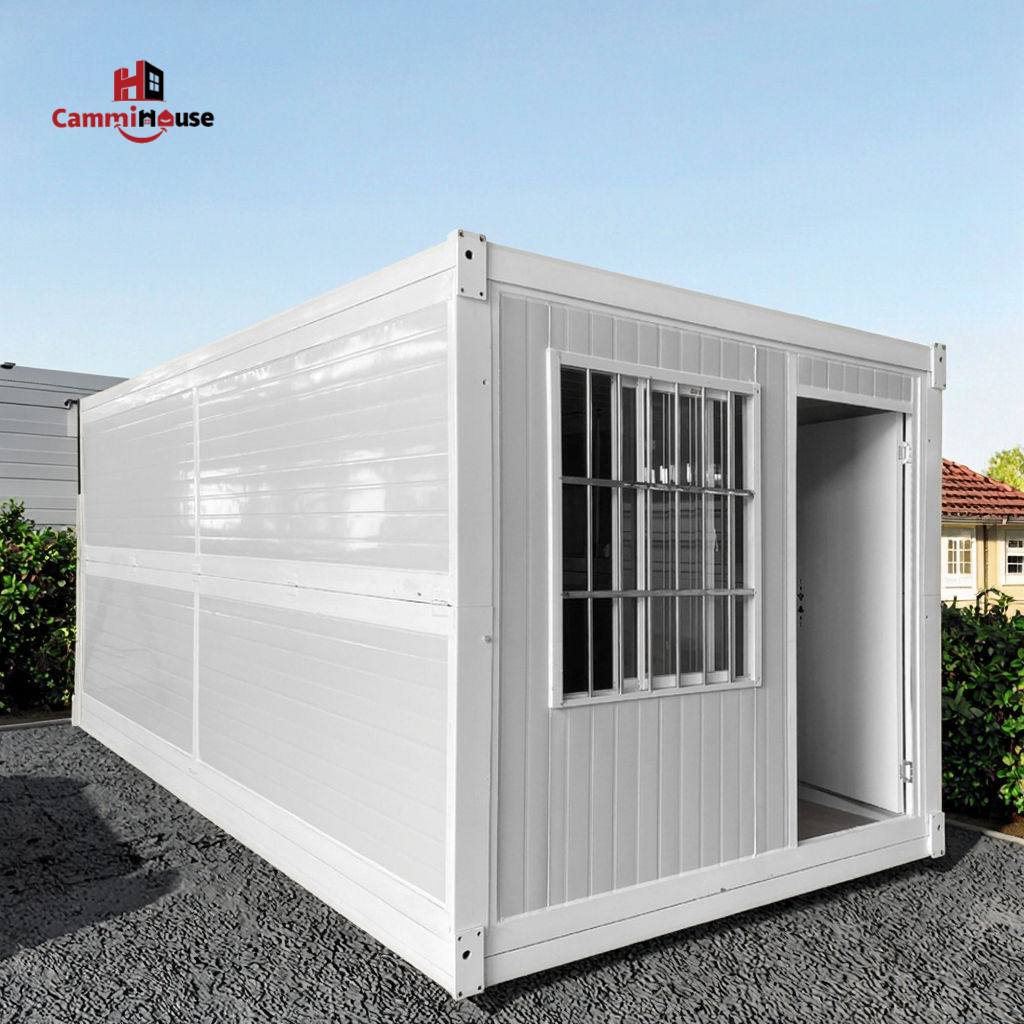
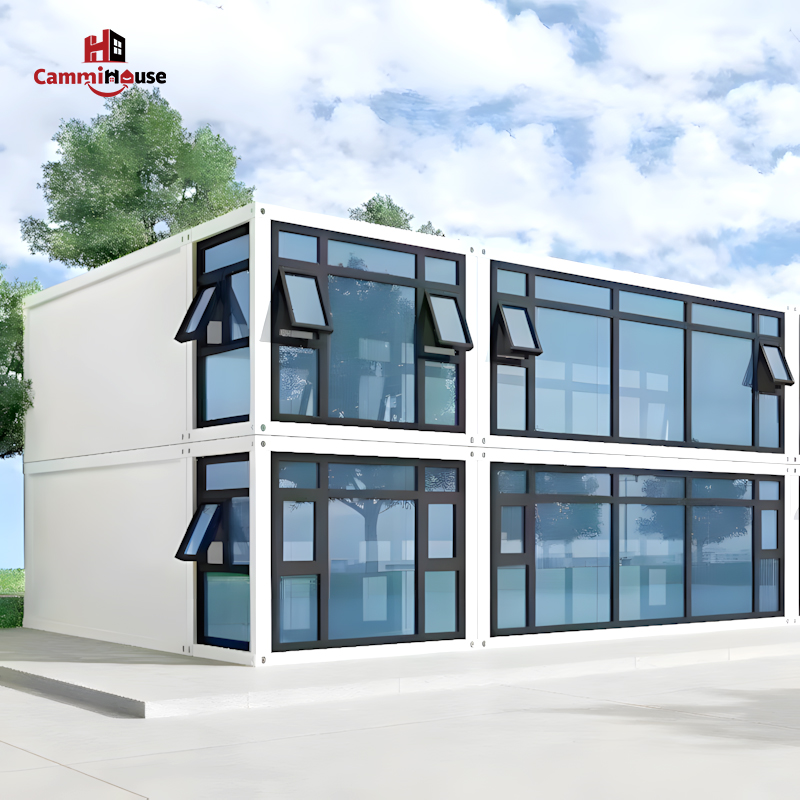
Transport Efficiency: The Numbers That Matter
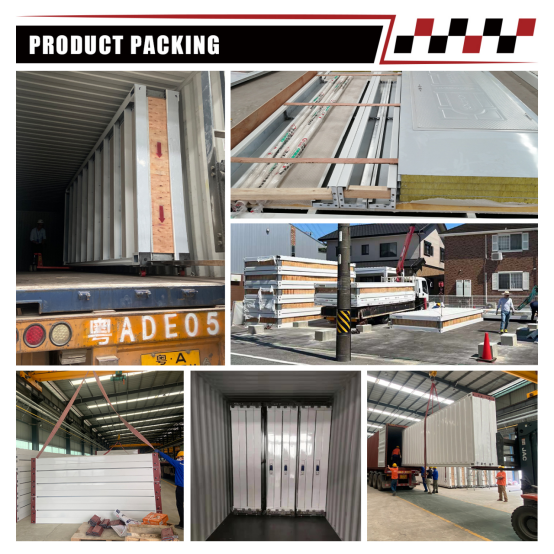
Flat pack container houses deliver a 300% improvement in shipping capacity compared to traditional assembled units. A standard 40ft high cube container holds 6-8 flat pack units versus only 2 pre-assembled structures. This difference directly translates to cost savings: shipping 100 capsule houses requires 13-17 containers using flat pack systems, compared to 50 containers for traditional units. At current international freight rates of $3,000-4,500 per container (Asia to North America, Q4 2024), flat pack reduces shipping expenses by $99,000-148,500 on a 100-unit order.
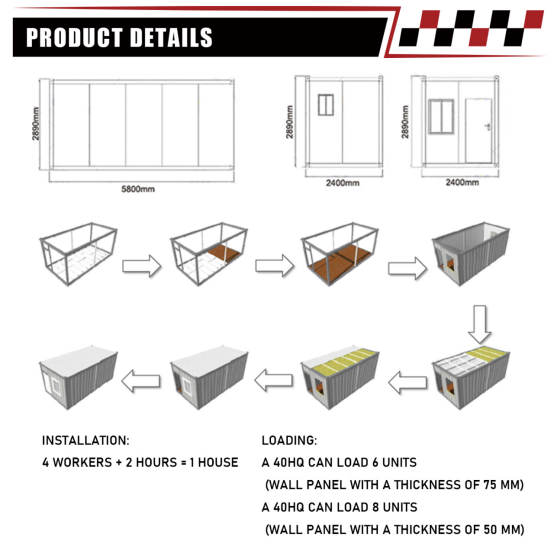
The compressed packaging works through systematic deconstruction. Wall panels, roof trusses, floor sections, and steel frames nest together in standardized bundles. Each component measures under 2.3 meters in any dimension, fitting standard container dimensions without wasted space. Cammi House flat pack capsule units include pre-drilled panels and numbered assembly sequences, eliminating guesswork during installation. The packaging protects components with moisture-resistant wrapping and corner guards, maintaining factory quality through ocean transit and multiple handling points.
Installation Cost Analysis
On-site assembly of flat pack capsule houses requires 6-8 labor hours per 20ft unit with a 4-person crew. Traditional containers arrive ready for placement but offer zero cost advantage in installation—both require foundation work, utility connections, and finishing touches. The labor cost difference: $320-480 per unit at typical construction wage rates ($20/hour per worker in Southeast Asia, $40/hour in North America).
For projects exceeding 50 units, this labor expense remains substantially lower than shipping savings. A 200-unit resort project saves $190,000-280,000 in transport costs while adding approximately $64,000-96,000 in assembly labor—net savings of $126,000-184,000. Projects under 20 units show marginal cost differences, making traditional containers viable for small-scale installations where shipping represents a smaller portion of total budget.
Cammi House provides detailed assembly manuals with each flat pack order, reducing installation time by 15-20% compared to industry averages. Our capsule house models use color-coded components and tool-free connection systems for window frames and door assemblies. Electrical conduits and plumbing rough-ins install during wall panel assembly, streamlining the construction sequence. Most clients achieve full proficiency after completing 3-5 units, with subsequent installations proceeding 25% faster.
Total Cost Breakdown
Purchase price for flat pack capsule houses runs 5-8% lower than equivalent traditional units due to reduced factory handling and packaging labor. A standard 20ft capsule house costs $12,500-14,000 in flat pack configuration versus $13,200-15,000 for traditional assembly. The savings stem from simplified factory processes—no final assembly, no quality inspection of completed units, no reinforced shipping frames for assembled structures.
Hidden costs favor flat pack systems for international orders. Customs duties calculate based on declared value and shipping volume. Flat pack's compressed format may qualify for lower volumetric weight calculations, potentially reducing customs fees by 12-18% depending on destination country regulations. Insurance costs drop proportionally with reduced container counts. Port handling charges (crane fees, storage, documentation) decrease with fewer containers to process.
Real-world example: A glamping resort in Thailand ordered 80 capsule houses from Cammi House in 2024. Flat pack configuration cost $1,040,000 (units) + $54,000 (shipping, 12 containers) + $38,400 (assembly labor) = $1,132,400 total. Traditional units would have required $1,120,000 (units) + $165,000 (shipping, 42 containers) = $1,285,000, representing $152,600 higher total project cost. The resort recovered assembly labor costs within 6 months through earlier revenue generation—flat pack's faster shipping meant opening 8 weeks sooner than traditional container delivery timelines.
When Traditional Containers Make Sense
Traditional assembled capsule houses suit specific scenarios despite higher transport costs. Remote locations with limited skilled labor pools benefit from ready-to-use structures. A mining camp in northern Canada with no local construction workforce paid premium shipping costs but avoided the challenge of recruiting and housing assembly crews for 6-8 weeks. Sites with difficult terrain access—requiring helicopter or barge delivery—lose flat pack's container-count advantage since each unit ships individually regardless of packaging format.
Projects under 15 units often show equivalent total costs between systems. The shipping savings on small orders ($12,000-18,000) roughly equals assembly labor expenses, making traditional containers appealing for their installation simplicity. Tourist attractions ordering 3-5 capsule houses for immediate seasonal use frequently choose traditional units to avoid construction project management.
Weather-sensitive timelines also drive traditional container selection. Assembled units can be placed and occupied within 2-3 days after delivery, while flat pack requires 1-2 weeks of on-site work. Resorts needing to meet hard opening deadlines for peak tourist seasons pay shipping premiums to guarantee operational readiness. Cammi House delivered 12 traditional capsule houses to a Maldives resort in January 2025, meeting their February 1st opening despite ordering in late November—flat pack assembly would have extended timelines past their revenue-critical Valentine's Day bookings.
FAQ
Q: How much can I save with flat pack on a 100-unit order?
A: Flat pack systems typically save $120,000-180,000 on 100-unit projects compared to traditional containers. Savings come primarily from reduced shipping costs (33 fewer containers at $3,000-4,500 each) minus additional assembly labor ($60,000-80,000). Actual savings vary by shipping route and local labor rates. Cammi House provides project-specific cost analyses accounting for your destination and timeline requirements.
Q: Do flat pack capsule houses compromise structural quality?
A: No. Flat pack and traditional units use identical materials and engineering specifications. Both feature 2.5mm steel frames, 50mm rock wool insulation, and marine-grade protective coatings. The only difference lies in assembly location—factory versus on-site. Cammi House flat pack models include pre-fabricated components with factory-applied finishes and tested connections, often showing fewer defects than field-assembled alternatives due to controlled manufacturing environments.
Q: What tools and skills does flat pack assembly require?
A: Basic construction skills and standard tools suffice for flat pack assembly. Required equipment includes impact drivers, levels, measuring tape, and adjustable wrenches. No welding or specialized machinery needed. A crew experienced in basic carpentry or metal building construction achieves proficiency within 3-5 units. Cammi House provides video tutorials, technical support during first installations, and optional on-site training for projects exceeding 50 units.
