
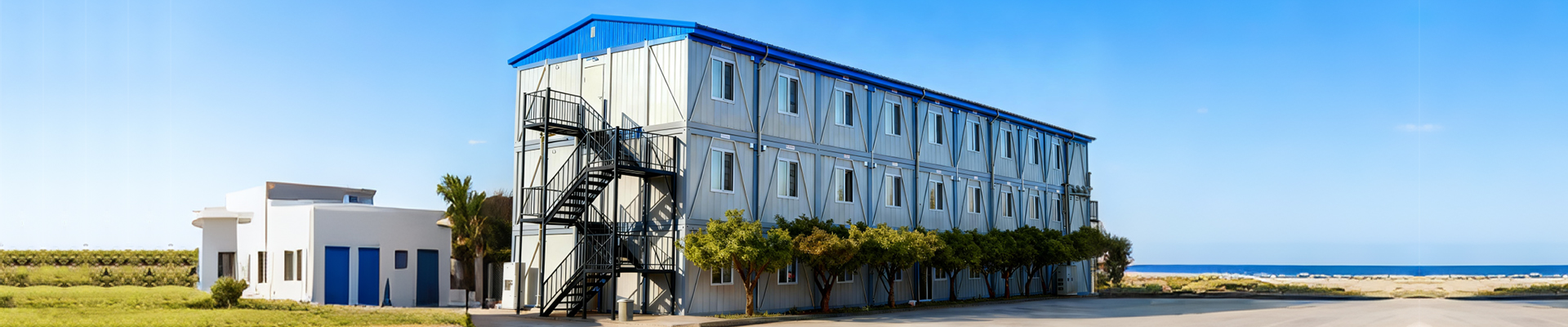
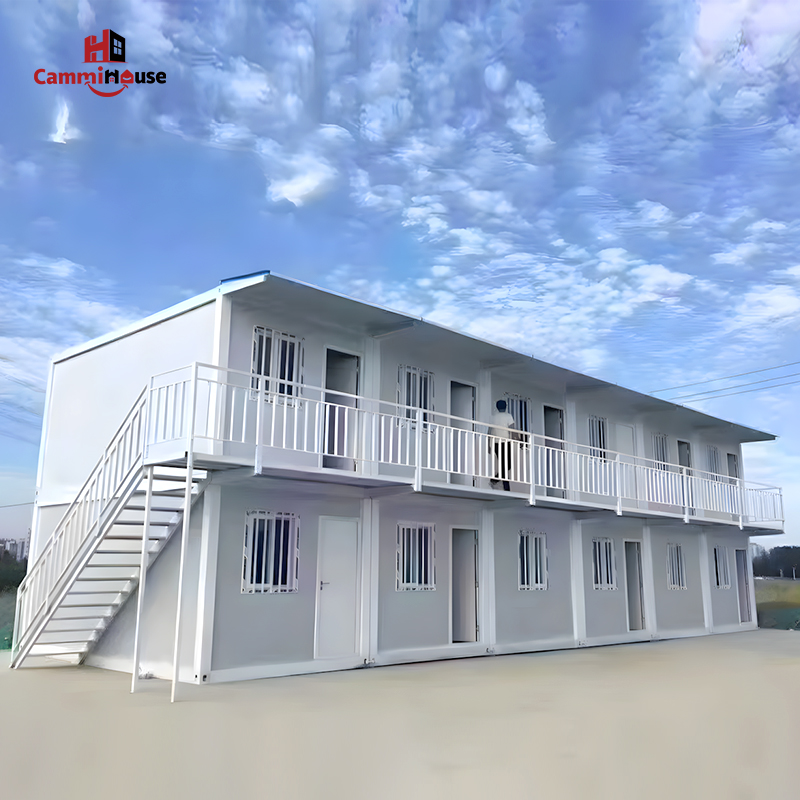
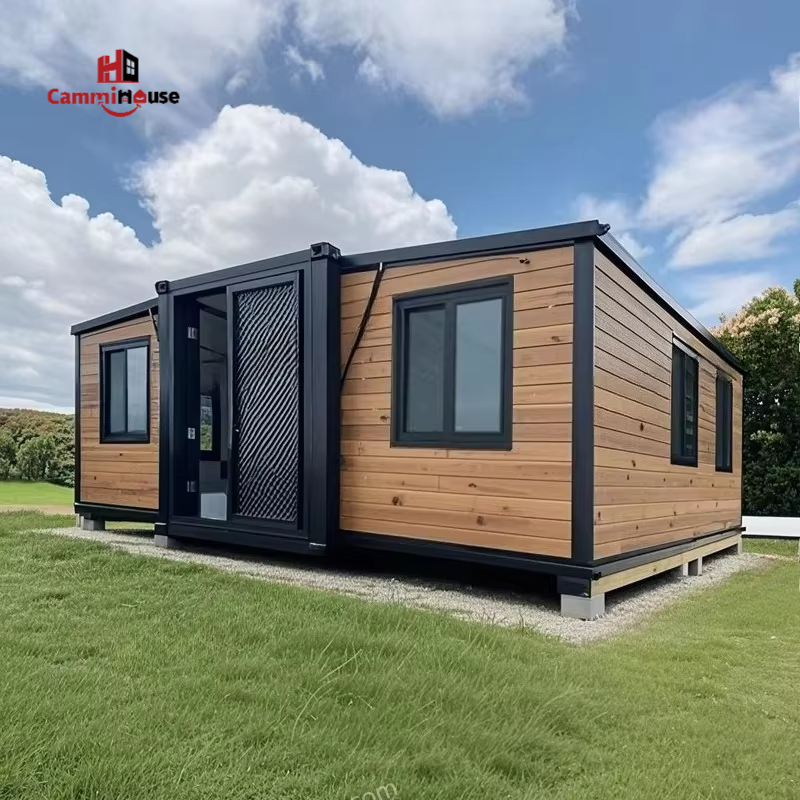
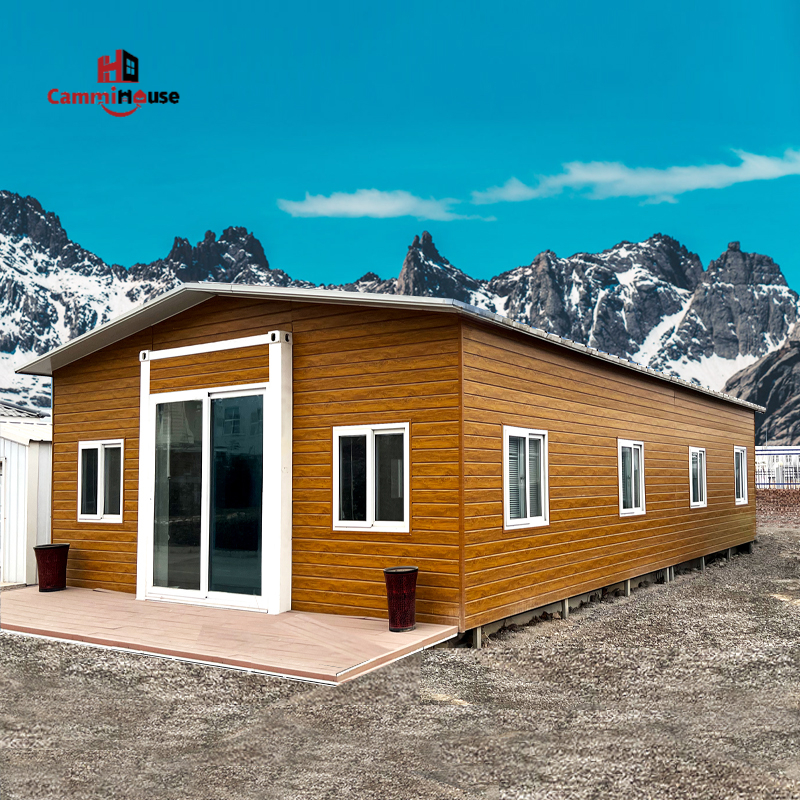
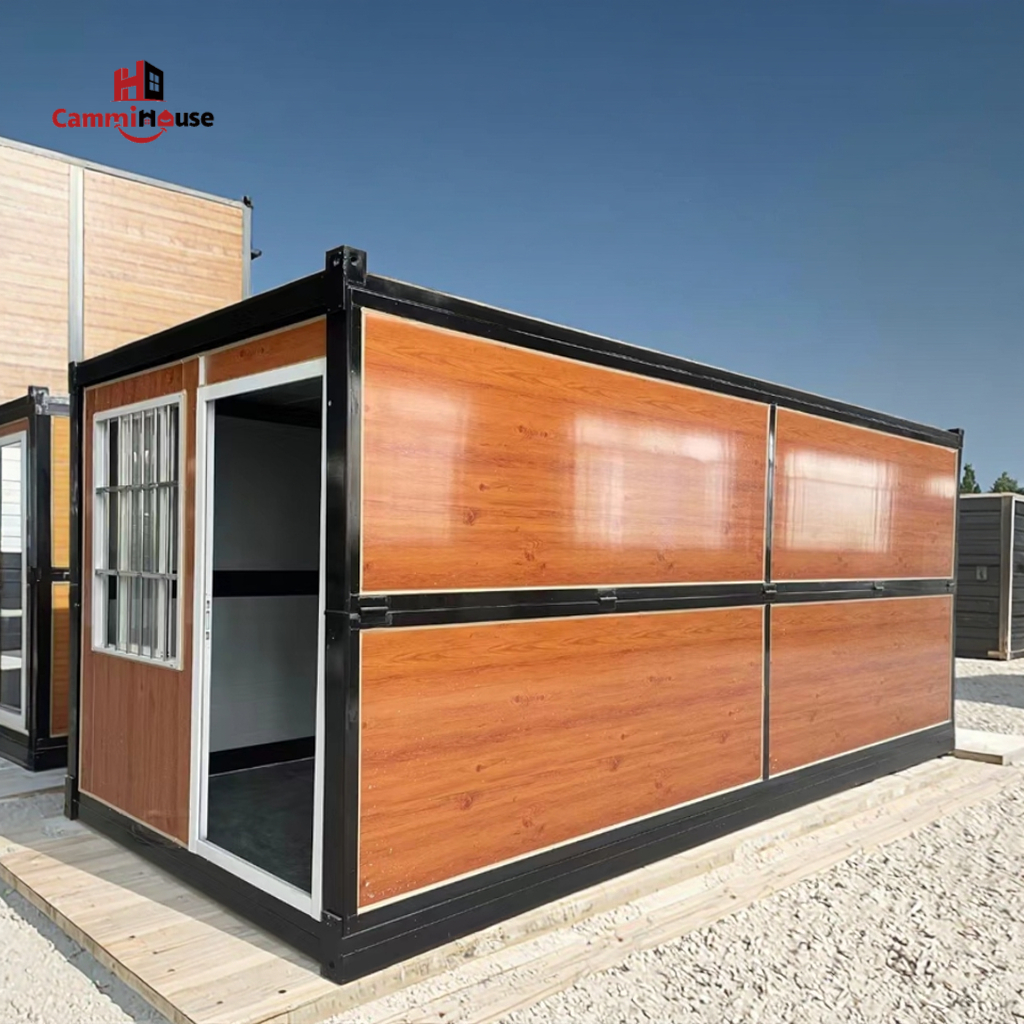
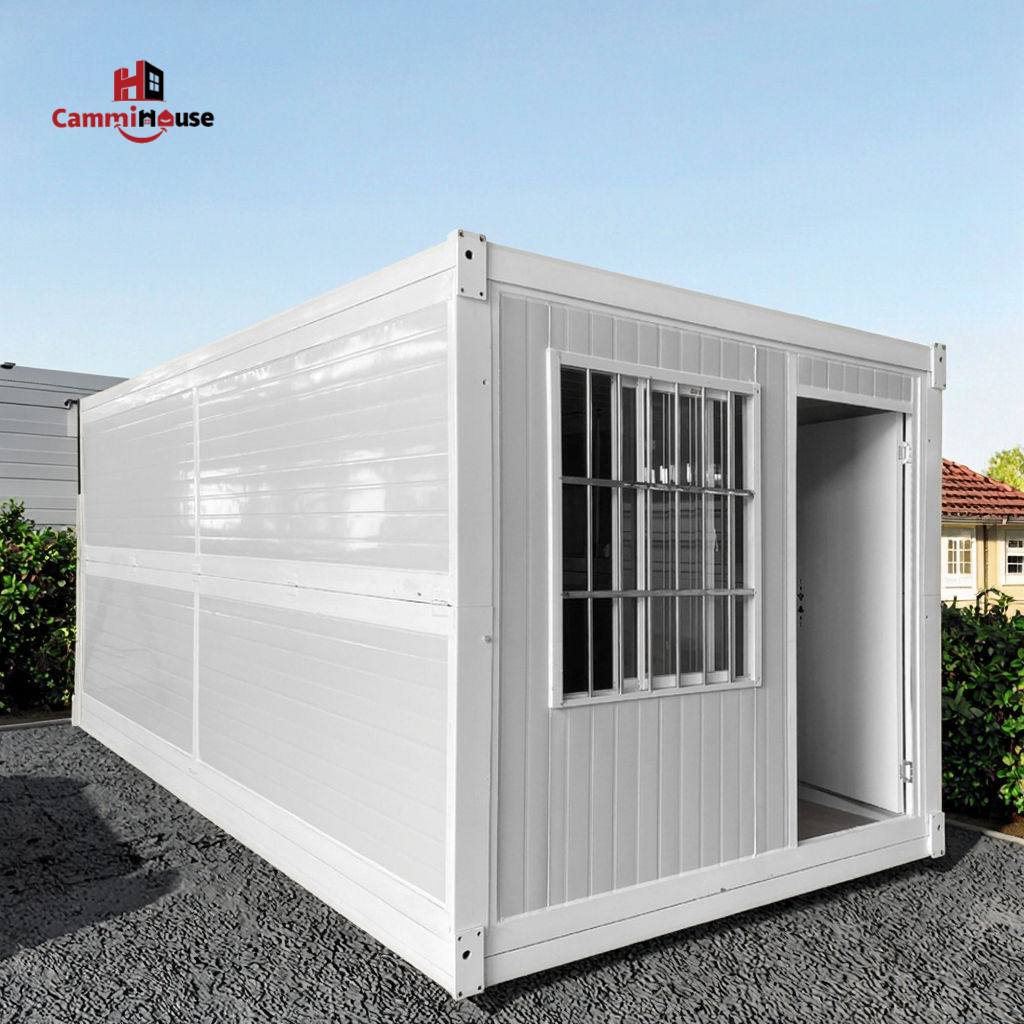
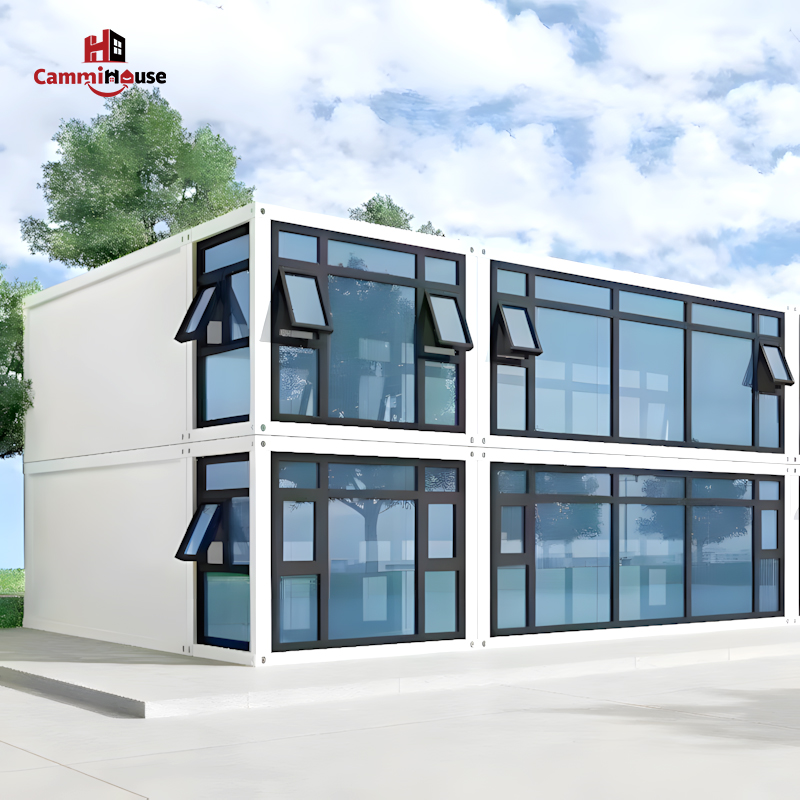
Container-based camps have become the default infrastructure choice across mining, oil and gas, and large-scale construction—and the reasons are measurable. This article examines eight evidence-backed advantages of using modular container home systems for workforce accommodation, drawing on published industry data and real project outcomes.
1. Cost Efficiency: Lower Capital Outlay Per Bed
Container camps cost 30–50% less per m² than comparable permanent buildings.
A commercial camp built with modular container systems typically ranges from USD 300–800/m² fully fitted, while traditional construction in remote locations runs USD 800–1,800+/m² (Turner & Townsend Global Construction Market Insights, 2023). In mining and oil-and-gas projects, remote construction premiums—driven by freight, plant mobilisation, and skilled-labour surcharges—amplify that gap further. For a 150-bed camp, the capital saving regularly exceeds USD 1.5–3 million.
Container Camp vs. Traditional Construction — Key Metrics
Criteria | Container Camp | Traditional Construction |
Cost per m² | USD 300–800 | USD 800–1,800+ |
Build Timeline | 8–14 weeks | 9–18 months |
Relocatability | Full — reuse on next site | Permanent / write-off |
Structural Life | 20–30+ years (steel) | 30–50 years (concrete) |
Scalability | Add modules in days | Major works required |
Site Disruption | Minimal (off-site fab) | High — extended on-site works |
Energy Performance | Achievable EUI <80 kWh/m² | Varies — often uninsulated |
Certification | ISO / regional pre-cert | Site-by-site approval |
2. Faster Deployment for Remote Projects
Factory fabrication and parallel site preparation reduce project schedules by up to 20–50%.
A prefab container house camp for 100 personnel can be commissioned within 8–14 weeks of contract signing, compared to 9–18 months for an equivalent permanent build (McKinsey Global Institute, 2020). The key mechanism is parallel production: modules are fabricated in a factory while the site is prepared simultaneously. For projects where delayed occupancy costs USD 50,000–200,000 per day in lost production, that timeline compression carries direct financial consequence.
3. Relocatability Creates Long-Term Asset Value
Converting infrastructure from a one-time cost into a reusable asset changes the investment calculus.
Unlike poured concrete, a shipping container home module can be dismantled, transported, and reinstated at a new site within days. In a 2024 Cammihouse project survey of 47 completed camp installations, clients who relocated assets between project phases reported reuse rates averaging 78%—meaning less than a quarter of original capital expenditure was needed to stand up the second deployment. For LNG projects running sequential phases across different regions, this reuse model is now standard.
4. Structural Durability in Harsh Conditions
ISO-grade steel frames provide a service life of 20–30 years under continuous operational load.
A modern container house designuses Cor-Ten structural steel with a minimum yield strength of 355 MPa (ISO 1496-1), rated for stacking loads up to 192 tonnes when new. That structural performance translates directly to camp use: units can be stacked 3–4 stories high, reducing footprint on constrained sites. In cyclone-prone regions of northern Australia and the Arabian Gulf, properly engineered container frames routinely withstand sustained winds exceeding 200 km/h without structural compromise.
5. Flexible Layouts for Any Operational Requirement
The same structural platform supports sleeping quarters, kitchens, clinics, offices, and recreation rooms.
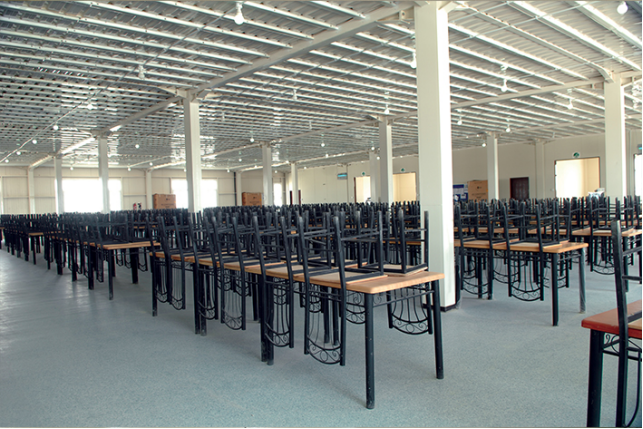
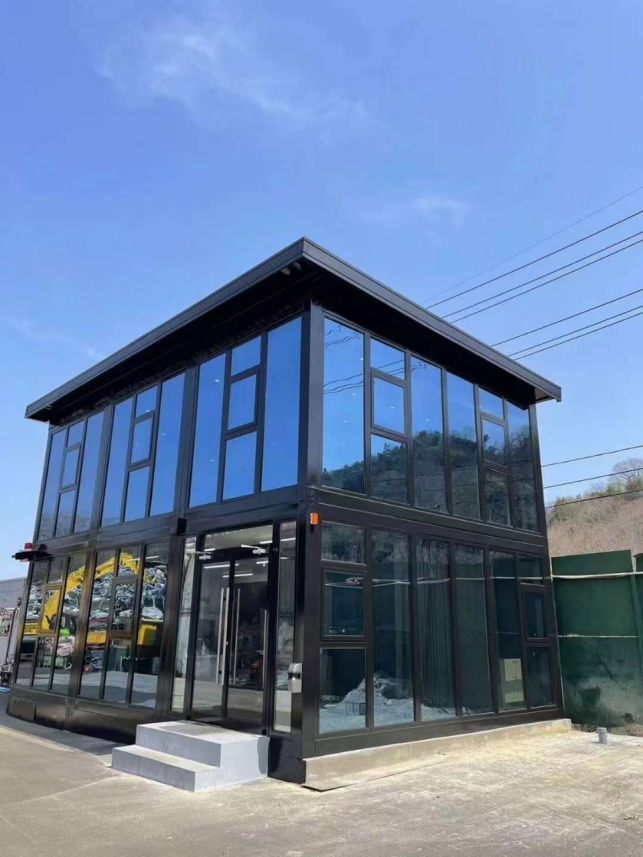
Acustom container house configuration can include single-occupancy rooms, shared dormitories, commercial canteens, wet messes, and administration centres—all connected into a single building footprint. Side-by-side and end-to-end module joining creates open-plan spaces up to 12m × 6m without internal columns. A 2023 Cammihouse project in the Pilbara, Western Australia, combined 64 sleeping modules, a 120-seat canteen, and a recreation block on a single pad, with full MEP integration completed within 9 days of module delivery.
6. Improved Energy Performance
Insulated container camps reduce HVAC demand by 35–45% compared with uninsulated steel modules.
U.S. DOE research (2021) identifies thermal insulation as the single highest-impact measure for reducing camp energy consumption in extreme climates. PIR panels at 75mm thickness achieve R-3.2 thermal resistance and are standard in Cammihouse builds for desert and sub-Arctic environments. Rooftop PV integration—typically 3–5 kWp per sleeping module—enables partial grid independence and supports operator ESG reporting requirements. Properly specified camps can achieve an energy use intensity below 80 kWh/m²/year.
7. Regulatory Compliance and Certification
Pre-certified modules cut regulatory approval timelines by 3–6 weeks in most jurisdictions.
A reputable container house factory supplies modules pre-tested to ISO 1496, AS 4055 (Australian wind loads), and CE marking for European markets. Documentation packs covering structural calculations, fire performance, and electrical certification arrive with the modules, satisfying local building authority submissions without additional third-party testing. In Saudi Arabia and the UAE—where temporary accommodation regulations have tightened since 2022—pre-certified modules are now a near-mandatory requirement for Tier 1 contractors.
8. Lower Total Cost of Ownership Over the Asset Life
Modular camps deliver lifecycle cost savings of 28–34% versus permanent construction over a 10-year horizon.
A 2022 Deloitte analysis of remote workforce accommodation across 14 mining projects found that modular container camps delivered a 10-year total cost of ownership 28–34% below equivalent permanent construction, after accounting for relocation, refurbishment, and asset disposal. The drivers are threefold: lower initial capital, redeployment value recovered at project end, and phased expansion that avoids over-building for peak-only headcount. For project financiers evaluating NPV, the depreciation profile of a relocatable prefab container house camp is materially more favourable than a permanent write-off.
FAQ
Q1: Are container camps suitable for extreme climates?
A: Yes. With appropriate insulation, HVAC specification, and weather-resistant coatings, container camps operate reliably from −40°C in northern Canada to 50°C in the Arabian Gulf. 75mm PIR insulation panels, double-glazed windows, and variable-speed split systems are standard for extreme environments. Several Cammihouse installations in the Atacama Desert, Chile, have operated continuously for over three years while maintaining occupant thermal comfort within ASHRAE 55 standards.
Q2: How long does a container camp last before major refurbishment?
A: Structural steel frames on ISO-grade modules carry a service life of 20–30 years or more under standard camp use. Interior fit-outs—flooring, wall linings, and fixtures—typically require refurbishment every 7–10 years depending on occupancy intensity. Exterior corten steel coatings should be inspected every 5 years and recoated every 10–12 years in high-humidity coastal environments. Well-maintained units retain 40–60% of original value at the 10-year mark.
Q3: What project types benefit most from container camps?
A: Mining camps, oil and gas field bases, large-scale infrastructure construction sites, disaster-response facilities, and temporary workforce accommodation projects all benefit from container camp systems. The advantages are strongest where speed of deployment, remote logistics, relocatability at project close-out, and phased scalability are operational priorities—conditions that describe the majority of resource-sector and heavy civil projects globally.
Author: Justin Mercer, Cammihouse Technical Team
Justin Mercer is a structural engineer specializing in container-based modular construction, with over 10 years of experience in mobile accommodation and remote camp deployment across mining, oil and gas, and construction sectors.
