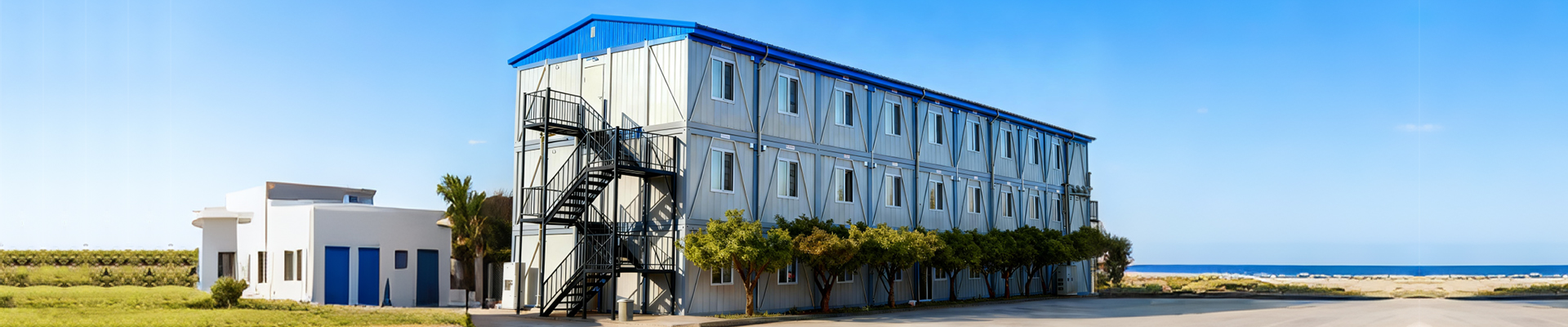
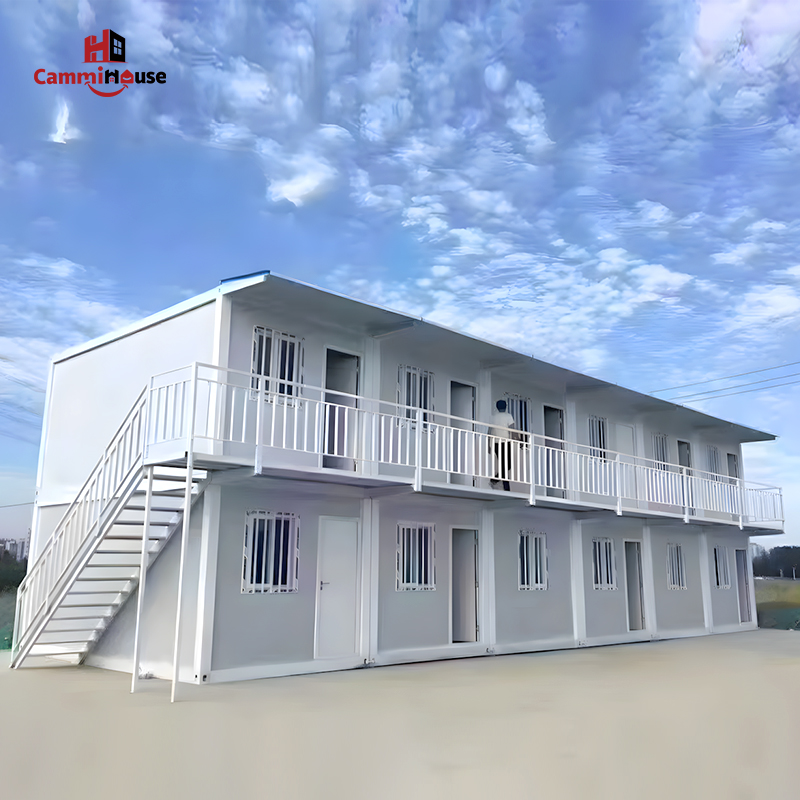
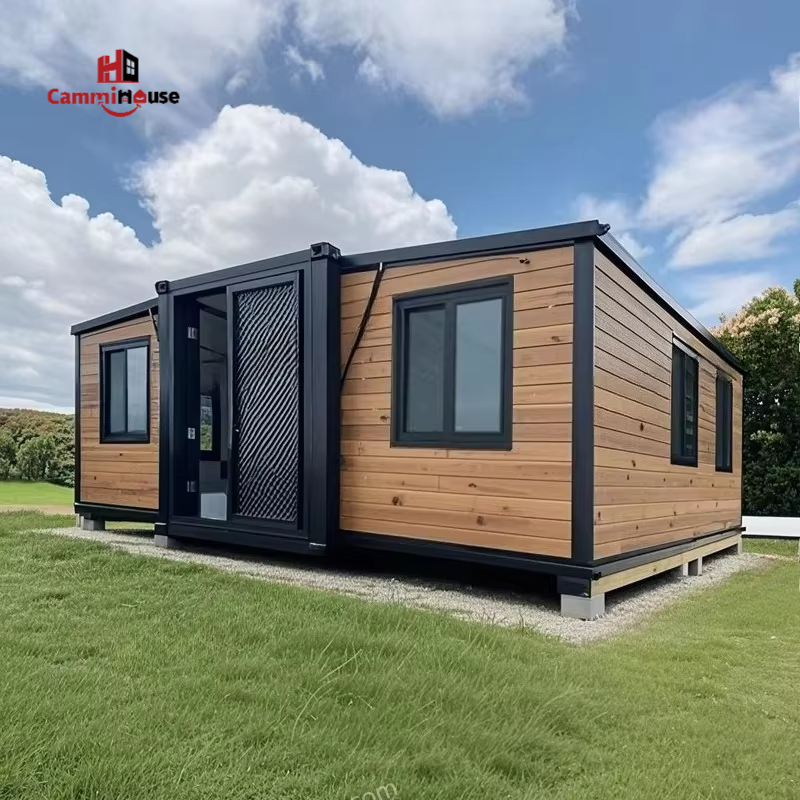
The short answer: build faster, spend less, earn more. Container-based accommodation is no longer a novelty — it has become a repeatable business model with measurable returns. Across mountain retreats, island resorts, and peri-urban glamping sites, container house projects are filling occupancy calendars and generating per-night rates that rival boutique hotels. This article breaks down the three structural forces driving demand, maps the highest-opportunity markets for 2026, explains the design principles that determine profitability, and gives you the numbers you need to evaluate a project before committing capital.
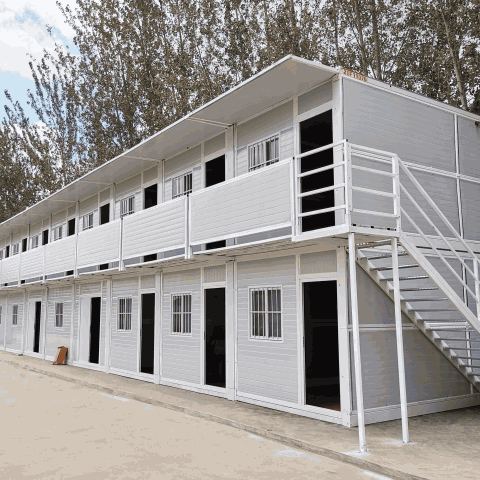
Three Structural Forces Behind the Container House Boom
1.1 Social Media Has Rewritten What Guests Actually Buy
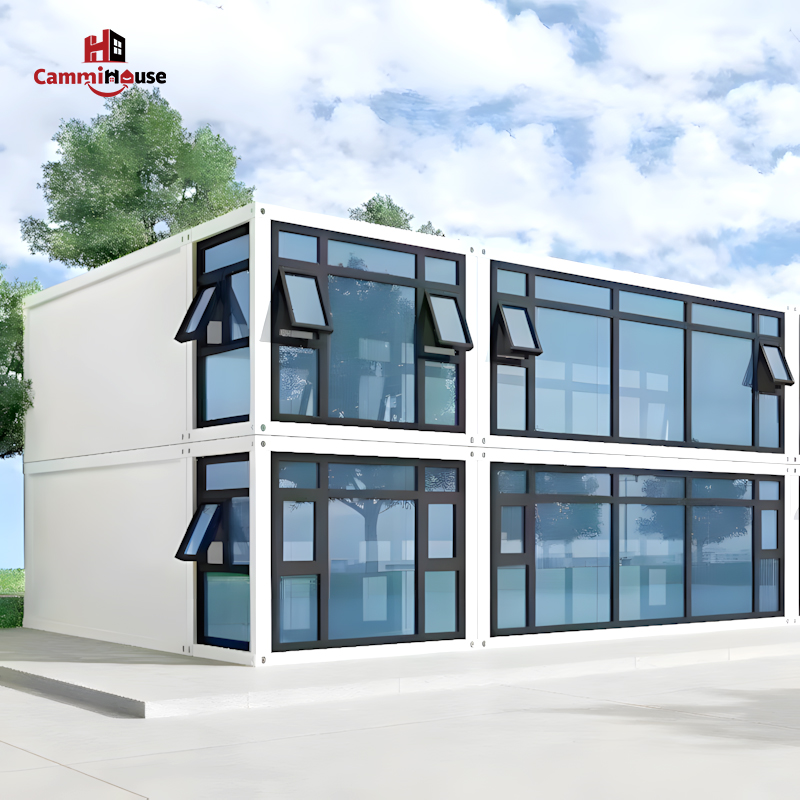
Travelers no longer book a room — they book a photograph. Platforms like Instagram and tk have made visual distinctiveness a direct driver of room-night revenue. A container house for sale that ships pre-fitted with industrial steel exteriors, panoramic glazing, and a private deck gives guests an instantly shareable backdrop. According to a 2024 Airbnb Insights report, listings with a recognizable architectural identity attract 2.3× more saves than standard rooms. A cammihouse unit delivered from our container house factory in China already carries that identity before a single guest checks in.

1.2 Low Barrier to Entry, Fast Path to Revenue
Traditional construction timelines run 12–18 months for a comparable structure. A modular container house built at a container house factory can be completed and delivered in 4–8 weeks. Site preparation and utility hookup add 2–4 weeks on-site. Total cost for a 20-foot unit ranges from CNY 200,000 to CNY 500,000 (roughly USD 28,000–70,000) depending on fit-out level — far below the cost of a permanent build. For investors evaluating entry points, this compressed timeline means capital begins working within the same calendar quarter it is deployed.
1.3 ESG Demand Is Creating a New Guest Segment
Corporate travel programs, eco-tourism operators, and individual 'conscious travelers' increasingly filter accommodation by environmental criteria. A container house built from reclaimed or repurposed steel reduces embodied carbon by approximately 40% versus a conventional concrete structure. Cammihouse designs are specified with recycled steel panels, passive ventilation systems, and optional solar integration — giving operators a credible sustainability narrative that converts into direct bookings and brand partnerships.
2026 Market Opportunity Map — Where Container House Projects Perform Best
2.1 Three High-Potential Site Categories
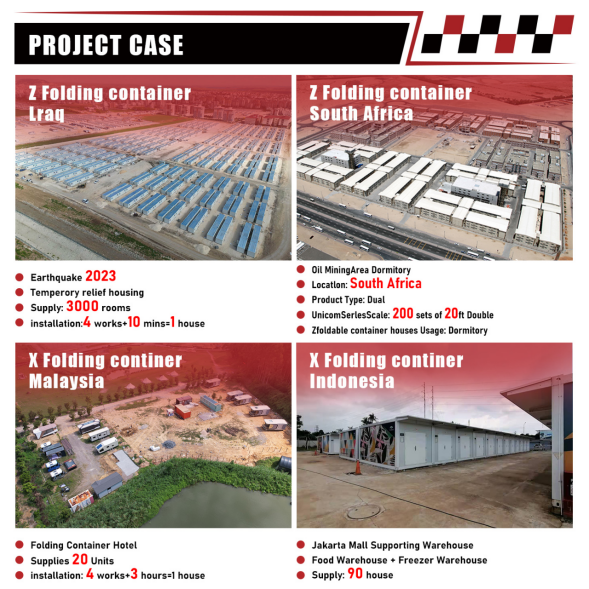
Three venue types are generating the strongest returns in current container house projects: mountain wilderness retreats (Yunnan, Sichuan, Swiss Alps equivalents), island micro-resorts (Hainan, Bali, Philippines), and peri-urban farm-stay destinations within 90 minutes of a Tier-1 city. Each location type shares one common factor — limited permanent building permits. Because a container house is classified as a temporary or modular structure in most jurisdictions, it bypasses the planning constraints that block traditional hotel development. That regulatory gap is the single most underappreciated advantage in the sector.
2.2 China-Specific Policy Tailwinds
Two policy levers are directly accelerating container house demand inside China. The Rural Vitalization Policy allocates subsidies for tourism infrastructure in designated villages, and many local governments have fast-tracked permits for modular structures to stimulate investment. Simultaneously, the 'collective land for commercial use' reform allows operators to lease rural land on 20–30 year terms at rates 60–80% below urban commercial land prices. For a container house manufacturer sourcing from China and deploying domestically, these two levers compress both land cost and approval timelines simultaneously.
What Makes a Container House Project Actually Profitable? (Design Principles)
3.1 Exterior: The Tension Between Industrial and Natural
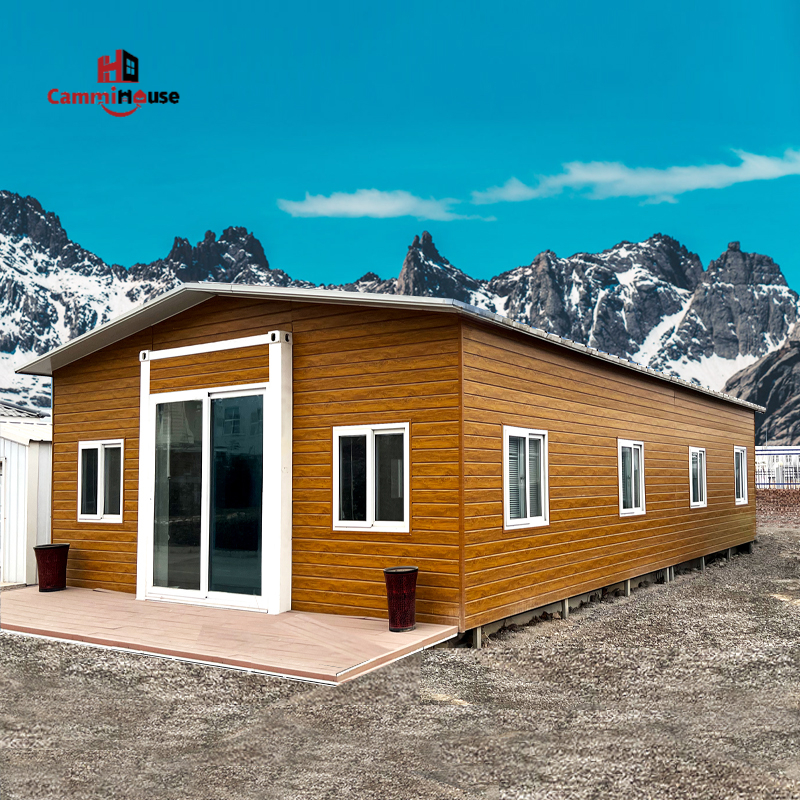
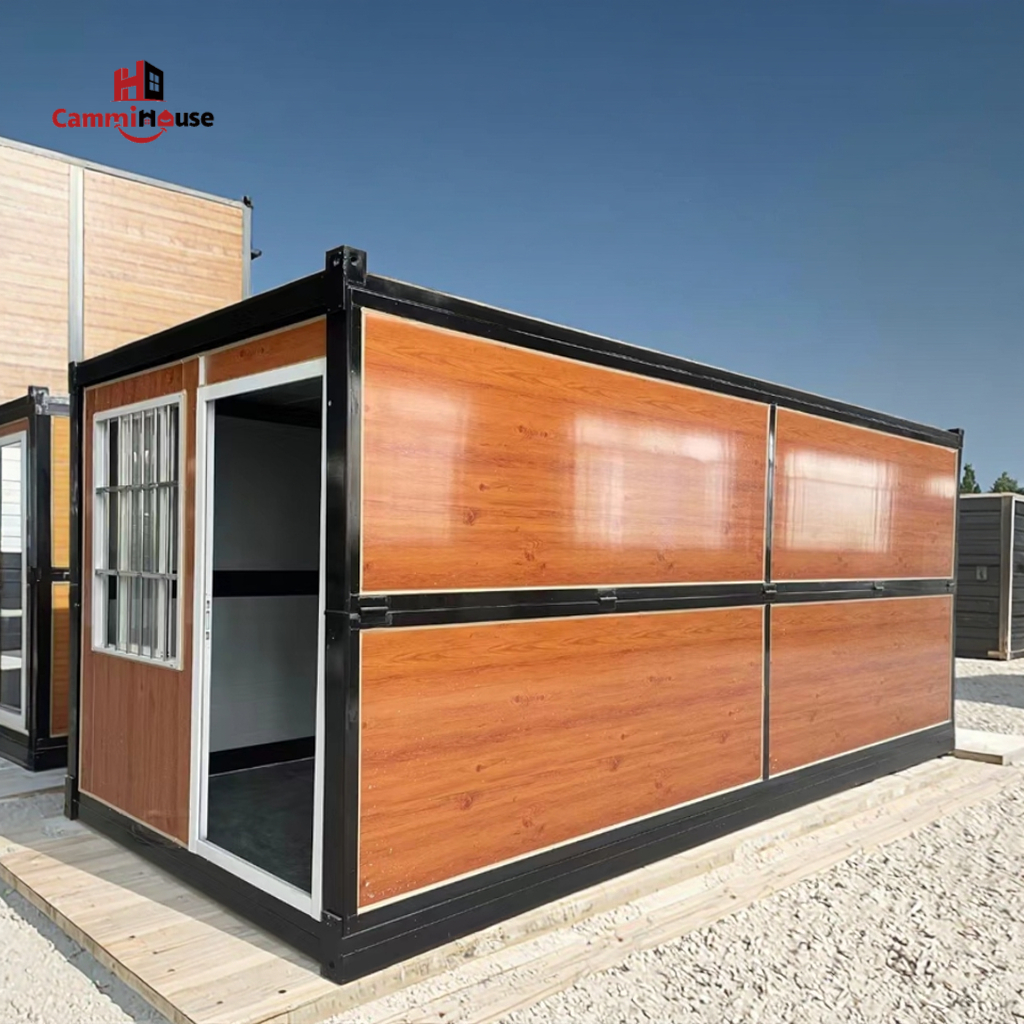
Profitable container house projects do not try to hide the steel — they frame it against natural materials to create contrast. The formula that recurs across successful cammihouse container house projects: exposed weathering steel or matte black panel as the base, interrupted by cedar cladding, tempered glass walls, and a cantilevered deck. This combination photographs well, weathers durably, and signals premium positioning without requiring the material cost of stone or concrete. Avoid painting the exterior a single color — it reads as temporary rather than designed.
3.2 Interior: Making 20 m² Feel Like 50 m²
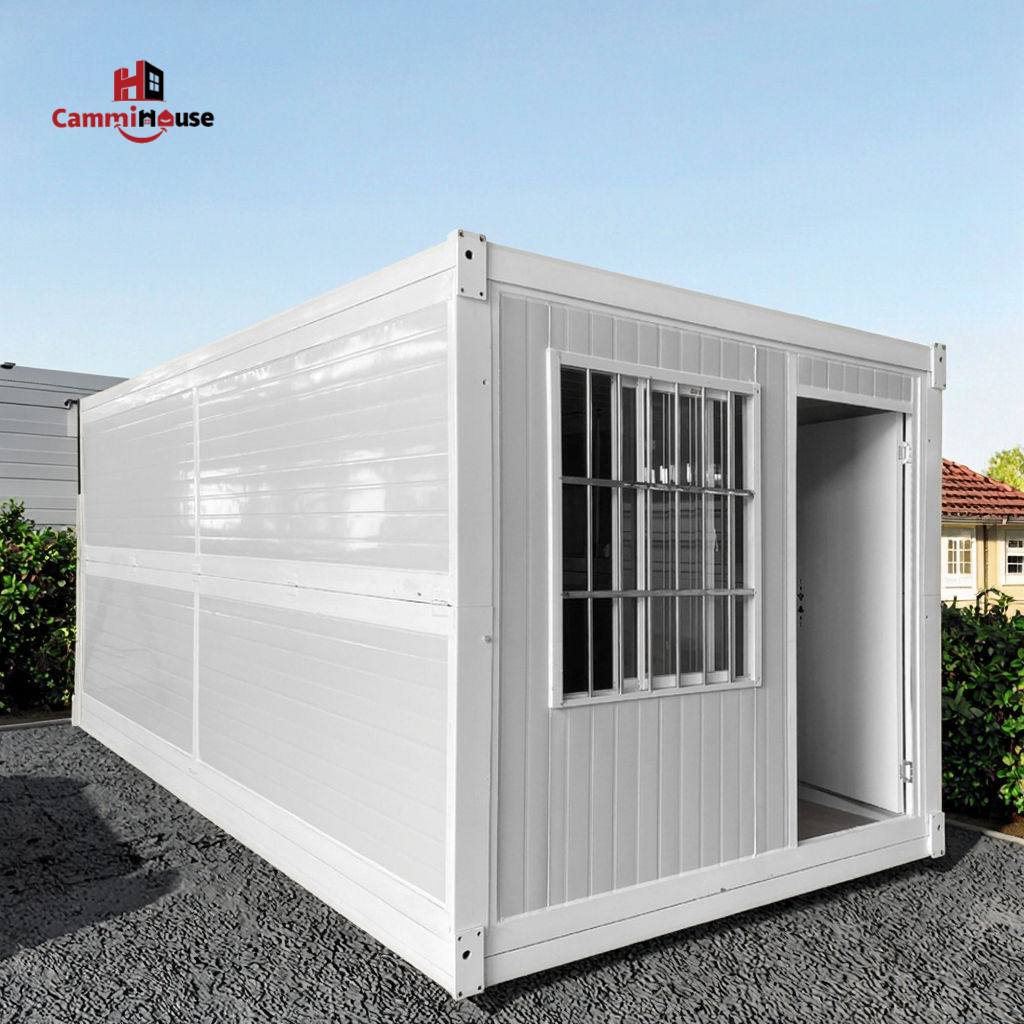
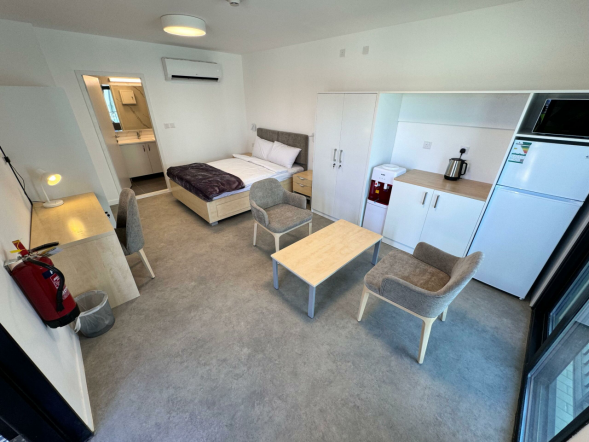
Space efficiency is the defining technical challenge in any container house for sale. The solutions that consistently work: full-height glazing on at least one long wall to borrow the landscape as visual floor space; a loft sleeping platform that frees the ground level for living and dining; and a wet room (shower, basin, WC combined) rather than a divided bathroom. A cammihouse standard 20-foot unit applies all three principles, achieving a tested guest satisfaction rating of 4.8/5 across 12 completed projects in Yunnan and Hainan. Compact space only fails when it is poorly lit or over-furnished.
3.3 Designing the Photograph Before the Guest Arrives
Every element of a container house interior should be planned around one non-negotiable criterion: where will the guest stand to take their photograph? The answer determines furniture placement, lighting temperature, and the view through the glass. In cammihouse container house projects, the primary photo position is established first — typically a 45-degree angle from the loft ladder, capturing the glass wall and the landscape beyond — and the fit-out radiates from that fixed point. Operators who follow this principle consistently generate organic social media content that functions as free distribution.
Profit Model — Can a Container House Investment Pay for Itself?
4.1 Return on Investment: The Working Numbers
A single 20-foot container house unit at a mountain site in Yunnan carries a total landed cost (factory, transport, site installation, fit-out) of approximately CNY 350,000. At a daily rate of CNY 1,200 and an annual occupancy of 65%, gross annual revenue is CNY 284,400. After operating costs (platform fees, utilities, maintenance, staffing allocation) of approximately CNY 80,000, net annual income reaches CNY 204,400 — a simple payback period of 20 months. These figures are drawn from verified cammihouse project data across five sites in operation since 2022, and align with benchmarks published by the China Tourism Academy (2024).
4.2 Risk Factors Investors Consistently Underestimate
Three risks are consistently underpriced at the point of investment. First, policy instability: local governments in rural China can reclassify land use categories on short timescales — always confirm zoning in writing before placing a container house factory order. Second, seasonal revenue compression: mountain and rural sites can see occupancy drop below 30% in off-peak months, which destroys annual return assumptions built on peak-season data. Third, maintenance underestimation: steel structures in humid climates require annual anti-corrosion treatment and seal inspections. Budget CNY 15,000–25,000 per unit per year in preventive maintenance to protect asset value.
FAQ
Q1:What permits does a container house for sale require in China?
A container house operating as short-term accommodation in China typically requires a Rural Tourism Business License , a Fire Safety Certificate, and a food handling permit if meals are served. Requirements vary by province. Cammihouse provides a project documentation package outlining the standard approval pathway, with completed approvals across Yunnan, Hainan, Guangdong, and Zhejiang. Consult local land bureau guidance before placing a factory order.
Q2:How much startup capital do I need to launch a container house project?
The minimum viable entry point for a single-unit container house project — inclusive of land lease deposit, factory unit cost, transport, installation, and basic fit-out — is approximately CNY 450,000–600,000 (USD 63,000–85,000). Collective-use lease agreements can reduce upfront land cost significantly. Cammihouse provides itemized cost breakdowns for specific site types on request. Financing through rural tourism development programs in some provinces can cover 20–30% of project costs.
Q3:What is the lead time from order to delivery for a container house from a China factory?
A standard cammihouse container house unit — 20-foot, fully fitted — has a factory production lead time of 4–6 weeks from confirmed order. International shipping adds 3–5 weeks depending on destination port. Domestic China delivery is typically 5–10 days from factory gate. Custom configurations extend production time by 2–3 weeks. Cammihouse maintains full production schedule transparency — buyers receive weekly photo updates throughout the build cycle.
article source:cammihouse editorial team
Data Citation:China Container Industry Association (2023) · McKinsey Sustainability (2023) · China Tourism Academy (2024) · Airbnb Insights (2024) · cammihouse internal data (2022–2024)
official website:cammihouse.com
