

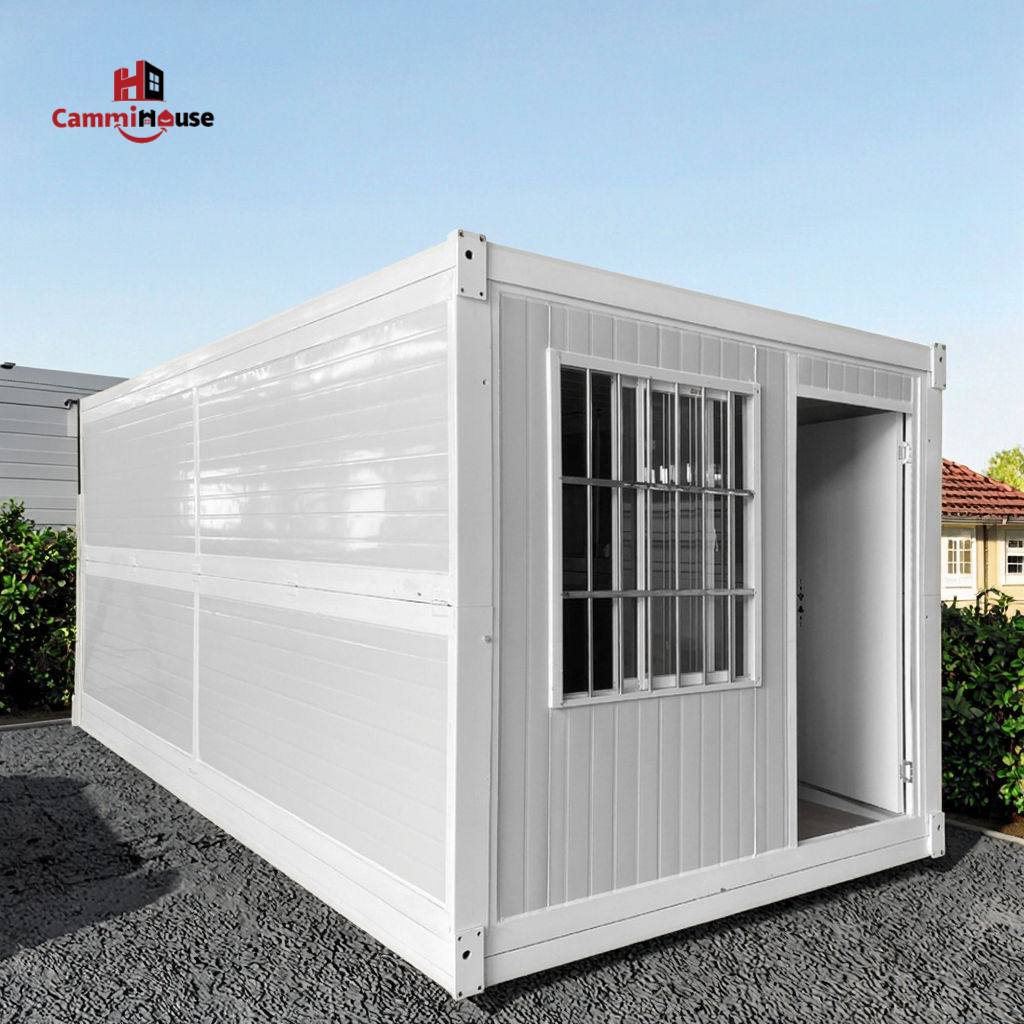
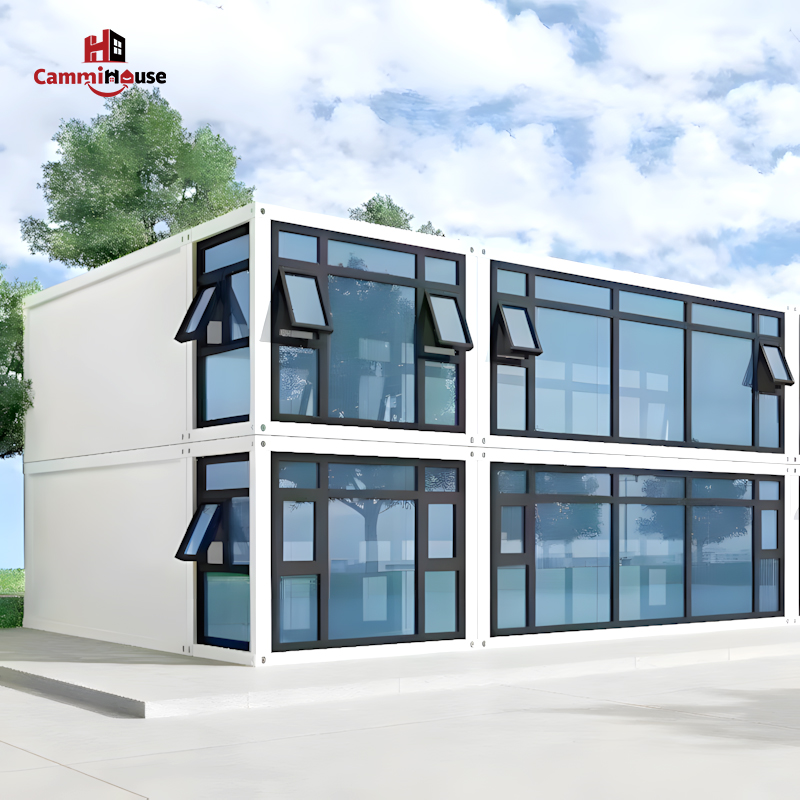
Choosing the right container house materials is a commercial decision, not a design preference. For B2B buyers, material selection directly determines service life, compliance risk, total cost of ownership, and project scalability. This guide breaks down the core materials and quality standards that define a reliable container house, with a focus on what procurement teams should verify before placing orders.
Steel Grade & Thickness Standards
Structural steel determines lifespan and compliance
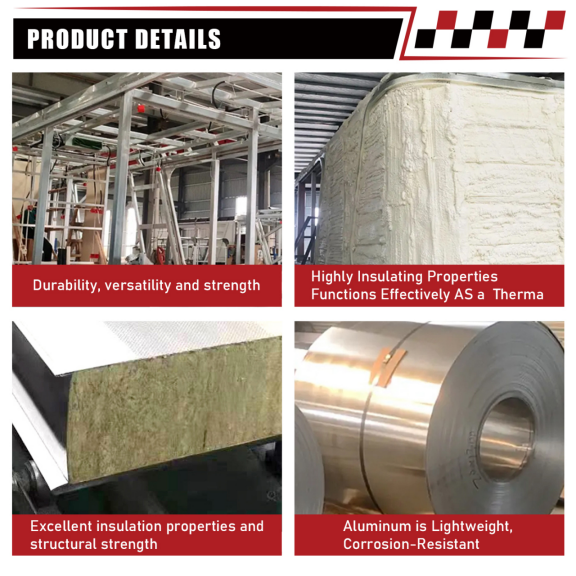
Steel grade is the backbone of any container house. Most qualified manufacturers use Q235 or Q355 structural steel, equivalent to ASTM A36 and A572, for primary frames. Thickness standards matter more than brand claims: columns below 2.3 mm often fail long-term fatigue testing, while 2.5–3.0 mm frames meet most industrial and residential load requirements.
At Cammi House, container house frames are engineered based on static load, wind load, and transport stress—not minimum cost targets. Each model has a documented steel thickness range matched to application scenarios such as mining camps, resorts, or permanent housing.
Insulation Material Options
Insulation performance defines operational cost
Insulation is where container house materials directly affect operating expenses. Common options include EPS panels, glass wool, and rock wool insulation. Rock wool (50–75 mm) delivers superior fire resistance (Class A1) and stable thermal performance across extreme climates.
Industry data shows heating and cooling costs can vary by 18–25% annually depending on insulation type (International Energy Agency, 2024). Cammi House standardizes rock wool insulation for export markets, with climate-specific upgrades for cold and desert regions.
Roofing & Waterproofing
Roofing systems protect structural investment
Roof material failure is one of the most common quality issues in container houses. Proper systems include galvanized steel sheets, waterproof membranes, and sloped drainage design. Flat roofs without drainage engineering often fail within 3–5 years in high-rainfall regions.
Cammi House applies multi-layer waterproof roofing with tested seam sealing and slope control, validated through simulated rainfall testing before shipment. This reduces post-installation leakage claims for large-scale buyers.
Electrical & Plumbing Systems
Pre-installed systems reduce site risk
Electrical and plumbing systems must comply with destination standards, not factory convenience. Copper wiring, residual current devices (RCD), and pre-installed conduits reduce on-site error rates. Plumbing materials should be rated for pressure and temperature variations during transport and use.
Cammi House integrates factory-installed MEP systems, tested before packing. Buyers report shorter commissioning times and fewer site modifications compared to shell-only units.
Certification Requirements
Certifications protect buyers, not manufacturers
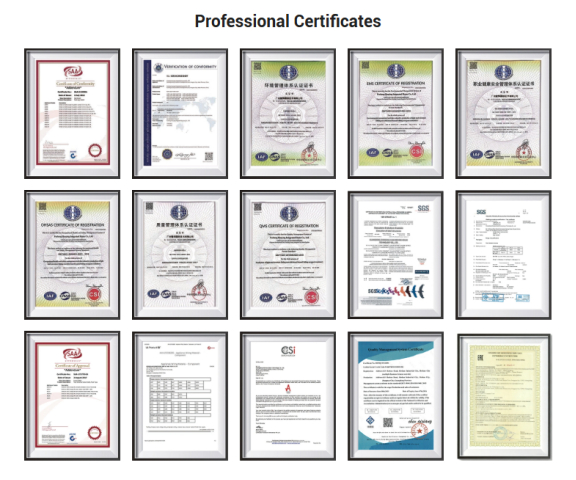
Valid certifications are non-negotiable for commercial container house projects. Common requirements include ISO 9001, CE, SGS testing reports, and local structural compliance depending on market. Certification gaps often cause customs delays or project shutdowns.
Cammi House maintains a centralized certification system, providing document packages aligned with destination regulations to reduce procurement and compliance risk.
Quality Inspection Checklist
Inspection standards prevent hidden costs
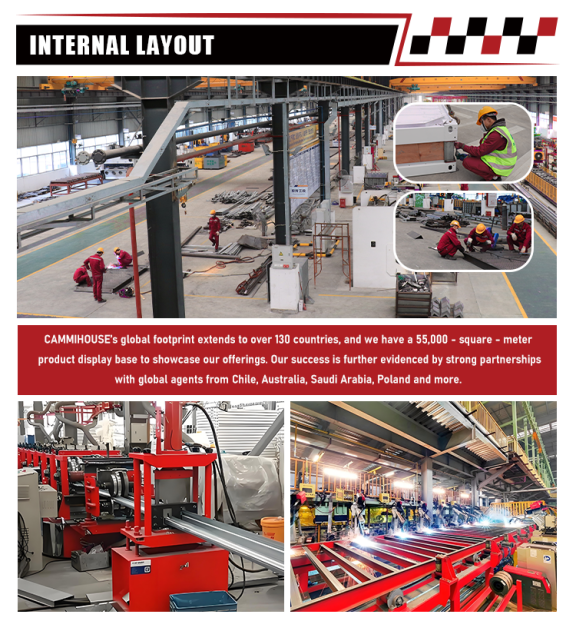
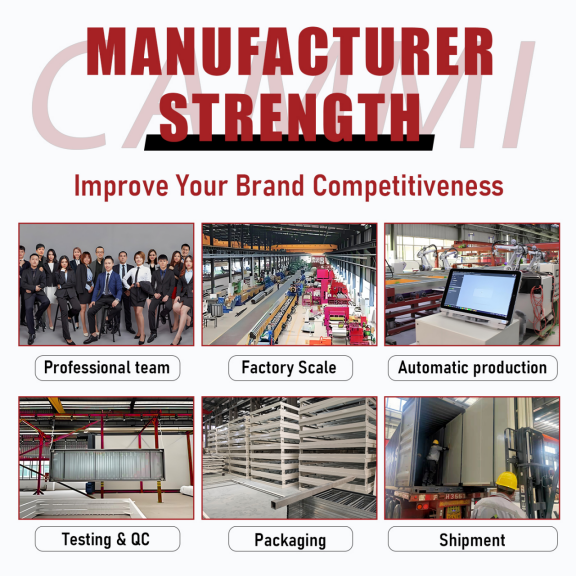
A reliable supplier follows a documented inspection process: steel thickness verification, insulation density checks, waterproof testing, electrical load testing, and packing inspection. Skipping these steps shifts risk to the buyer.
Cammi House implements a five-stage quality inspection checklist, with photo and video records shared before shipment to support bulk procurement decisions.
Frequently Asked Questions
Q1: What steel thickness is recommended for long-term container house use?
For commercial or long-term projects, a minimum of 2.5 mm structural steel is recommended. Thinner frames reduce upfront cost but increase deformation and maintenance risk. Cammi House selects steel thickness based on load calculations and intended service life.
Q2: Which insulation material is best for export container houses?
Rock wool insulation offers the best balance of fire resistance, thermal stability, and durability. EPS may reduce cost but increases fire risk and long-term energy expenses. Cammi House uses rock wool as a standard option with climate-adjusted thickness.
Q3: How can buyers verify container house quality before shipping?
Buyers should request inspection reports covering steel thickness, insulation density, waterproof testing, and electrical safety. Cammi House provides full inspection documentation and pre-shipment visual records for remote verification.
