
By Justin Mercer, Cammihouse Technical Team
1. Who Is Justin Mercer?
From Job Sites to Factory Floors
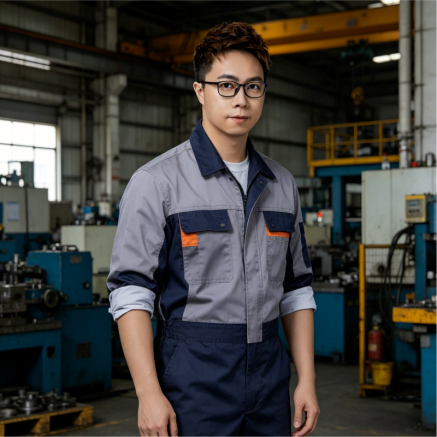
Justin Mercer is a structural engineer with over 10 years of hands-on experience in modular and prefabricated housing. His career began on remote Australian mining sites, where temporary accommodation had to be erected in under 72 hours — a challenge that taught him more about container house design than any textbook could.
After working with contractors across Southeast Asia and the Middle East, Justin joined Cammihouse's technical team in 2019, focusing on structural validation, insulation systems, and international compliance for prefab container house exports.
2. Why Container Homes? The Case for Steel-Frame Prefab
Speed and Cost: The Two Numbers That Matter Most
The core argument for a modular container home is simple: a traditional stick-built house in the U.S. takes 6–18 months and carries unpredictable cost overruns averaging 20% above budget (McKinsey Global Institute, 2020). A factory-built container unit can be delivered and installed in 4–10 weeks at a fixed price.
"I've seen clients in Arizona receive a fully finished two-bedroom expandable unit, place it on their lot, and move in within 45 days," Justin notes. "That timeline is simply not achievable with conventional construction."
3. The Insulation Problem — and How to Actually Solve It
Why 'Steel Box = Oven' Is Outdated Thinking
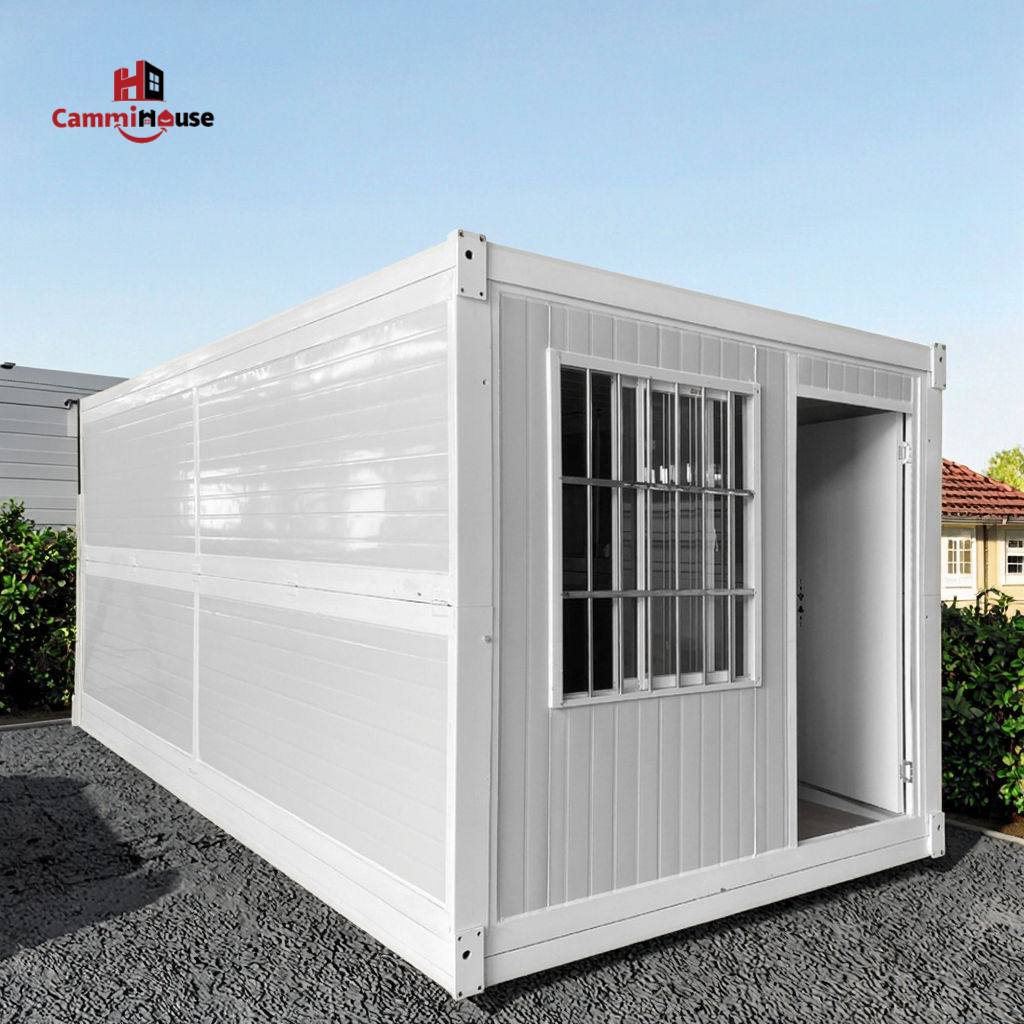
The most common objection Justin hears: won't a metal home overheat in summer? The answer depends entirely on the wall system. Bare steel conducts heat at 50 W/m·K. A properly specified container home insulation sandwich panel — 50mm polyurethane core between two steel skins — drops that figure to 0.022 W/m·K, outperforming most timber-frame walls (U.S. DOE Building Energy Data Book, 2021).
Justin's standard specification for hot-climate markets (Middle East, Southwest U.S.) includes a vented roof cavity, low-e glass on south- and west-facing windows, and reflective exterior panel finishes. In a 2024 Cammihouse project survey of 38 units delivered to Saudi Arabia, interior summer temperatures averaged 4°C lower than equivalent uninsulated steel structures.
4. What Makes a Good Container House Factory?
Five Variables Justin Checks Before Recommending Any Supplier
Not all container house factory output is equal. Justin evaluates suppliers on five criteria: (1) ISO 1161 corner casting compliance for stackability; (2) EN 13162 insulation certification; (3) weld inspection records — minimum 10% NDT sampling per batch; (4) in-house electrical routing with IEC 60364 compliance; (5) documented lead time with penalty clauses.
"I've visited factories in Guangdong, Hebei, and Zhejiang. The gap between the best and worst is enormous," he says. "Cammihouse's Guangdong facility, for example, runs a 48-point QC checklist per unit before shipping — that level of documentation matters when your client needs to pass a U.S. county building inspection."
5. Custom vs. Standard: When to Specify a Custom Container House
The Decision Tree Justin Uses With Every Client
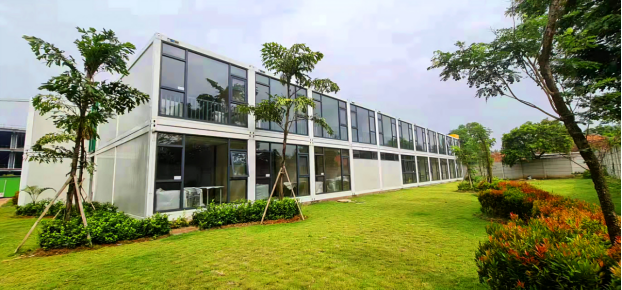
A custom container house is justified when: the site has non-standard dimensions, local zoning requires a specific roofline, or the client needs a commercial-grade finish (café, office, retail). Standard expandable models cover 80% of residential use cases and ship 30–40% faster than custom builds.
Justin's rule of thumb: "If your brief fits inside a 40ft footprint and your function list is bedroom-bathroom-kitchen-living, go standard. If you're building a medical clinic in a remote mining camp or a glass-roofline café for a hospitality brand, that's when custom engineering adds real value."
6. The Modern Container Home Aesthetic — Beyond the Industrial Look
How Material Choice Changes the Entire Conversation
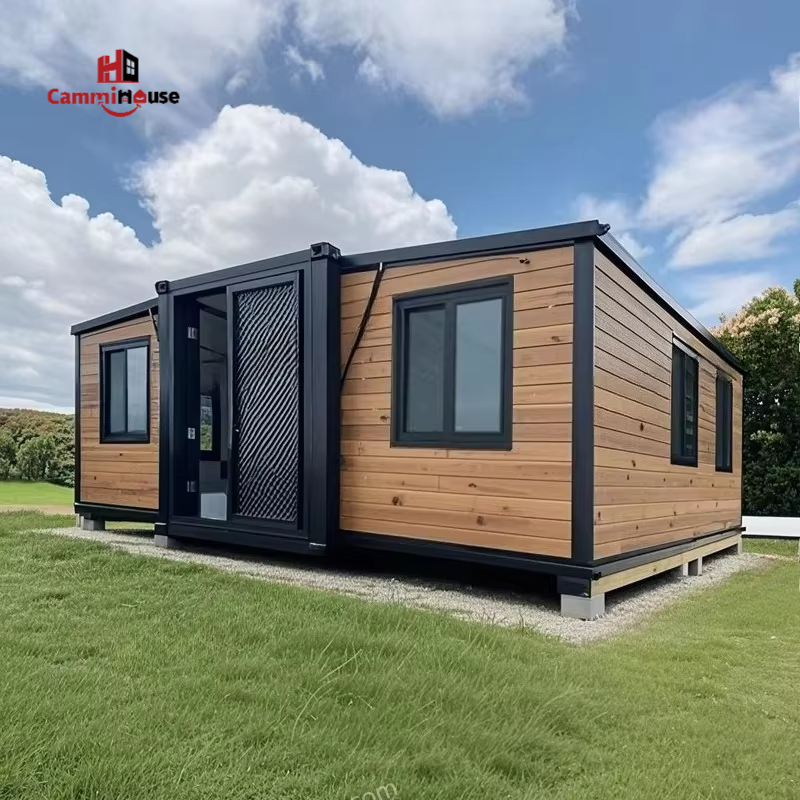
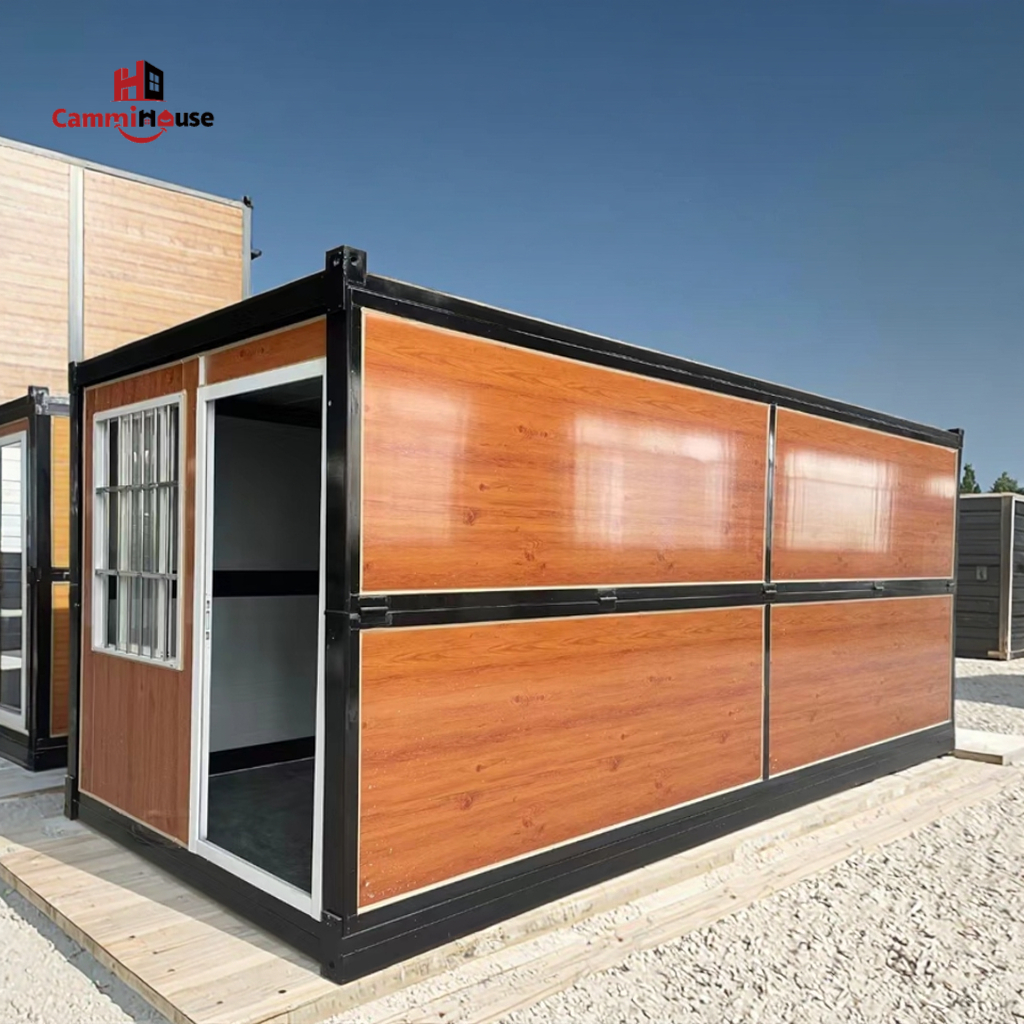
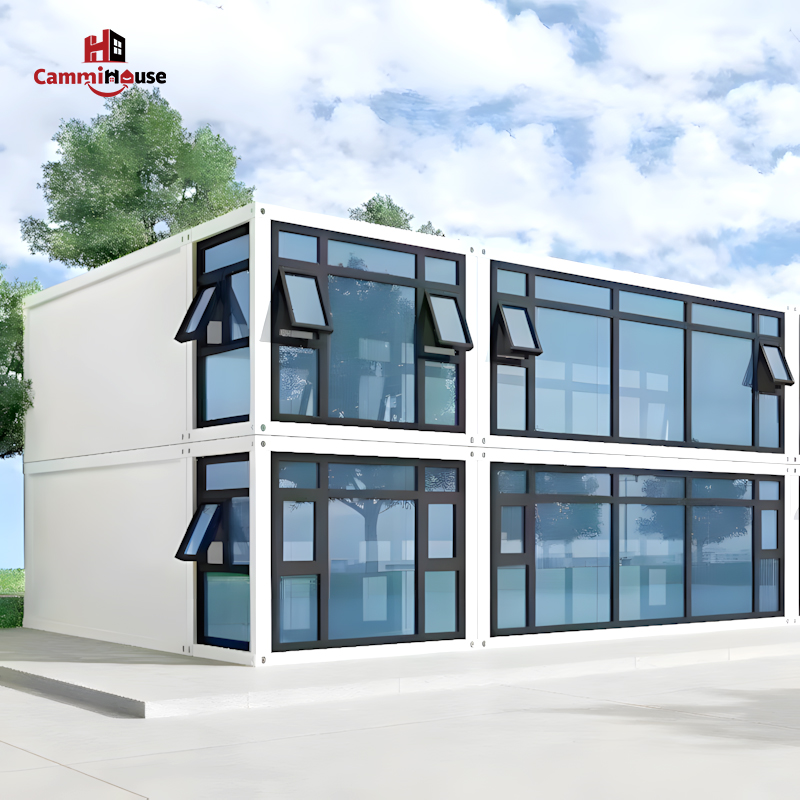
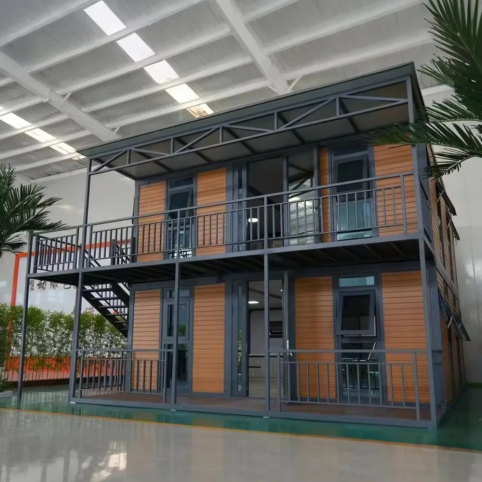
The modern container home market has moved far beyond corrugated steel exteriors. Wood-grain steel panels, frameless glass facades, and flush-panel rooflines now allow container structures to compete visually with architect-designed homes. Justin points to a 2023 Cammihouse commercial project — a folding-facade café in Guangdong — as evidence: the structure attracted 40,000 social media impressions within two weeks of opening, with most viewers unaware it was a container build.
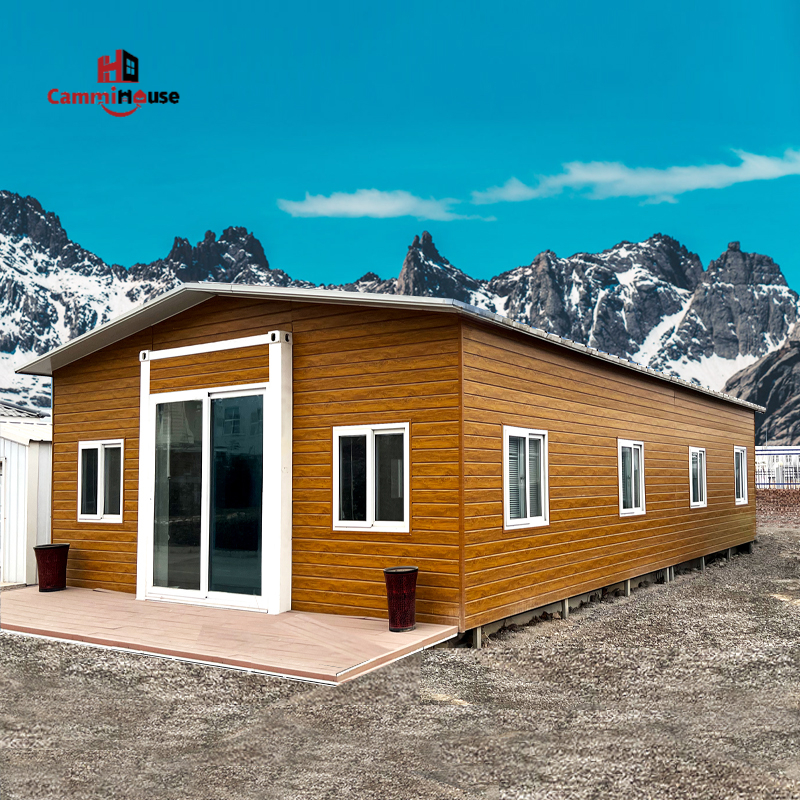
Material selection also affects permitting. In several U.S. states, a wood-finish exterior can shift a container home from 'industrial structure' to 'residential dwelling' in the zoning classification — a distinction that affects financing eligibility.
7. Shipping Container Home Logistics — What the Brochures Skip
Port to Plot: The 11 Steps Nobody Talks About
A shipping container home purchase from a Chinese factory involves more than wiring a deposit. Justin walks clients through 11 steps: factory inspection → payment milestone structure → export customs (Form A for GSP tariff reduction) → freight forwarding → U.S. port clearance (EPA/DOT compliance) → inland trucking on a flat-rack → site crane requirements → foundation connection → utility hook-up → local permit sign-off → final inspection.
"The step people most underestimate is inland trucking," Justin says. "A 40ft expanded unit requires a wide-load permit in most states. That's a 2–3 week lead time you need to build into your schedule."
8. Justin's Advice for First-Time Container Home Buyers
Three Questions to Ask Before You Sign Anything
After reviewing hundreds of purchase inquiries, Justin has distilled his advice to three questions every buyer must ask: (1) Does the unit carry CE or ISO certification, and can the factory provide the test reports — not just a logo? (2) What is the insulation R-value, and has it been tested to ASTM C518 or equivalent? (3) What is the factory's policy on dimensional variance — units with ±15mm tolerances cause on-site assembly problems that delay installation by days.
"The buyers who have the smoothest experience are the ones who treat this like a manufacturing procurement, not a retail purchase," he says. "Specs, certifications, and delivery terms in writing — every time."
FAQ
Q: What is the lifespan of a prefab container house?
A: A well-maintained steel-frame prefab container house has a structural lifespan of 25–50 years, depending on the coating system and climate. Hot-dip galvanized frames with epoxy primer and polyurethane topcoat are the standard specification for coastal or high-humidity environments. Cammihouse units use a three-layer coating system rated to ISO 12944 C4 (industrial/coastal) environments.
Q: Can a shipping container home be placed in a U.S. mobile home park?
A: It depends on the park's rules and the county's zoning classification. Many rural counties — including parts of Arizona and Texas — permit HUD-code modular or container structures in designated mobile home parks. The key requirement is that the unit meets HUD 24 CFR Part 3280 standards or is classified as a site-built structure with a permanent foundation. Always check with the county planning office before purchasing.
Q: How does container home insulation compare to a traditional house?
A: A 50mm polyurethane-core sandwich panel achieves a U-value of approximately 0.40 W/m²K, which is comparable to a 140mm timber-stud wall with fiberglass batt insulation. Thicker 100mm PU panels — available as an upgrade from most reputable container house factory suppliers — reach U-values below 0.25 W/m²K, exceeding the 2021 IECC energy code requirements for most U.S. climate zones.
