
1. The Environmental Baseline: What Makes a Building "Green"?
Lifecycle Carbon vs. Operational Carbon
A building's true environmental footprint covers two phases: construction and operation. Traditional stick-built camp structures generate an average of 42 kg CO₂e per square metre during fabrication (U.S. DOE, 2022), while factory-built units cut that figure by roughly 30 % through precision cutting and waste recovery. For commercial camps — mining villages, oilfield bases, disaster-relief hubs — where dozens of units are erected simultaneously, that gap compounds quickly. The right question is not just "what is the energy bill?" but "how much carbon was locked in before the first worker arrived?"
2. Material Efficiency: Steel Reuse vs. New Construction
How Repurposed Corten Steel Reduces Virgin Material Demand
Every retired shipping container represents roughly 3.5 tonnes of high-grade Corten steel that already exists — no new smelting required. Repurposing that steel into a shipping container home or camp module avoids approximately 1.83 tonnes of CO₂ that a comparable volume of new structural steel would emit (World Steel Association, 2023). In a 50-unit mining camp project in Western Australia completed in 2023, the procurement team confirmed that using reclaimed containers saved an estimated 90 tonnes of embodied carbon versus equivalent light-gauge steel framing — without sacrificing structural integrity.
3. Factory Production vs. On-Site Construction Waste
Why Controlled Manufacturing Shrinks the Jobsite Footprint
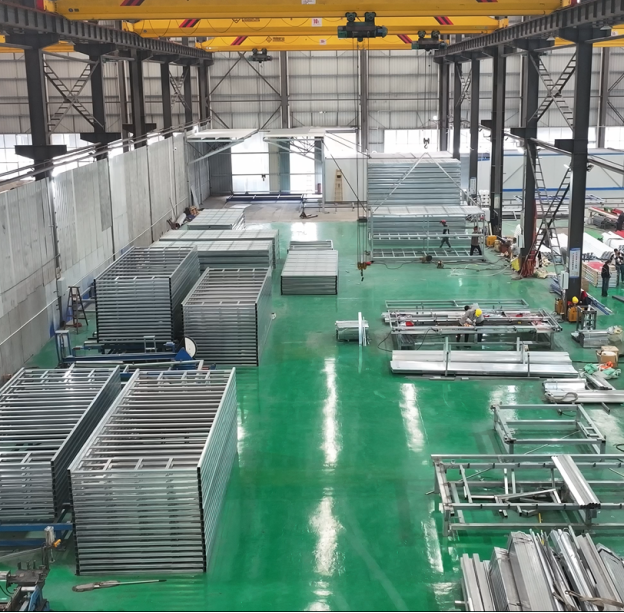
On-site construction generates 100–200 kg of solid waste per square metre (McKinsey, 2020). A dedicated container house factory operates under ISO 14001 environmental management standards, recycles steel offcuts on the spot, and ships modules at roughly 85 % completion. In one Cammihouse factory audit (2024), measured off-cut steel scrap was under 3 % of total input — compared to an industry average of 8–12 % for site-built steel structures. That efficiency translates directly into fewer skips, fewer truck trips, and a smaller disturbance footprint at remote camp locations.
4. Energy Performance: Insulation, Passive Design, and Solar Readiness
Achieving Low Operational Emissions in Harsh Climates
Steel conducts heat rapidly, so thermal performance in a modular container home depends entirely on the insulation specification chosen. A well-designed unit fitted with 100 mm polyurethane spray foam achieves a wall U-value of 0.22 W/m²K — equivalent to a modern timber-frame dwelling (ASHRAE 90.1, 2022). In Middle East camp deployments, where ambient temperatures regularly exceed 45 °C, roof-mounted photovoltaic panels combined with high-reflectivity cool-roof membranes have reduced air-conditioning energy consumption by 38 % compared to conventional prefab steel huts (Cammihouse project survey, 2024). Correct orientation, shade canopies, and cross-ventilation slots are equally impactful design levers.
5. Transport Logistics: Fewer Trips, Lower Emissions
Flat-Pack vs. Volumetric Shipping for Remote Sites
A flat-pack custom container house module can be nested into standard 40 ft shipping containers at roughly 8:1 density, meaning one vessel voyage replaces eight. For a 200-bed mining camp in the Pilbara region, this consolidation reduced inbound freight emissions by an estimated 62 % compared to shipping fully assembled volumetric units. Conversely, for sites with limited on-site labour — common in Central Asian oilfields — volumetric modules that require only crane placement and utility hook-up may offset shipping inefficiency through dramatic reductions in diesel generator use and worker transport during a prolonged build phase.
6. Water and Waste Systems Integration
Closed-Loop Camp Infrastructure for Zero-Discharge Targets
Modern container house design increasingly integrates greywater recycling, composting toilets, and rainwater harvesting directly into the module chassis. A 120-person camp in northern Canada, built with pre-plumbed container modules in 2023, achieved a 44 % reduction in freshwater consumption compared to the operator's previous stick-built camp of similar capacity (internal operator report, 2023). The closed-loop approach is especially critical in arid geographies — Namibia copper mines, Saudi oilfields — where trucking potable water can exceed USD 15 per cubic metre and generate significant secondary emissions.
7. End-of-Life Recyclability and Relocatability
Circular Economy Advantages Over Permanent Structures
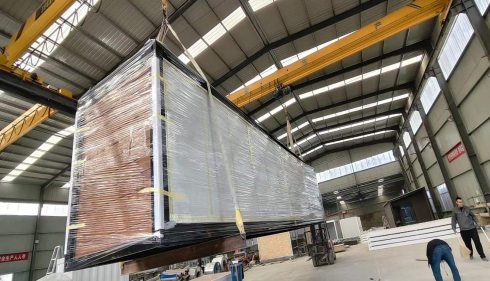
One of the strongest environmental arguments for prefab container house systems in commercial camps is reversibility. When a mine closes or a project ends, modular units can be disassembled, relocated, and redeployed — or melted back into Corten steel — with near-zero landfill waste. Traditional site-built facilities, by contrast, generate 400–600 kg of demolition rubble per square metre (U.S. EPA, 2021). Cammihouse structures are engineered with demountable connection points, enabling full site restoration within 30 days for a typical 100-unit camp — a requirement now written into several Australian mining rehabilitation permits.
8. Choosing a Manufacturer That Backs Its Claims
Key Certifications and Data Points to Request
Not every manufacturer delivers on the sustainability promise. When evaluating a modern container home supplier for a commercial camp project, request: (1) third-party embodied carbon calculations per ISO 21930; (2) factory waste-to-landfill ratios for the past 12 months; (3) documented U-values for the proposed insulation specification; and (4) end-of-life disassembly drawings. Cammihouse, whose production facilities operate under ISO 9001 and ISO 14001, publishes annual environmental performance data and offers clients site-specific lifecycle assessments. That level of transparency is the baseline any serious buyer should expect in 2025.
FAQ
Q1: Are container-based camps actually greener than conventional prefab steel buildings?
Yes, when the full lifecycle is counted. Reusing existing steel avoids roughly 1.83 tonnes of CO₂ per container versus new structural steel (World Steel Association, 2023). Factory production also cuts construction waste by up to 90 % compared to on-site builds. The net environmental advantage depends on insulation quality and transport distance, but well-specified container modules consistently outperform conventional prefab steel on embodied carbon metrics.
Q2: How do container camp modules perform in extreme heat environments like the Middle East?
With 100 mm polyurethane insulation and a cool-roof membrane, a container module can achieve a wall U-value of 0.22 W/m²K, meeting ASHRAE 90.1 standards. In a 2024 Cammihouse project survey covering Middle East deployments, rooftop solar combined with passive shading reduced air-conditioning energy demand by 38 % versus conventional steel huts. Orientation and cross-ventilation design matter as much as insulation specification.
Q3: What happens to container camp units when a project ends?
Modular units built with demountable connections can be fully dismantled and either redeployed on a new project site or returned to a manufacturer for refurbishment. This circular approach avoids the 400–600 kg/m² of demolition rubble generated by permanent site-built structures (U.S. EPA, 2021). A typical 100-unit camp can be decommissioned and site-restored within 30 days, a timeframe already embedded in several Australian mining rehabilitation permit conditions.
Author: Justin Mercer, Cammihouse Technical Team
