
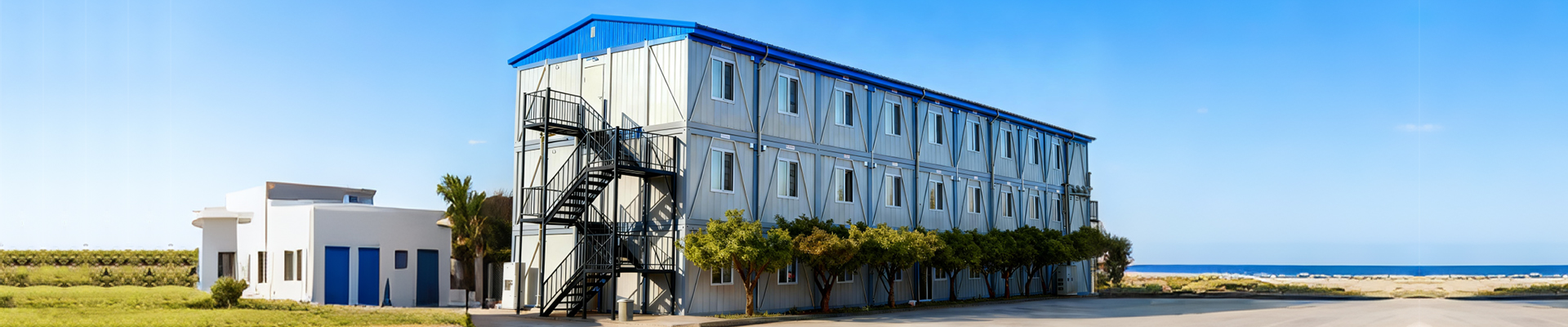
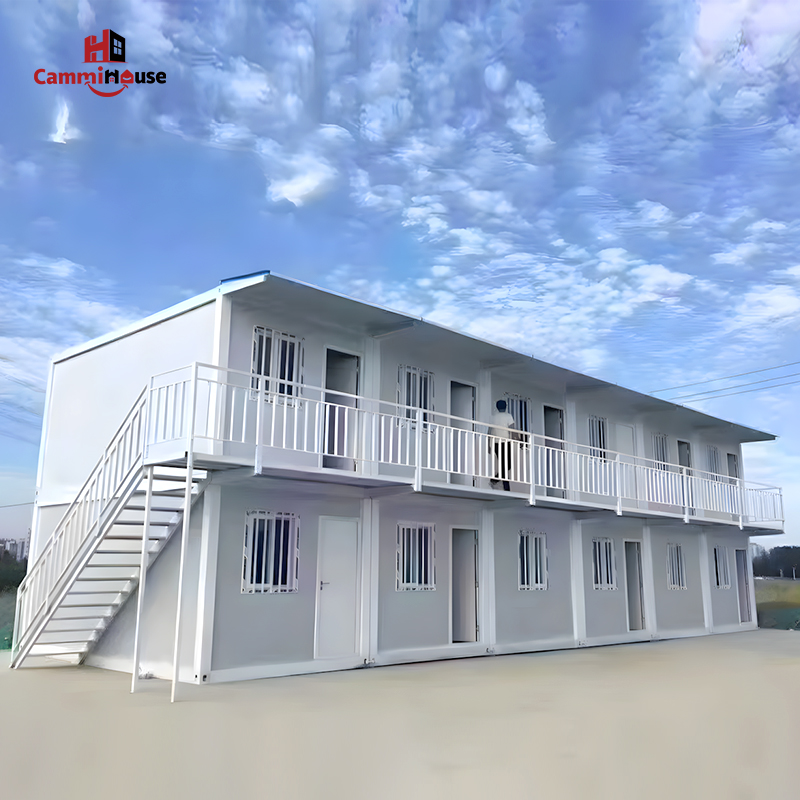
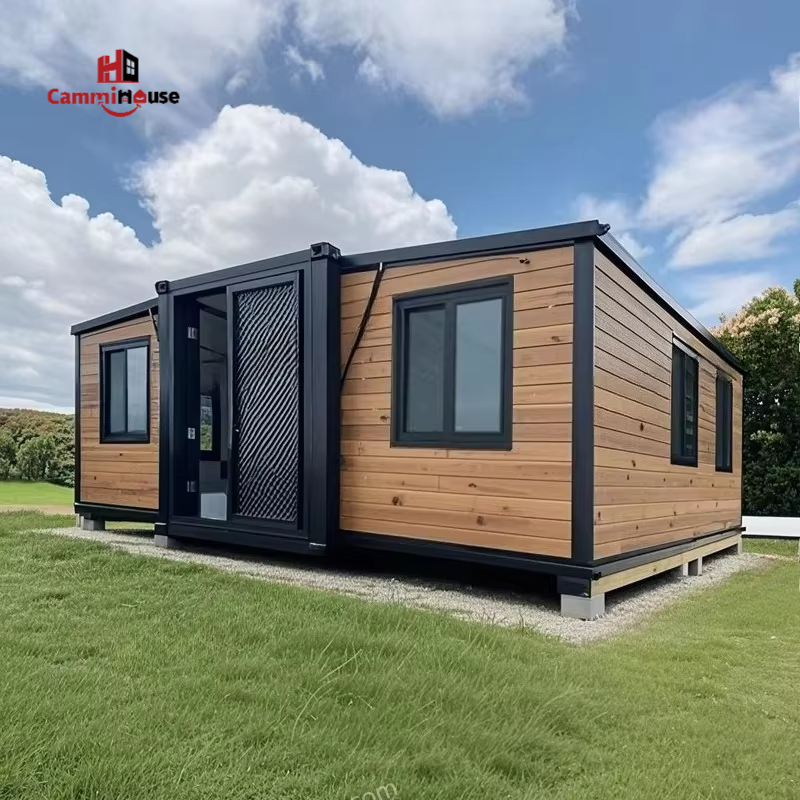
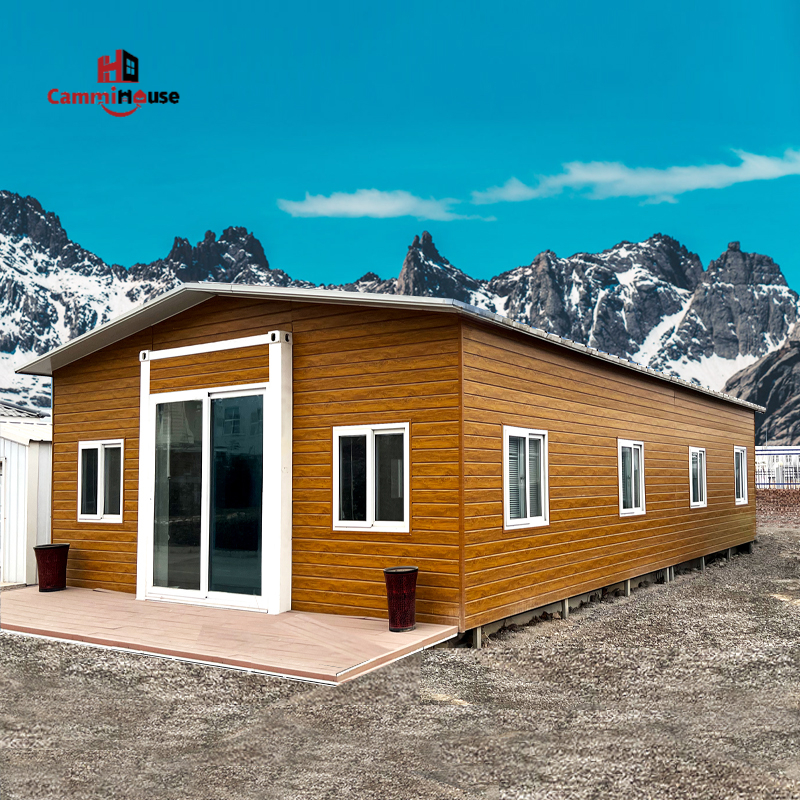
The total cost of a container house typically ranges from $25,000 to $250,000 in the US market, and RMB 80,000 to 600,000 in China — depending almost entirely on four variables: the container itself, the foundation, the conversion work, and the utility systems. At Cammihouse, we get this question from buyers every day. This guide breaks down each cost component so you can build a realistic budget before you commit.
1. The Container Itself
Buying the box is the starting point for any container house project, and usually accounts for 15–25% of the total budget.
Price Ranges
A standard 20ft shipping container runs $3,000–$6,000 used or $6,000–$12,000 new. A 40ft high-cube (40HC) — the most popular choice among container house manufacturers for residential builds — typically costs $5,000–$10,000 used. Prices vary by region, port proximity, and current steel market conditions.
Condition Grades: Which One to Buy
Grade | Condition | Best For | Price Premium |
CW (Cargo Worthy) | Single-trip,minimal wear | Residential builds, visible exteriors | Highest |
WWT (Wind & Water Tight) | Structurally sound, cosmetic wear | Most conversion projects | Mid |
AS-IS | Sold as-found, may need repair | Budget builds — inspect in person first | Lowest |
Don't Forget Delivery
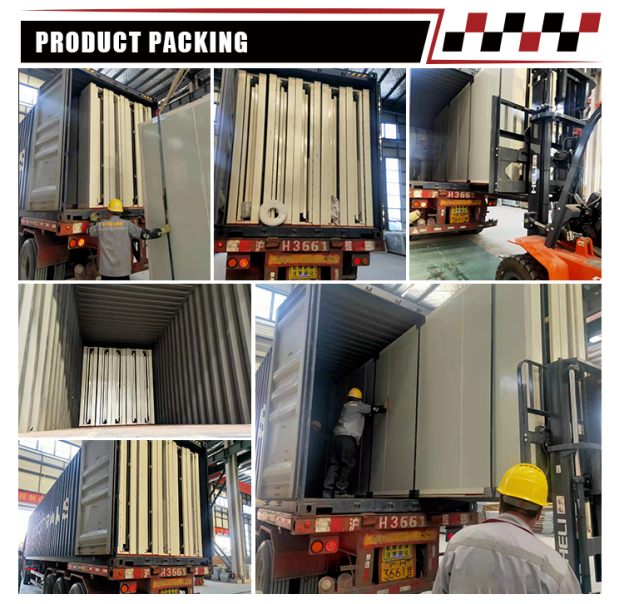
Transport from the depot to your site adds $500–$3,000+ per container depending on distance and road access. Sites more than 60 miles from a major port or depot should budget on the higher end. This is one of the most frequently underestimated line items in any container home build.
2. Foundation
The foundation is the most commonly underestimated cost in a container house project — and the one most likely to blow your budget if you skip the site assessment.
Three Foundation Types and Costs
Foundation Type | Best For | Typical Cost |
Helical Piers / Screw Piles | Sloped sites, soft soil, temporary installs | From $5,000 |
Strip / Perimeter Footing | Permanent residential on standard soil | From $8,000–$15,000 |
Concrete Slab / Raft | Multi-container stacked builds | From $20,000+ |
Soil Conditions Add Surprise Costs
Expansive clay, high water tables, or rocky terrain can increase foundation costs by 30–100% over the base estimate. A geotechnical report ($500–$1,500) is money well spent before finalizing your foundation choice — reputable container house manufacturers will always recommend one.
3. Conversion & Build-Out (The Biggest Variable)
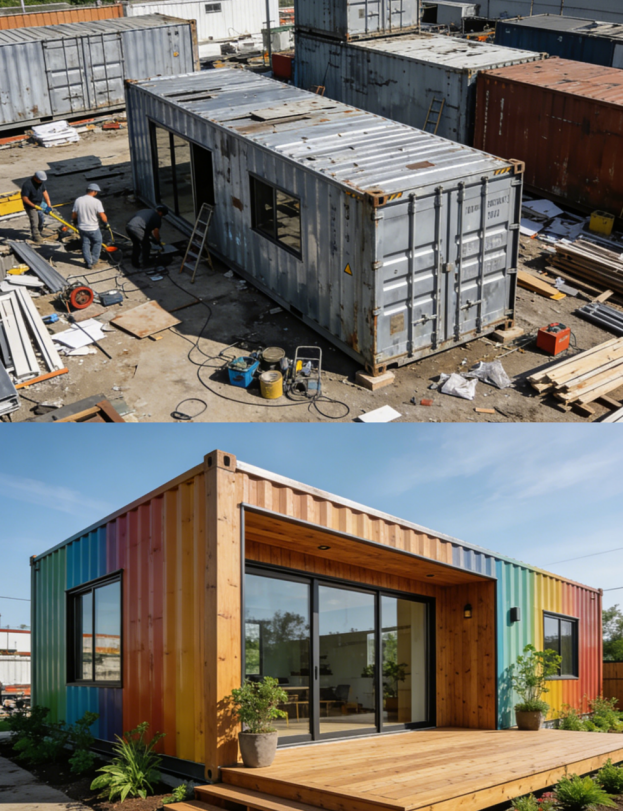
This is where cost ranges diverge most dramatically. A basic weatherproof conversion and a turnkey luxury build can differ by a factor of five or more.
Three Tiers of Conversion
Tier | What's Included | Typical Cost per Container |
Basic | Rust treatment, insulation (batt or spray foam), window & door openings, exterior paint | $8,000–$20,000 |
Mid-Range | All of Basic + framed interior walls, electrical rough-in, plumbing, HVAC, standard finishes | $20,000–$50,000 |
Premium / Custom | Full architectural design, high-end finishes, custom cabinetry, smart home systems | $50,000–$120,000+ |
DIY vs. Working with a Container House Manufacturer
Taking on non-structural work yourself (painting, flooring, interior trim) can shave 30–50% off conversion labor costs. However, structural modifications — cutting large openings, stacking containers, welding reinforcements — require an engineer's stamp and should always be handled by an experienced container house manufacturer or licensed contractor. Cutting corners here creates safety liability that no budget saving justifies.
4. Utility Systems
Getting the box livable means connecting it to the real world — or making it self-sufficient. Either way, utilities deserve its own budget line.
Grid Connection
Connecting to municipal water, sewer, and electricity typically runs $5,000–$20,000, heavily influenced by how far the container sits from existing service lines. Urban infill lots are usually cheaper; rural acreage can get expensive fast.
Off-Grid Options
Solar + battery storage systems are increasingly popular in Cammihouse container builds for remote or mobile applications. A basic off-grid package (5kW solar + 10kWh storage) starts around $12,000–$25,000 installed. The long-term operating savings often justify the upfront cost for properties without easy grid access.
HVAC
Mini-split systems ($1,500–$4,000 per unit installed) are the industry standard for container houses due to their efficiency in small, well-insulated spaces. In-floor radiant heating is a premium option for permanent residences starting around $8,000.
5. Full Cost Summary: Three Build Scenarios
Cost Component | Budget Build | Mid-Range Build | Premium Build |
Container (1 x 40HC used) | $5,500 | $7,000 | $9,000 |
Delivery | $1,200 | $1,500 | $2,000 |
Foundation | $6,000 | $12,000 | $25,000 |
Conversion & Build-Out | $18,000 | $42,000 | $95,000 |
Utility Systems | $6,000 | $12,000 | $28,000 |
Permits & Engineering | $2,000 | $4,000 | $8,000 |
Total (Estimated) | ~$38,700 | ~$78,500 | ~$167,000 |
Note: Estimates are for a single 40HC container build in the US market (2026 pricing). Multi-container projects often achieve 10–20% per-unit savings through shared foundation and utility infrastructure. Land cost is not included.
6. Five Hidden Costs Most Buyers Miss
• Floor treatment: Original shipping container floors may contain pesticide-treated timber (methyl bromide fumigation). Replacement or sealing adds $800–$2,500 and is non-negotiable for residential use.
• Building permits: Permanent container houses require permits in most jurisdictions. Fees vary widely — budget $1,500–$6,000 and build in 4–12 weeks of processing time.
• Structural engineering: Any stacking, large wall openings, or non-standard configurations require a stamped structural drawing. Typical fee: $1,500–$4,000.
• Roof waterproofing: The container roof is the most common leak point in a finished build. A proper roof membrane or green roof system adds $1,500–$5,000 but prevents far costlier repairs later.
• Temporary accommodation: Most conversion projects take 6–16 weeks. Factor in where you'll live during the build, especially for owner-occupier projects.
7. Frequently Asked Questions
Are container houses cheaper than traditional construction?
Typically 20–40% less expensive than stick-built homes of comparable size, primarily due to faster build timelines and reduced labor. The gap narrows significantly for premium custom builds, where a high-specification container house can reach parity with light-gauge steel construction.
What is the minimum budget for a livable container house?
For a single 20ft container converted to a functional small dwelling (insulation, basic electrical, plumbing, and weatherproofing), a realistic minimum in the US market is around $30,000–$40,000 all-in. At Cammihouse, our entry-level residential units start in this range, with clear itemization of every cost component.
Can I get a mortgage for a container house?
It depends on classification. Container houses built on permanent foundations with traditional utilities and a certificate of occupancy can qualify for conventional mortgages in many US states. Units on temporary foundations or classified as personal property (like manufactured housing) typically require a chattel loan or personal loan instead.
How do I find a reliable container house manufacturer?
Look for manufacturers with a portfolio of completed projects, in-house engineering capacity, and transparent pricing. Ask specifically about their quality control for container grading, structural modifications, and insulation systems. A trustworthy container house manufacturer will welcome site visits and provide references from past clients.
Reference: Container Atlas: A Practical Guide to Container Architecture — Slawik et al. | Gestalten, 2020. Pricing data in this article draws on cost ranges documented across 30+ real-world case studies in the publication.
