

How Do Expandable Container House Systems Work?
Expandable container housesystems are designed to solve one core problem of traditional container buildings: limited interior space. By using engineered expansion mechanisms, a single container unit can double or even triple its usable floor area while remaining compact during transport.
This article explains how expandable container house systems work, the key technologies behind them, and what buyers should evaluate when selecting an expandable container house for real-world projects.
What Is an Expandable Container House?
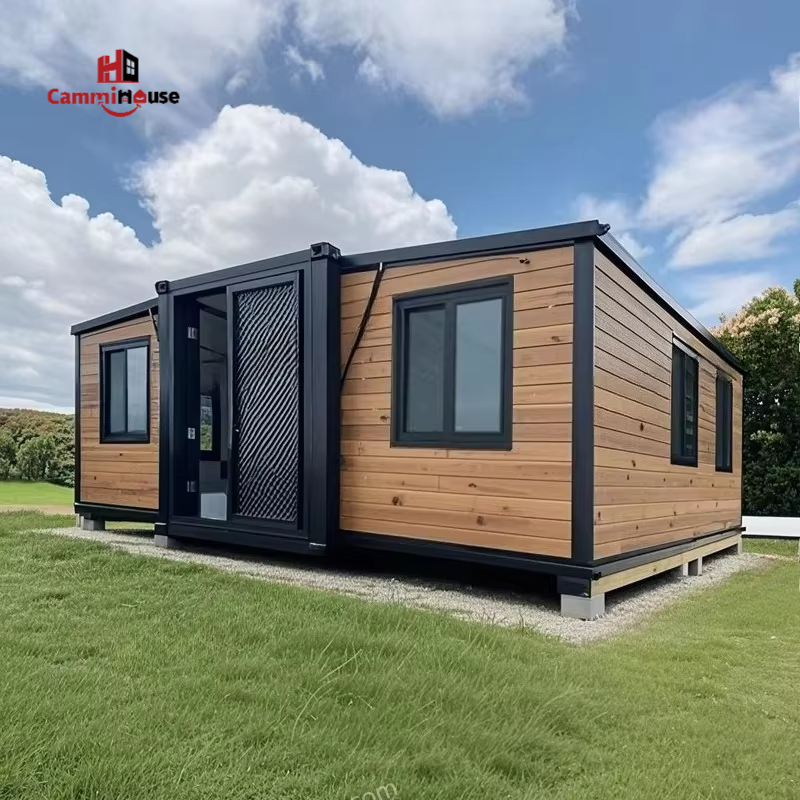
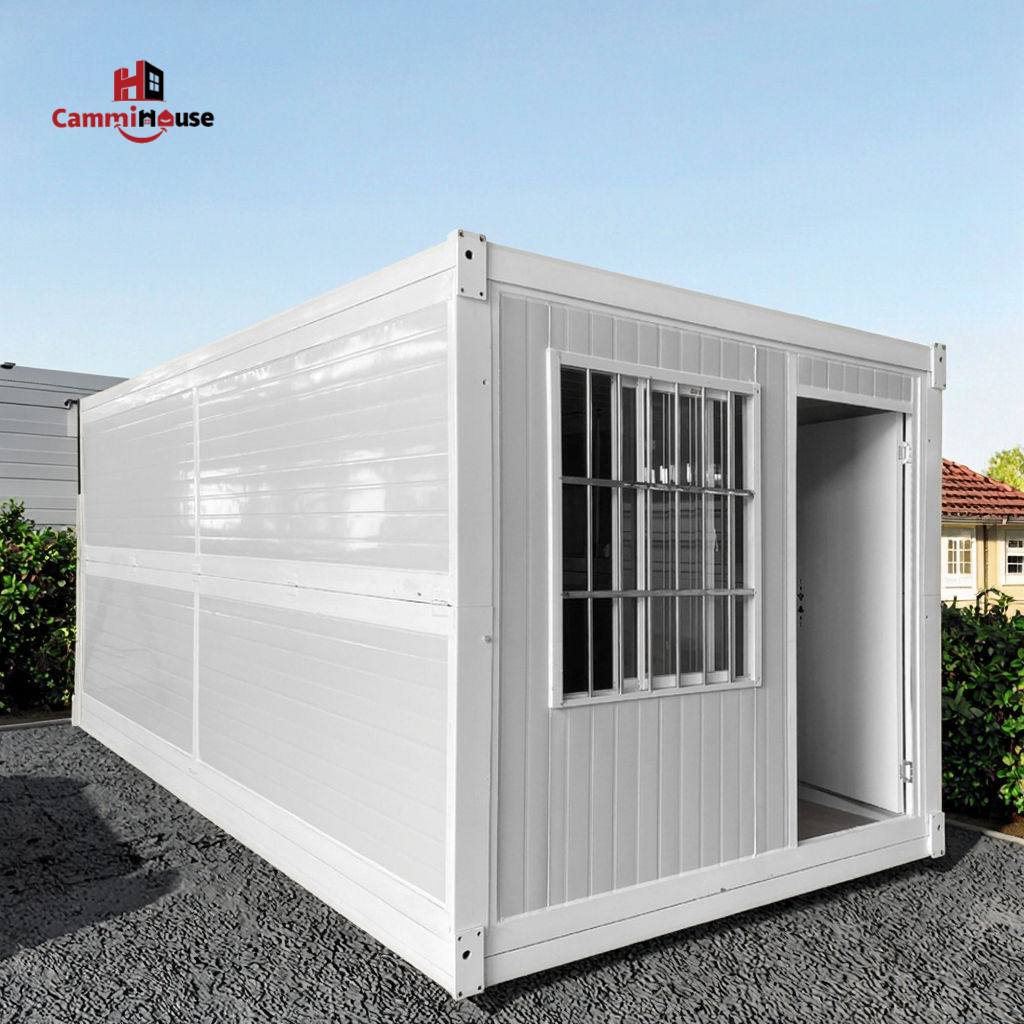
An expandable container house is a prefabricated building that increases its interior space through sliding or folding structural sections. A standard 20ft unit can expand from approximately 160 sq ft to 320–480 sq ft, creating full living zones without combining multiple containers.
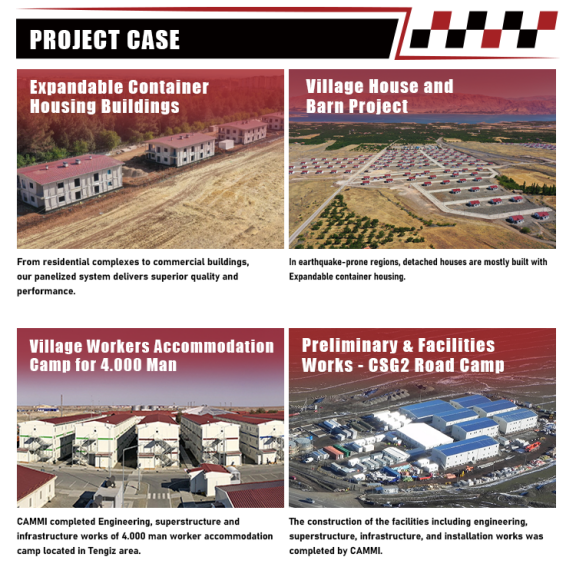
Expandable container houses are widely used for:
Residential housing
Resorts and glamping projects
Temporary offices and workforce housing
Remote or fast-deployment sites
How Does the Expansion Mechanism Work?
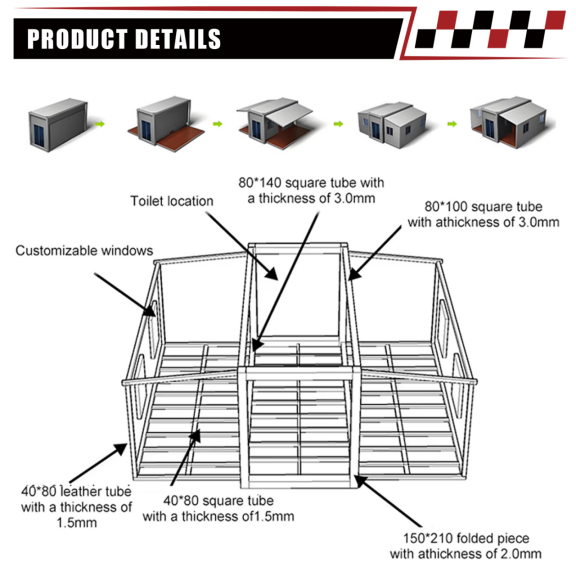
Telescopic Side Expansion Design
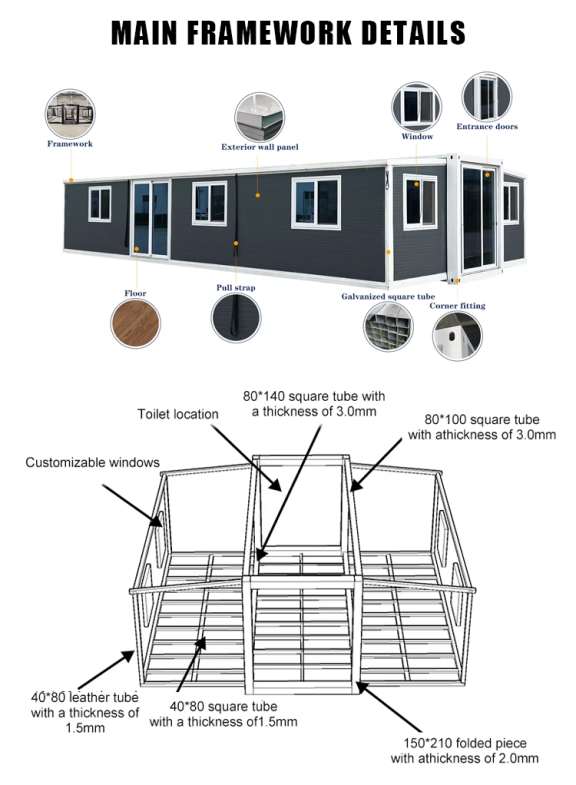
Most expandable container house systems use telescoping side panels that slide outward from a fixed central module. The center section remains stationary and contains all permanent functions such as bathrooms, kitchens, and utility connections.
Expandable side sections move horizontally along steel guide rails integrated into the floor and roof structure. Once fully extended, the system locks into position, transforming the compact container into a wide, open interior space.
Typical expansion increase:
100%–300% floor area gain
No additional container modules required
Weight Distribution and Structural Balance
To maintain stability, expandable container houses are engineered with controlled weight distribution. Heavier components remain in the center module, while expandable sections contain lighter living or sleeping areas. This keeps the center of gravity stable during and after expansion.
Structural design ensures the expanded configuration meets wind and load standards for permanent occupancy.
Hydraulic vs Manual Expansion Systems
Hydraulic Expansion Systems
Hydraulic systems use electric pumps and cylinders to deploy expandable sections quickly and evenly. Expansion typically takes 30–40 minutes and can be completed by a single operator.
Advantages: Fast deployment - Reduced labor requirements - Smooth and synchronized movement
Considerations: Requires power supply during installation - Periodic hydraulic maintenance
Manual Expansion Systems
Manual systems rely on winches, cables, and pulley mechanisms. Two operators can complete expansion within 60–90 minutes.
Advantages: No electrical dependency - Lower upfront cost - Simpler mechanical structure
Considerations: Longer installation time - Manual labor required
Structural Stability After Expansion
Locking and Load Transfer Systems
Once expanded, the container house is secured using mechanical locking pins and brackets. These connections transfer wind and structural loads from the expandable sections back to the main frame and foundation.
The expansion mechanism itself does not support loads after deployment—structural stability relies entirely on the locking system.
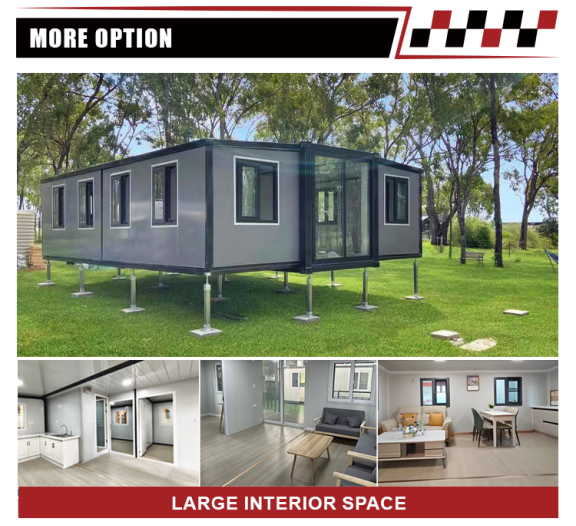
Adjustable Support Legs
Expandable sections extend beyond the original container footprint, requiring additional ground support. Adjustable steel support legs are deployed during expansion to: - Distribute floor loads - Level the structure on uneven terrain - Improve long-term stability
This allows expandable container houses to perform reliably on a wide range of site conditions.
Sealing and Weatherproofing Systems
How Expansion Joints Stay Weather-Tight
Weatherproofing is a critical design challenge for expandable container houses. Expansion joints use multi-layer sealing systems, typically combining: - EPDM compression seals - Flexible sealants - Exterior flashing or overlapping panels
These seals accommodate movement while preventing water and air infiltration in heavy rain, wind, and temperature changes.
Installation Process and Site Requirements
Foundation and Site Preparation
Expandable container houses require a larger foundation footprint than standard containers. Common foundation options include: - Concrete piers - Strip footings - Steel or helical ground anchors
The collapsed unit is placed first, utilities are connected to the central module, and expansion follows after positioning.
Installation Timeline
A trained crew can typically complete installation within one working day, including:
1. Positioning the collapsed unit
2. Utility connections
3. Expansion deployment
4. Locking and leveling
5. Final inspection
Maintenance Considerations
Routine Maintenance Needs
Expandable container house systems require periodic inspection of: - Guide rails and alignment - Locking mechanisms - Seals and joints - Hydraulic or cable components
Most maintenance tasks are simple and low-cost, especially when expansion occurs only once during initial installation.
Compared with traditional buildings, expandable container houses offer lower long-term maintenance complexity due to modular construction.
Frequently Asked Questions About Expandable Container Houses
How many times can an expandable container be expanded?
Most systems are designed for 50–100 expansion cycles. In permanent installations, expansion usually occurs once and remains fixed.
Can expandable container houses be stacked?
Expandable units are generally not stackable due to moving side sections. Multi-story designs require non-expandable containers or special engineering solutions.
Is the structure safe after expansion?
Yes. Once locked, the expandable container house behaves as a fixed structure. Expansion mechanisms are inactive after deployment.
Final Thoughts: Is an Expandable Container House Right for You?
Expandable container house systems offer a unique balance between compact transport size and generous living space. By combining modular engineering, controlled expansion mechanisms, and durable materials, they provide a practical solution for modern housing and commercial applications.
Choosing the right system depends on site conditions, usage frequency, and budget—but when properly engineered, expandable container houses deliver strong long-term value.