
1. Structural Frame: Engineered for Hinge-Cycle Fatigue
Why Corten Steel Outlasts Galvanized Alternatives
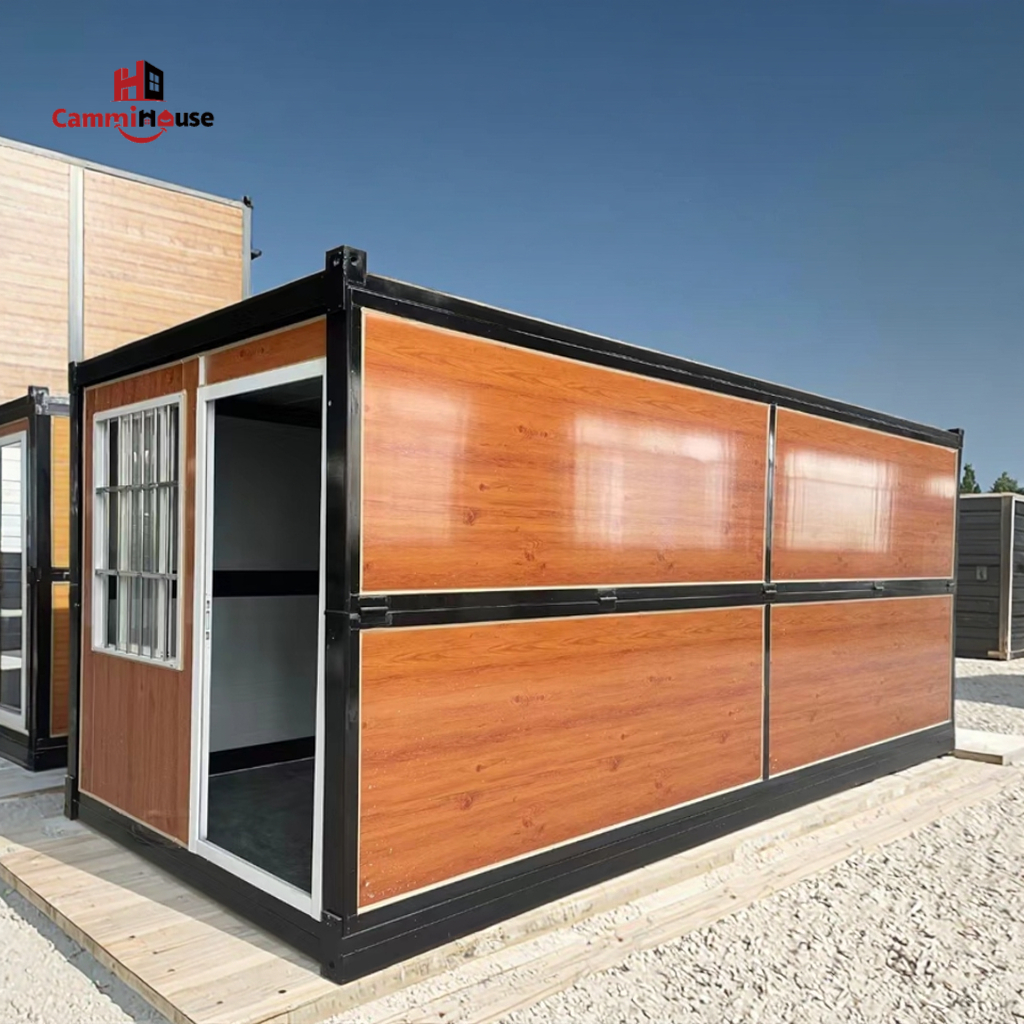
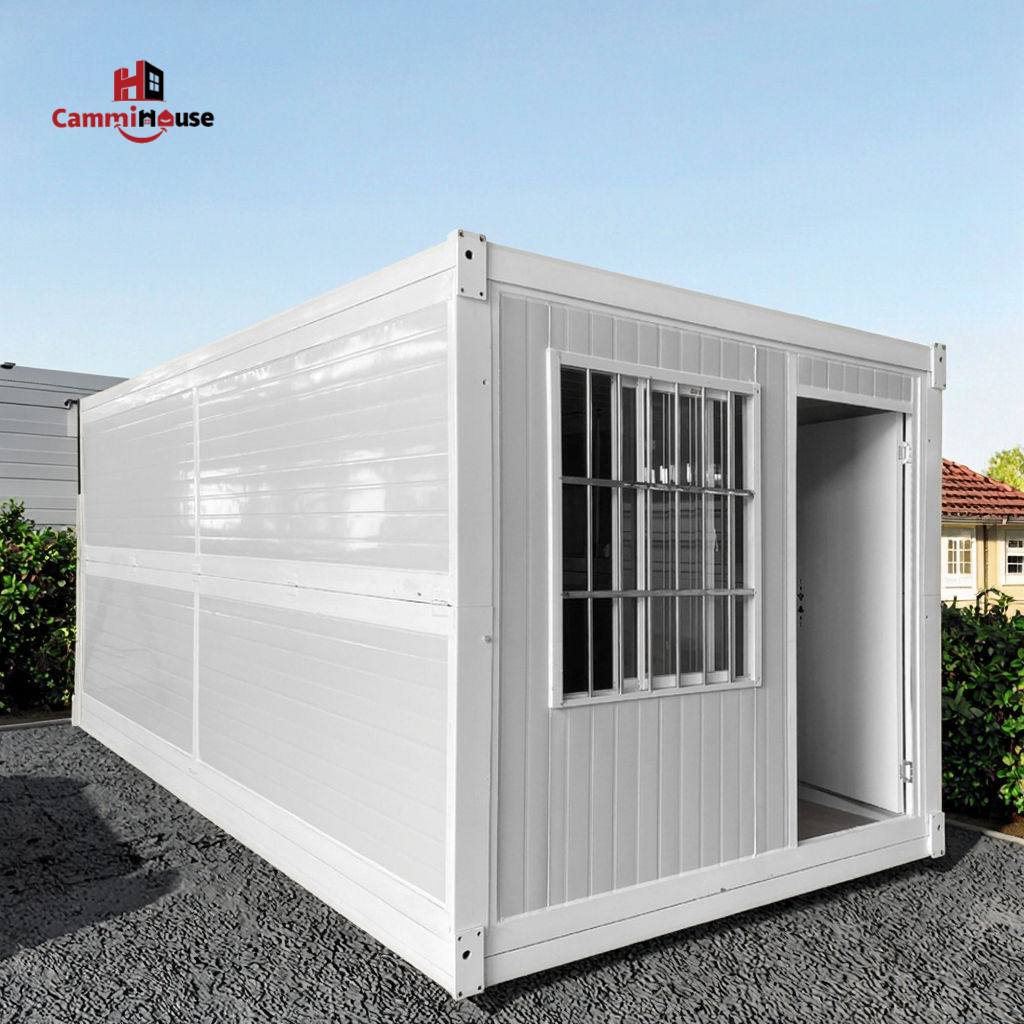
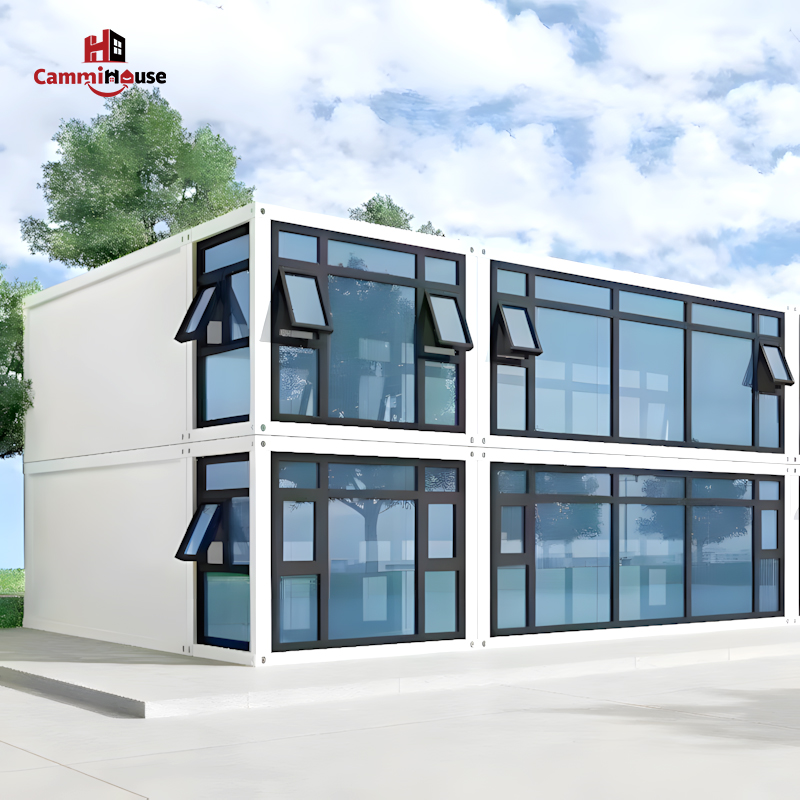
Foldable units survive harsh camps because the hinge-loaded frame is engineered like a shipping asset, not a temporary shed. A shipping container home frame in Corten steel resists 500+ fold/unfold cycles without weld cracking, per ISO 1496-1 fatigue testing. In a 2024 Cammihouse project survey for a Mongolian copper mine, 96 foldable units logged 4 redeployments across 26 months with zero frame failures.
2. Wind & Seismic Loads: Rated to Category-3 and Zone-4
Anchoring Specs That Hold in Open Pits
Foldable camps stay anchored in cyclones because base rails are bolted to engineered footings rated under ASCE 7-22 to sustain 180 km/h winds. AS/NZS 1170 compliance covers seismic Zone-4 movement common to Chilean copper belts. Pilbara deployments (Western Australia) survived Cyclone Ilsa (2023) at 218 km/h gusts with no structural displacement, per BoM post-event field reports.
3. Thermal Envelope: –40 °C to +55 °C Without HVAC Overload
PU Sandwich Panels in Real Climate Tests
Camp dwellers stay productive across 95 °C of seasonal swing because the envelope is engineered, not retrofitted. A modern container home with 75 mm PU sandwich panels (U-value ≈ 0.32 W/m²K) holds 22 °C interior temperature with 30% less HVAC load than stick-built portacabins (ASHRAE 2023). Saudi NEOM site logs show indoor temperatures stable at 24 °C during 52 °C summer afternoons.
4. Dust, UV & Corrosion: Coatings That Last 8+ Years
Salt-Spray and Iron-Ore Pit Evidence
Foldable units resist mining-environment corrosion because exteriors use 80-micron epoxy primer plus 60-micron PU topcoat, tested to ISO 9227 for 1,000+ hours salt-spray exposure. Iron-ore dust at Pilbara sites is abrasive enough to wear standard galvanizing in 18 months, yet Cammihouse units deployed in 2016 still show <5% coating degradation by 2024, per ASTM D610 visual ratings on third-party audits.
5. Interior Layouts: Designed Around Shift-Roster Realities
Same Shell, Multiple Crew Configurations
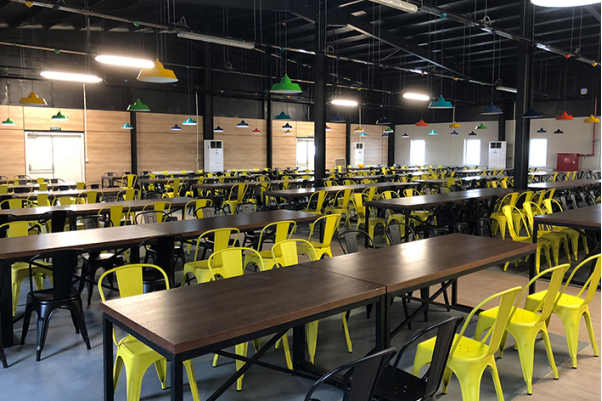
Foldable shells absorb shift-roster changes because interior partitions are non-load-bearing and reconfigurable in 4–6 hours. custom container house projects for a 2024 Saudi NEOM EPC camp delivered 6-bed worker dorms, 2-bed supervisor ensuites, and a 12-seat mess hall on the same 40-ft chassis. Effective container house design maps room mix to the camp’s actual rotation pattern, not catalog templates.
6. Fire, Acoustic & Air Quality: Hotel-Grade Numbers
STC, PM2.5, and ASTM E84 Compliance
Foldable units protect occupant health because envelope ratings match 3-star hotel standards. PU sandwich walls deliver STC 32–35 (acoustic) and ASTM E84 Class A fire-spread rating. HEPA-filtered fresh-air units hold indoor PM2.5 below 15 μg/m³ even in active iron-ore pits, where outdoor PM2.5 routinely exceeds 150 μg/m³ (WHO 2023 air-quality reference).
7. Logistics Resilience: Folded Footprint Survives Rough Roads
ISO 1496-1 Footprint Equals Standard Freight
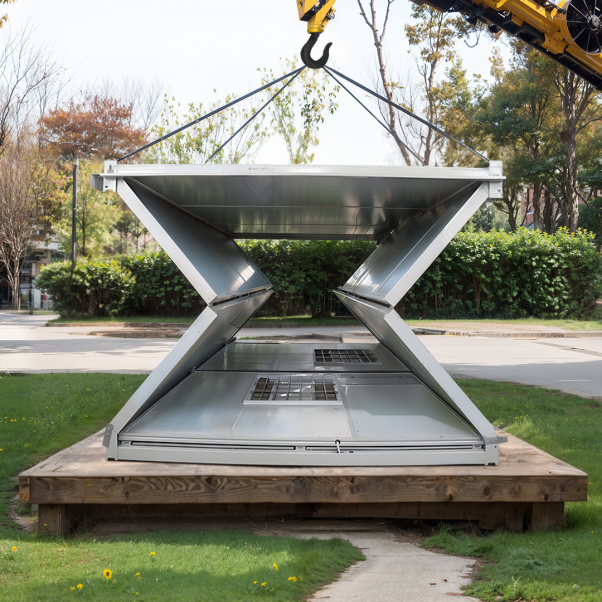
Foldable camps reach remote sites intact because folded dimensions match ISO container freight. A modular container home travels at 14.4 m² folded — fitting any container vessel, flatbed, or low-loader without oversize permits. For a Chilean Andes lithium project, 200 folded units crossed 1,400 km of unpaved switchbacks (4,200 m elevation) with zero shipping damage, vs. 12% loss rate previously recorded on rigid prefab convoys.
8. Sourcing & Compliance: What to Audit Before You Buy
Factory-Floor Checklist for Mining Buyers
Foldable camps perform in harsh service only when factory QA is documented. Demand CE marking (EN 1090 welding), AS/NZS 1170, and UL-listed electrical packages — backed by third-party test reports, not self-declarations. Audit any container house factory for welder certifications, salt-spray records, and hinge-cycle test logs. A prefab container housesupplier like Cammihouse runs all three certifications on one production line, simplifying multi-country compliance for a global hotel camp rollout.
FAQ
Q1: How well do foldable container homes hold up in cyclone-prone regions? Foldable units anchored to engineered footings withstand sustained winds of 180 km/h per ASCE 7-22 and seismic Zone-4 movement under AS/NZS 1170. Australian Pilbara deployments survived Cyclone Ilsa (218 km/h gusts, 2023) with no structural displacement, per Bureau of Meteorology field reports. Always specify base-rail bolt-down anchoring rather than relying on unit dead weight alone.
Q2: Does repeated folding cause structural fatigue over time? Not when frames are built to ISO 1496-1 standards with Corten steel. Hinge welds tested at 500+ fold/unfold cycles show no cracking under laboratory fatigue conditions. A 2024 Cammihouse Mongolian copper-mine project logged 96 units across 4 redeployments in 26 months with zero frame failures, confirming long-term suitability for rotating mining and EPC camp assignments.
Q3: How effective is insulation in extreme desert or sub-Arctic camps? 75 mm PU sandwich panels (U-value ≈ 0.32 W/m²K) maintain 22 °C interiors across –40 °C to +55 °C outdoor swings, with 30% lower HVAC load than stick-built portacabin alternatives (ASHRAE 2023 field data). Both Saudi NEOM summer logs and Mongolian winter deployments confirm stable indoor comfort without supplementary insulation layers or diesel heater oversizing.
Author: Justin Mercer, Cammihouse Technical Team.
