
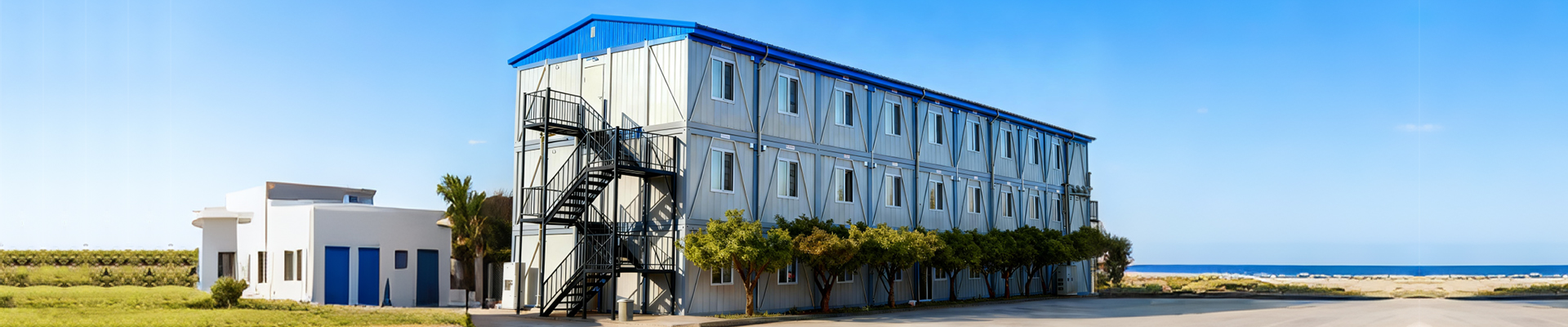
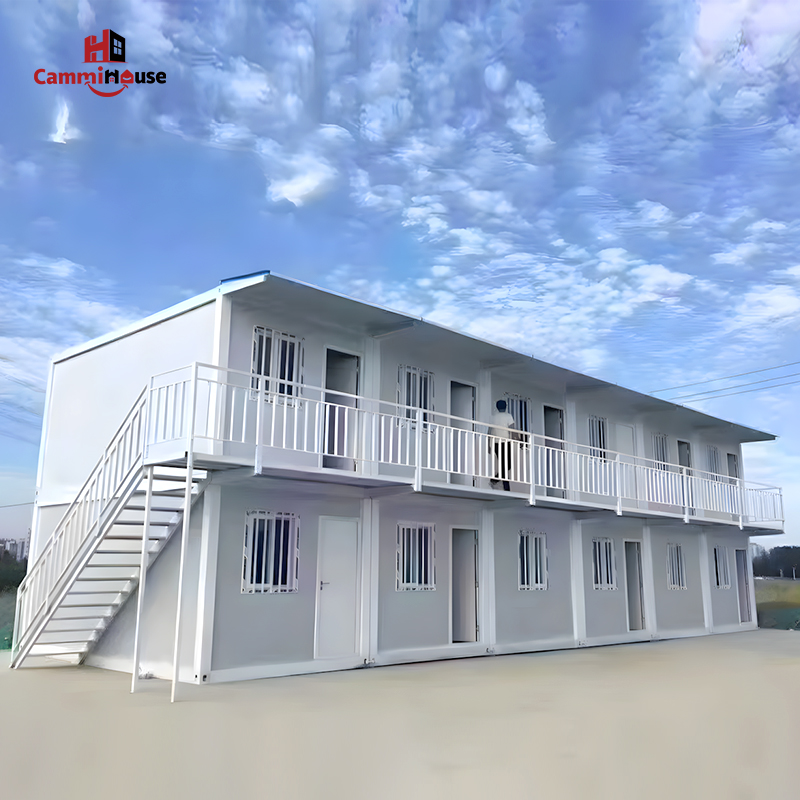
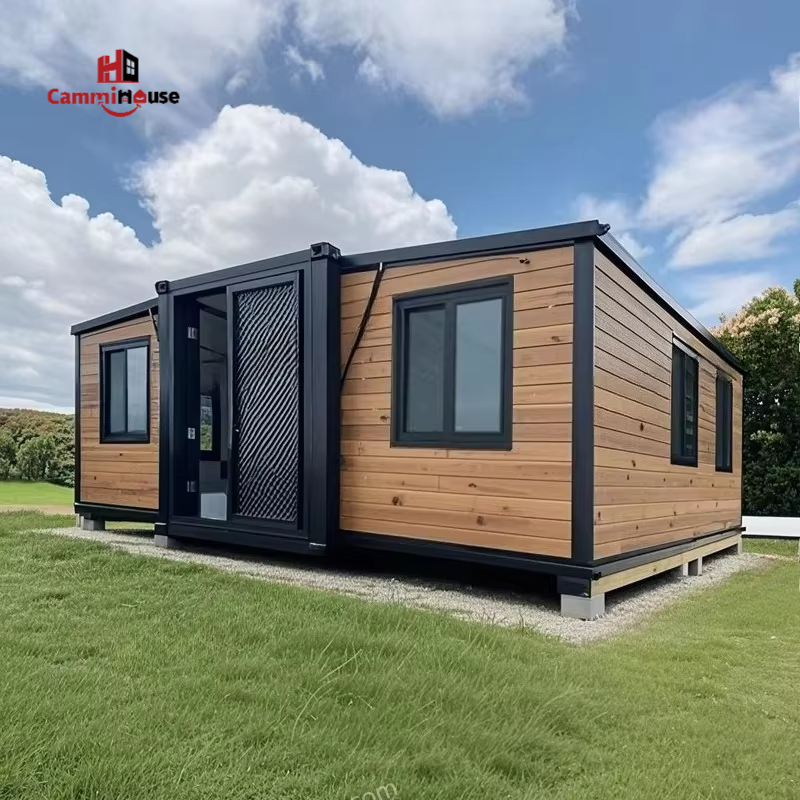
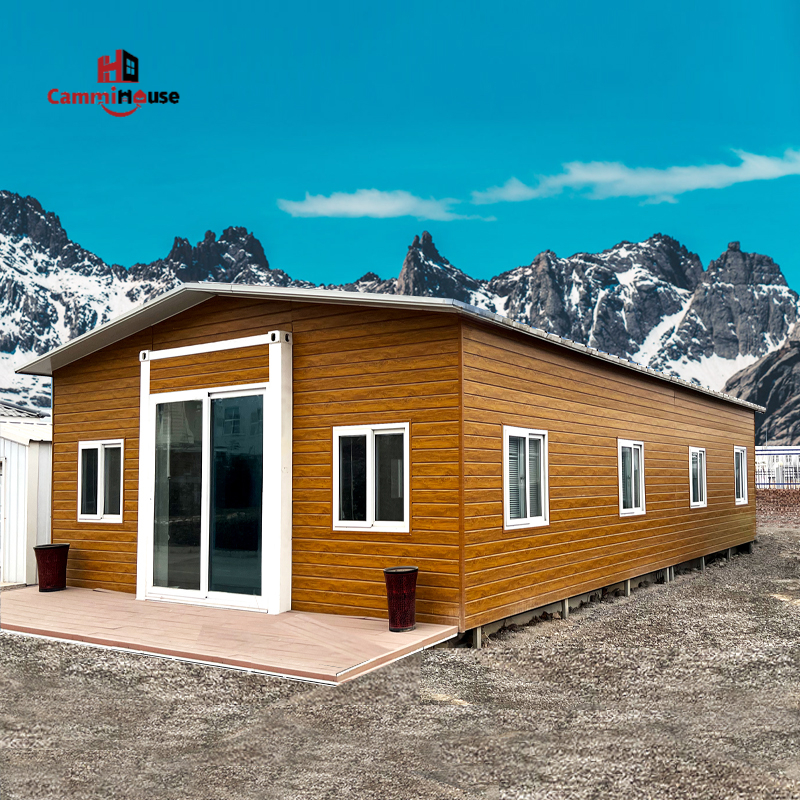
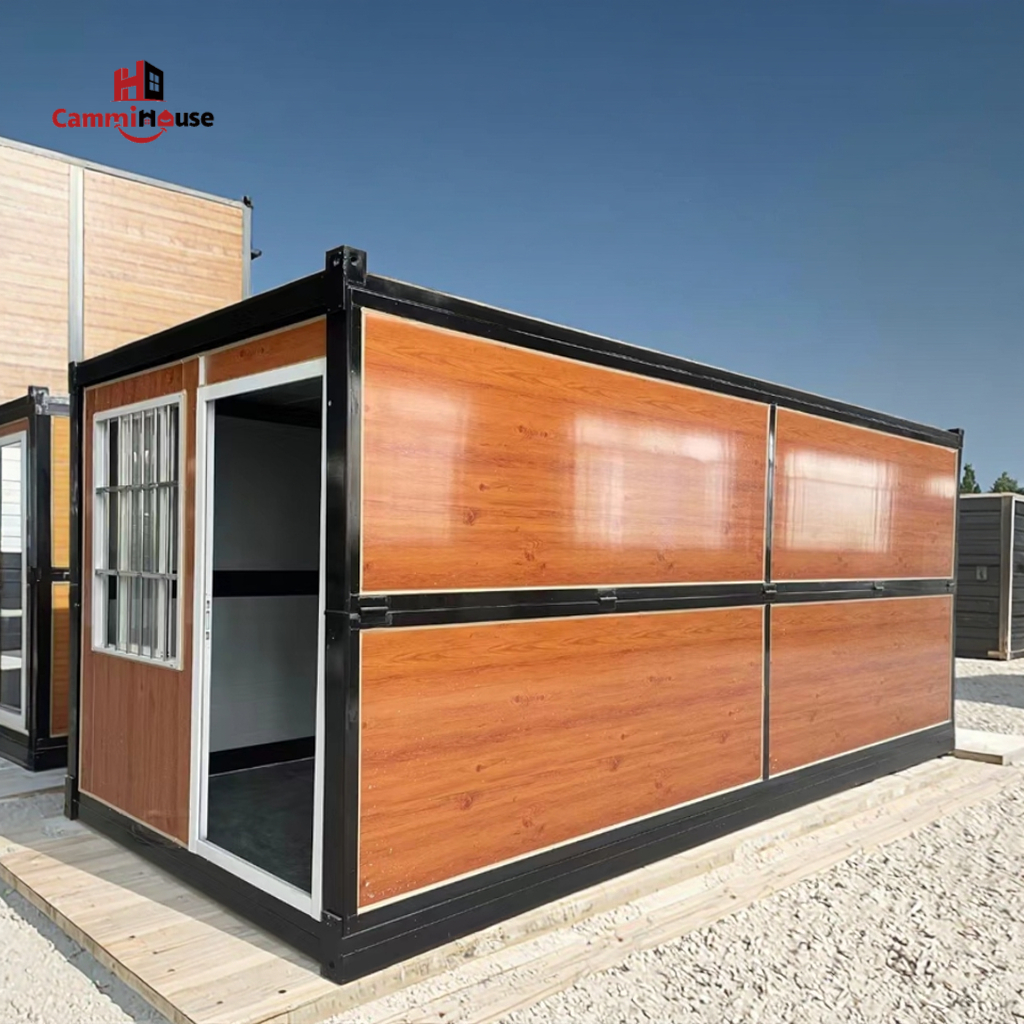
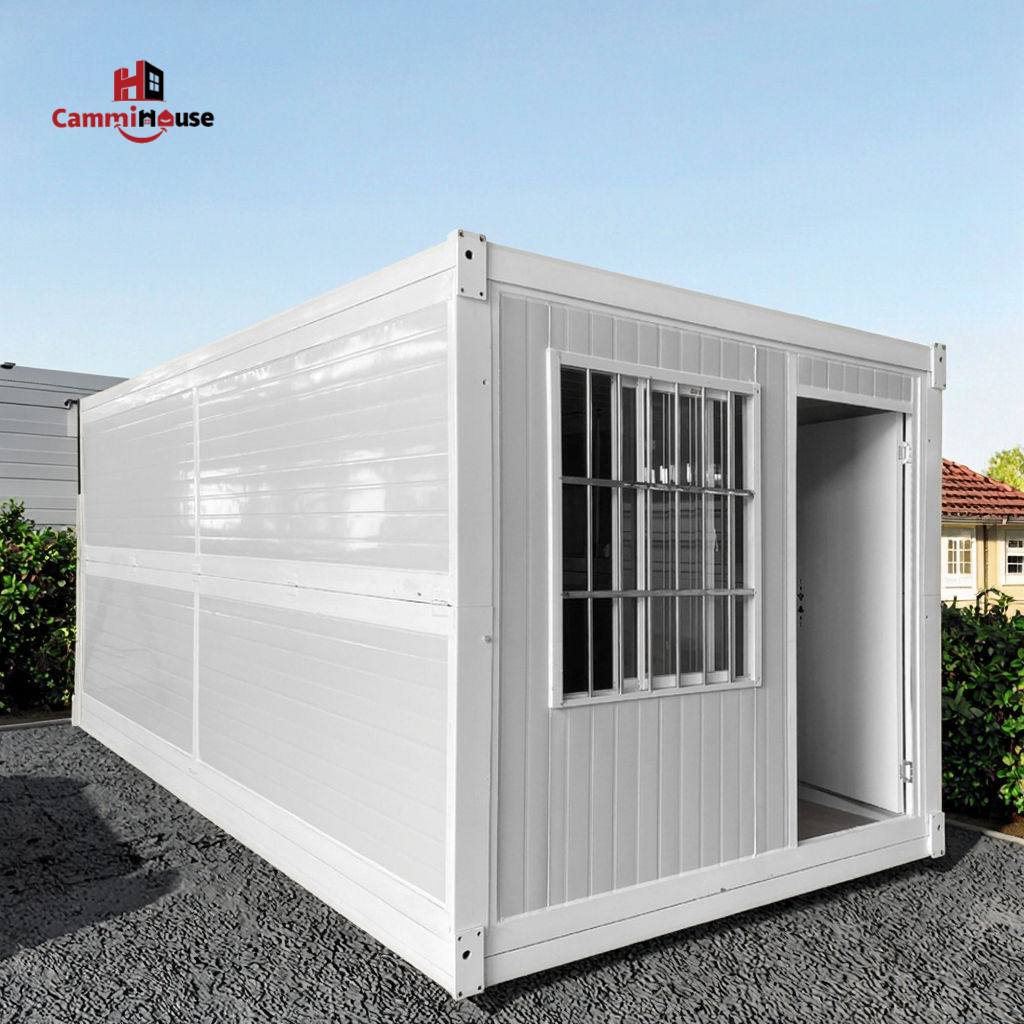
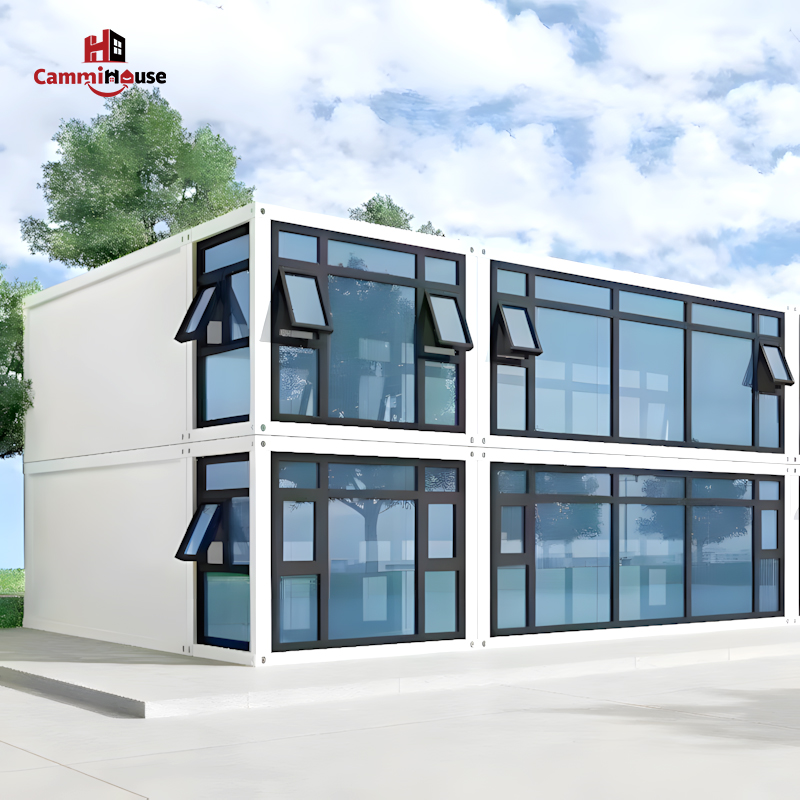
Yes — under the right conditions, a folding container house can go from flatpack to fully functional shelter in as little as 4–8 hours. That claim surprises most people, but the engineering behind modern expandable container homes makes it possible. This guide walks through exactly how it works, what affects the timeline, and what buyers should verify before assuming a one-day build applies to their project.
What Is a Folding Container House?
Design Principle: Flat Shipping, Fast Expansion
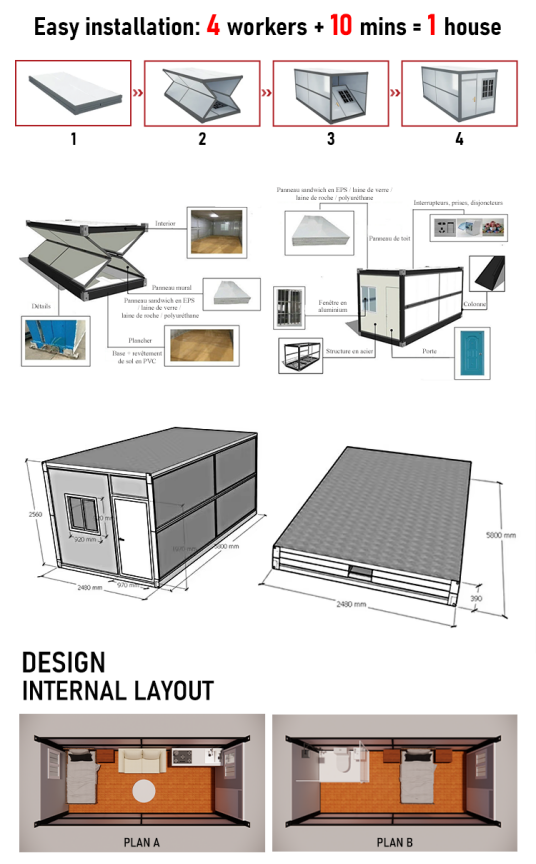
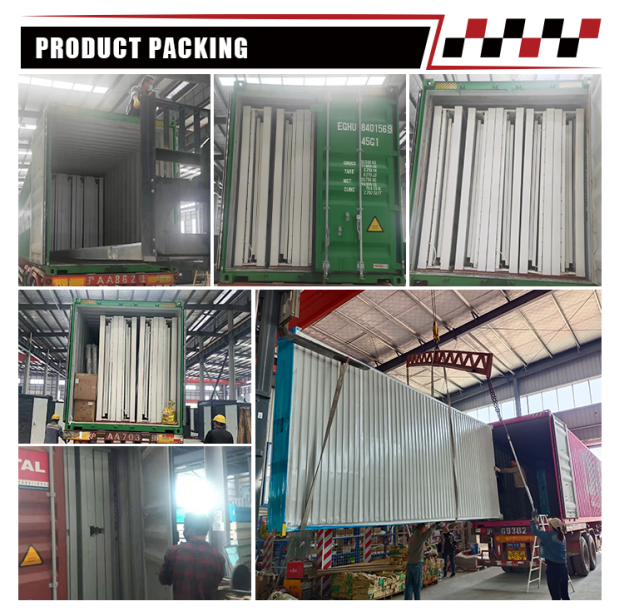
A folding container house — also called a collapsible container home or foldable modular house — is a prefabricated steel structure engineered to collapse to roughly 1/4 of its deployed volume for transport. Side walls fold inward, roof panels hinge downward, and the entire unit ships as a compact flatpack. On-site, hydraulic or manual mechanisms reverse the process. The result is a weatherproof, insulated living unit without poured foundations or conventional framing.
How It Differs from a Standard Shipping Container Conversion
Standard container conversions repurpose ISO shipping containers (20 ft or 40 ft) through cutting, welding, and interior fitting — a process requiring days or weeks on-site. Folding container homes, by contrast, arrive pre-wired, pre-insulated, and pre-finished. The difference matters for timeline, site access, and permit requirements. Cammihouse foldable units, for example, ship with pre-installed electrical conduit, wall cladding, and door/window frames — no cutting required at the job site.
The One-Day Installation Process: Step by Step
Site Preparation (Before Delivery Day)
One-day deployment depends on prep work done in advance. The site needs a level, compacted surface — concrete pad, compacted gravel, or helical piers work well. Most folding units weigh 3,500–5,500 kg and require a crane or telehandler with at least a 5-tonne lift capacity. Utility stub-outs (power, water, sewer) should be in place before the unit arrives. Skipping this step is the most common reason "one-day installs" turn into three-day jobs.
Delivery and Unfolding (2–4 Hours)
A flatbed truck delivers the collapsed unit. A crane lifts it onto the prepared pad, workers secure the base frame, then begin the unfolding sequence: floor panels lock out, wall sections swing up, roof hinges into place. On Cammihouse 40 ft expandable models, the full structural deployment takes approximately 2–3 hours with a two-person crew. International customer feedback collected in 2024 shows a median unfolding time of 2.5 hours for experienced crews, rising to 4 hours for first-time installers (source: Cammihouse customer installation survey, n=87).
Connection and Final Checks (1–2 Hours)
Once the structure is deployed, the remaining time covers connecting utilities, sealing joints with provided weatherstrip tape, installing roof drainage, and completing a walk-through checklist. Cammihouse units include a QR-linked installation guide and a 60-point inspection sheet. For off-grid setups — solar panels, rainwater collection, composting toilets — plan an additional half-day. The unit is structurally complete and lockable the same day in most single-unit deployments.
Factors That Affect the Timeline
Unit Size and Configuration
A single 20 ft folding container house with no slide-out extensions is the fastest to deploy. A 40 ft expandable container home with bilateral side rooms takes longer — plan 6–8 hours. Multi-unit arrangements (two or more containers joined into an L-shape or linear plan) require additional structural connections and alignment work, typically adding a half-day per join. Knowing your configuration upfront helps you schedule the right crew size and equipment.
Local Weather and Ground Conditions
High wind (above 35 km/h) halts crane operations for safety. Soft or uneven ground can add hours if re-leveling is needed mid-install. Frost in the substrate can prevent anchor bolt setting. These are not product defects — they are standard site constraints. Builders in coastal or highland areas should build a weather buffer into project scheduling, regardless of the container brand.
Permit and Inspection Requirements
Physical installation speed is separate from regulatory approval speed. In many US jurisdictions, a building permit for a permanent accessory dwelling unit (ADU) takes 4–12 weeks. In rural or agricultural zones, permits may not be required at all for structures under a certain square footage. Cammihouse provides CE-certified engineering drawings and load calculations for permit submissions, which shortens approval time compared to custom builds. Always confirm local zoning before placing an order.
Real-World Applications Where One-Day Installation Delivers Value
Emergency and Disaster Relief Housing
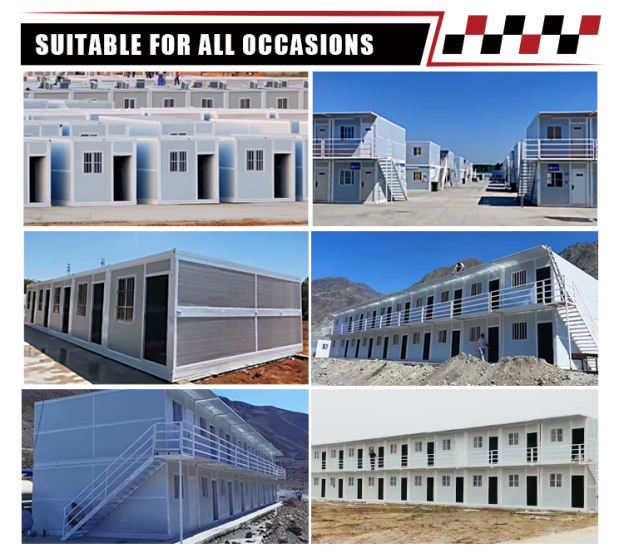
Speed is the core value proposition in humanitarian deployments. Organizations using expandable container shelters in post-earthquake responses (Turkey 2023, Morocco 2023) reported full camp setup — 20+ units — within 48 hours, compared to 2–3 weeks for traditional temporary housing. The folding format enables rapid air freight or truck delivery to sites where construction crews are scarce.
Remote Worksite Accommodation
Mining, forestry, and infrastructure projects routinely need accommodation within tight mobilization windows. A foldable modular house deployed in one day means workers are housed on-site the night of arrival rather than driving 90 minutes each way to the nearest town. Several Cammihouse clients in Southeast Asian mining operations reported labor productivity gains of 12–18% after switching from daily commutes to on-site container housing.
Backyard ADU and Vacation Cabin
Homeowners use folding container homes as backyard ADUs, vacation retreats, and short-term rental properties. In states like California and Oregon, ADU-friendly legislation has accelerated demand for structures that minimize on-site construction time — reducing neighbor disruption, contractor scheduling risk, and per-day labor cost. A one-day install means a single weekend project rather than a multi-week construction site in your backyard.
What Cammihouse Includes to Support Fast Deployment
Cammihouse designs every folding container home for installer confidence, not just factory efficiency. Standard features that support rapid deployment include: pre-run electrical conduit with labeled junction points, pre-fitted UPVC windows and security doors, factory-applied insulation (EPS sandwich panels, R-value ≥ 3.5), numbered component labels matching the installation manual, and a dedicated technical support line active during installation day. Units ship with all fasteners, sealants, and tools required for structural completion. Optional extras — solar-ready cable conduits, gray water outlets, and communication port sleeves — can be added at order without affecting field installation time.

Frequently Asked Questions
Q: Do I need a crane to install a folding container house?
In most cases, yes. A crane or telehandler is required for safe placement of the collapsed unit onto its foundation. Some compact 20 ft models under 3,000 kg can be positioned with a heavy forklift, but a crane gives more control and is standard for 40 ft units. Crane rental typically costs $500–$1,200 for a half-day, depending on location and lift capacity. Cammihouse can connect buyers with installation contractors in major regions who bring their own equipment.
Q: Is a one-day folding container home as structurally sound as a conventional house?
Yes, when built to standard. Folding container homes constructed with Q345B steel frames and EPS/rock wool sandwich panels meet or exceed the structural requirements for wind loads up to 120 km/h and seismic Zone 8 ratings (GB50011 standard). The folding mechanisms use industrial-grade hinges rated for 10,000+ cycles. Cammihouse units carry CE certification and ISO 1496 compliance documentation, which most mortgage lenders and building departments accept as equivalent to conventional structural certification.
Q: Can a folding container house be relocated after installation?
Yes — relocation is one of the key advantages of the format. A folding container home can be re-collapsed, lifted onto a flatbed, and redeployed at a new site. The process takes roughly the same time as the original install. This makes the format attractive for temporary event venues, seasonal glamping operations, and project-based worksites where the structure needs to move with the project. Note that utility disconnects and reconnects add time and require licensed tradespeople in most jurisdictions.
