
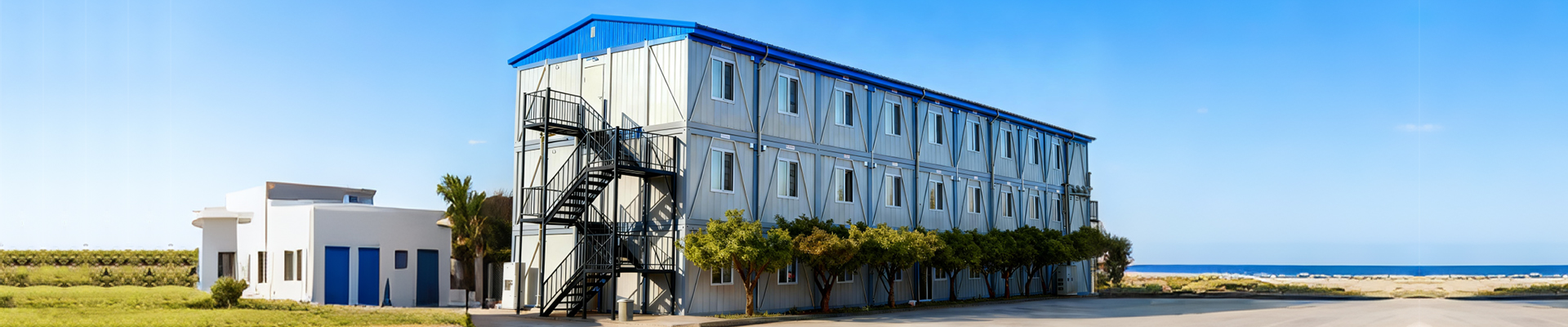
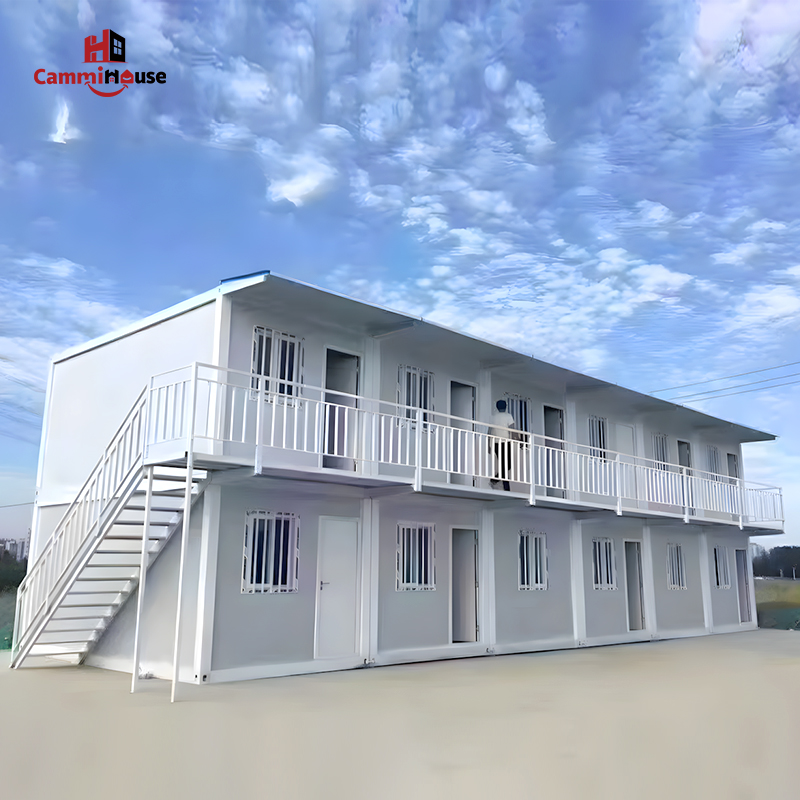
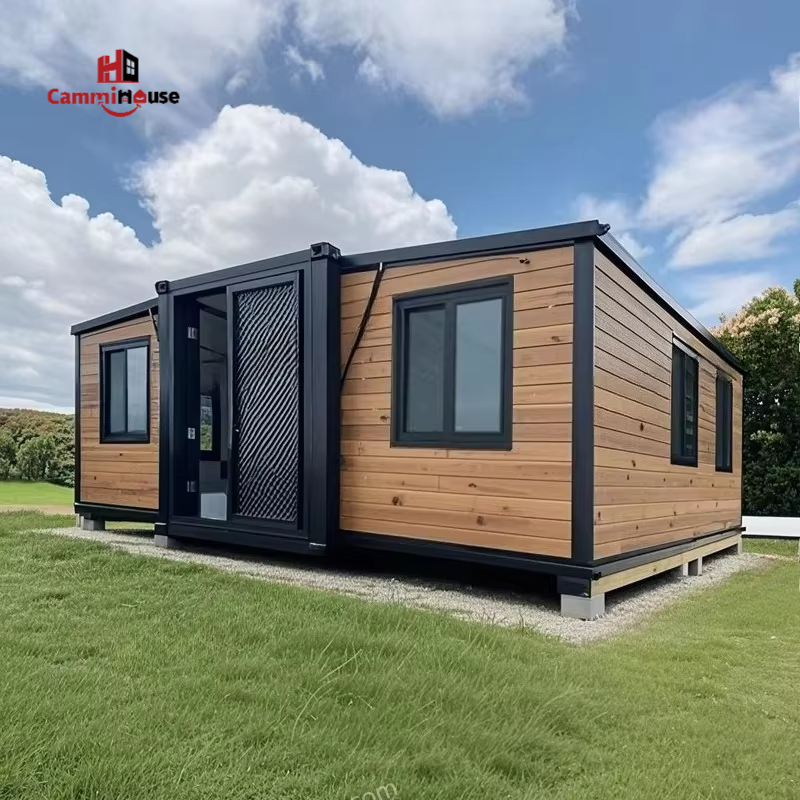
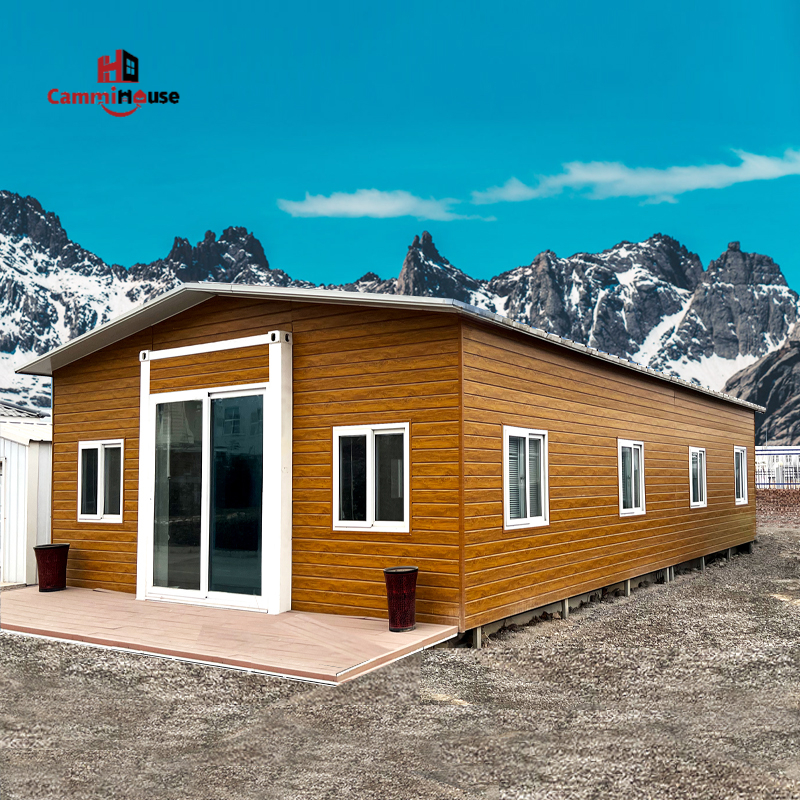
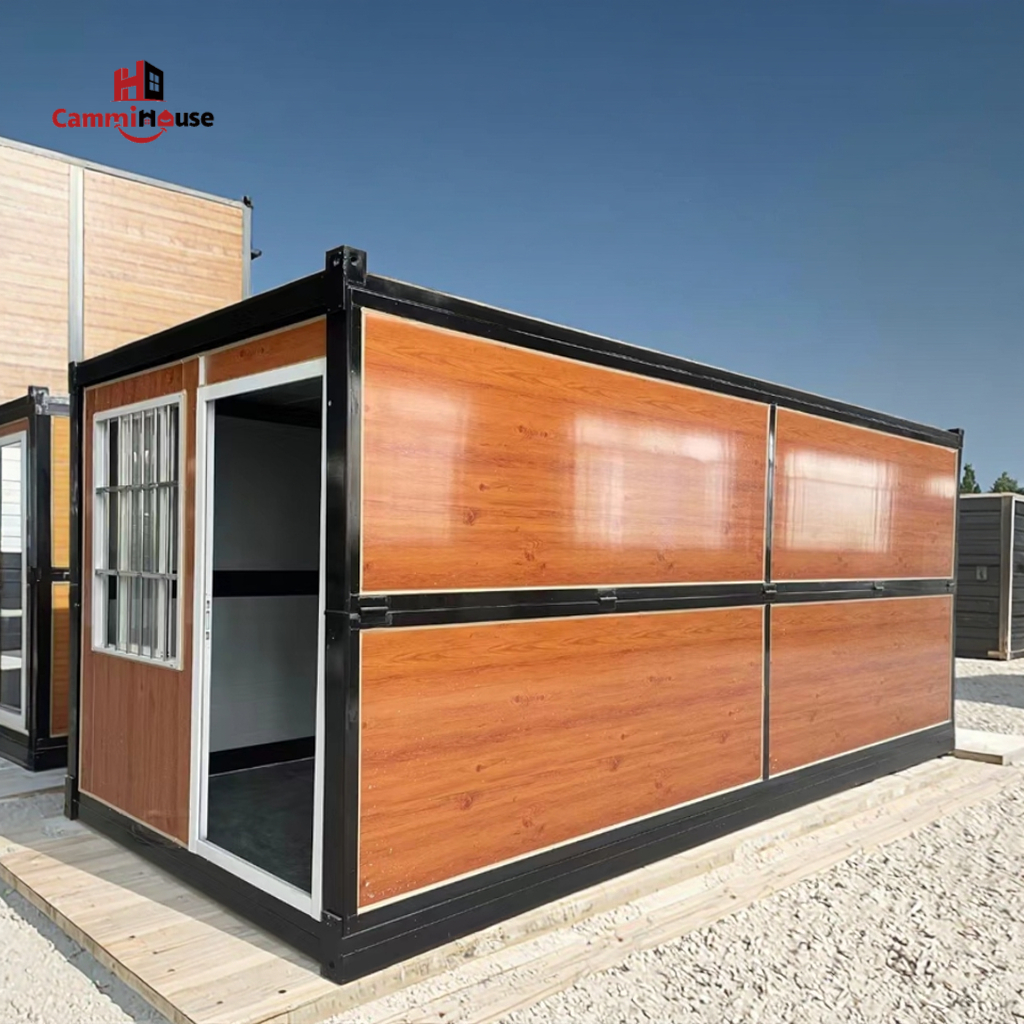
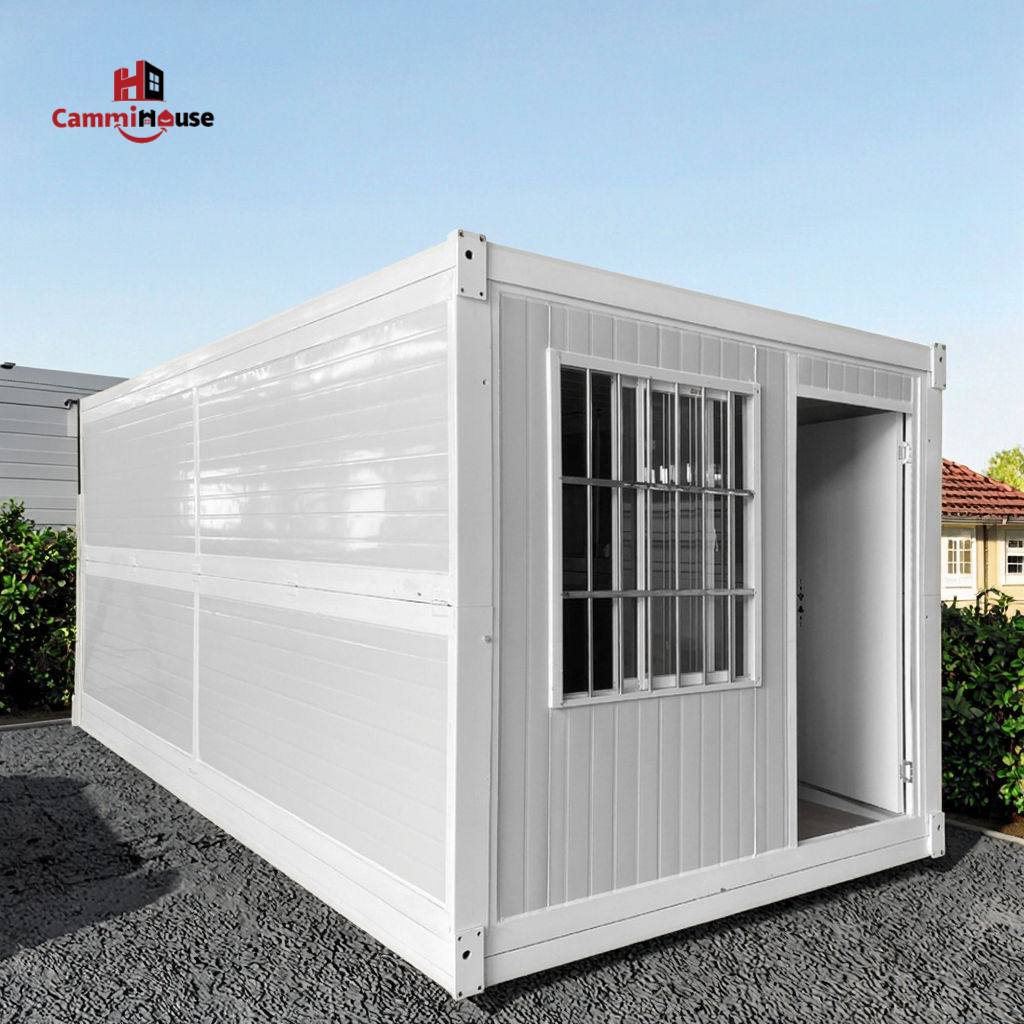
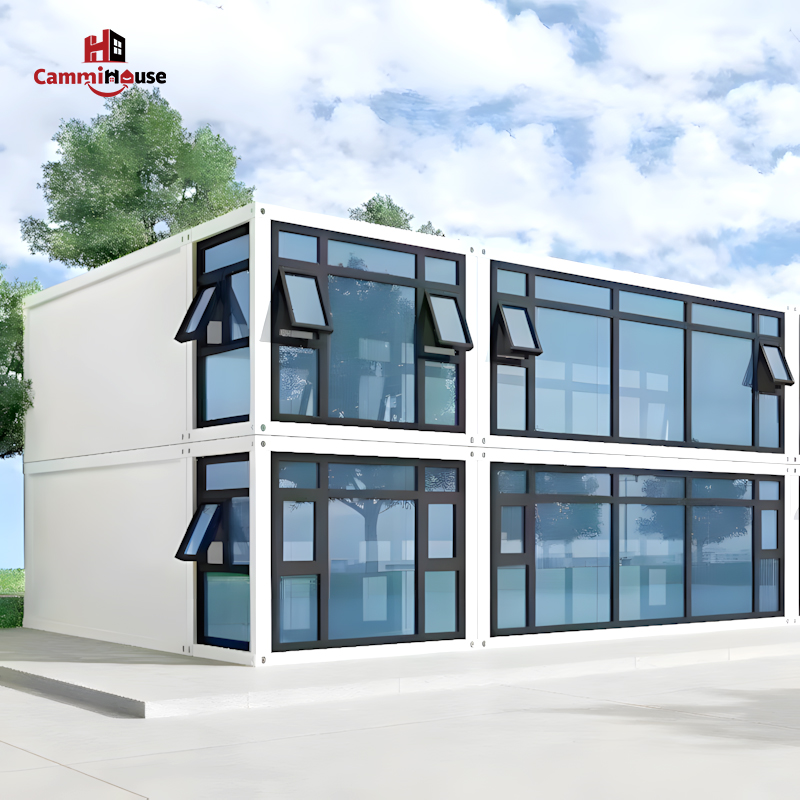
Foldable container houses have been a niche experiment for quite a while but they have become the main housing choice in a few years. People across every continent are increasingly interested in collapsible, portable, and expandable container homes, not as a trend but as a practical solution. The need for housing that can be constructed quickly, relocated when life circumstances change, and enlarged when the family grows, is driving this demand. This article explains the reasons behind this change and the features of modern foldable container homes that make them a viable alternative to the traditional building methods.
1. Speed of Installation: From Delivery to Move-In in Hours
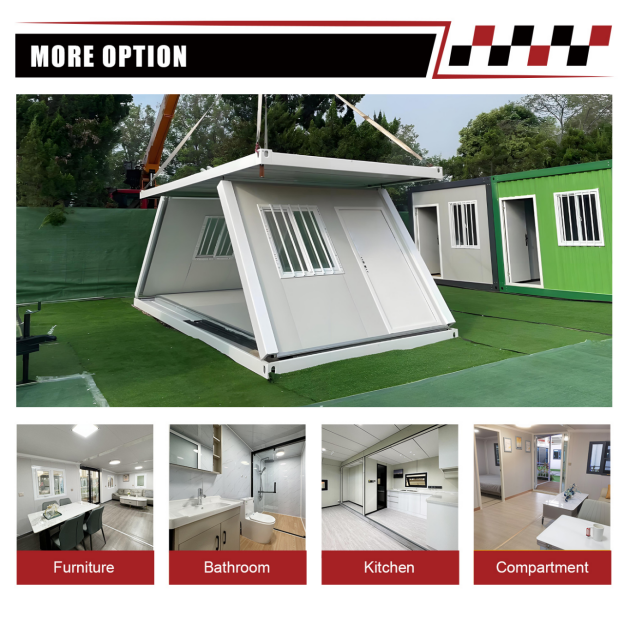
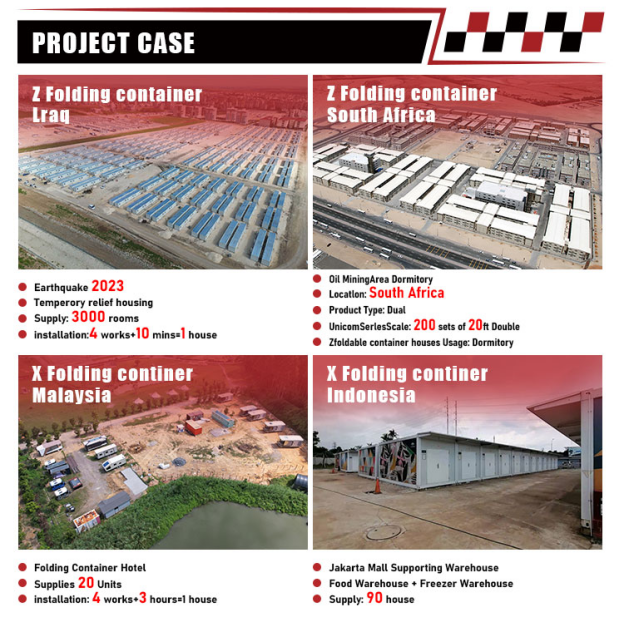
It may take from six to eighteen months to build a standard house. A foldable container house from a factory like Cammihouse can be completely installed on-site within four to eight hours. Given that the house comes from the factory already assembled - walls, insulation, electrical wires, and window frames are integrated - when it gets to the site, the workers just unfold the panels and fix them in their final positions.
Why Speed Matters More Than Ever
Emergency relief organizations, construction site managers, remote project teams are a few examples of people who need a quick and reliable shelter solution. Modular construction market worldwide reached nearly $84.48 billion in 2023 and it is expected to continue expanding at a CAGR of 6.8% till 2030 (Source: Grand View Research, 2023.). A large part of this growth is due to the emergence of portable and foldable prefab units that are deployed in time-sensitive situations. These include remote mining camps, disaster recovery zones and pop-up hospitality sites.
2. Transportability and Reusability Lower Long-Term Costs
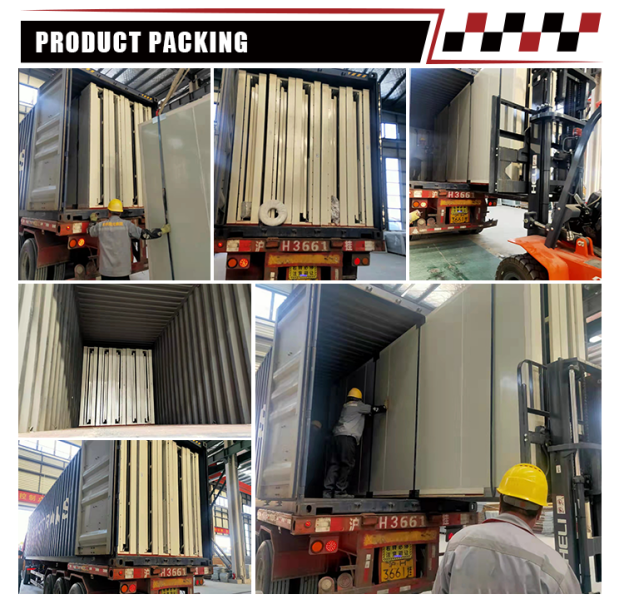
One of the major benefits of a collapsible container home is its mobility. Since the dimensions of a shipping container are standardized to a length of either 20 feet or 40 feet, foldable units can be easily transported on flatbed trucks and via intermodal cargo networks without needing special permits. On the other hand, a building that can be dismantled and relocated multiple times throughout its life has a much lower cost per use in comparison to a permanent structure which is torn down after a single project phase.
Real-World Application: Remote Worksites
Construction companies working in isolated areas often rent or buy portable container houses for their workers to live in during the project. When the project is completed, the units are folded down, loaded onto trucks, and transported to the next site. Such a system gets rid of the recurrent lodge expenses and also decreases the commuting time of workers. Cammihouse modular units are designed to be used in this reuse cycle — the structural steel frames are capable of being folded - unfolded several times without any degradation.
3. Flexible Floor Plans Suit Residential and Commercial Needs
If you think back to the first container-based buildings, then those rooms had almost no options for interior designing. Today, the expandable container homes change that. The expandable side parts help to enlarge the interior space by 30-50% after being opened without the need to increase the transport weight or volume at all. A 20-foot container that is transported at 8 feet wide can be expanded up to 14 feet wide at the location creating a very functional one-bedroom or studio layout.
From Tiny Homes to Resort Cabins
The same base unit that serves as a single-person office can be configured as a compact vacation cabin. Connect two units with a covered walkway and you have a two-bedroom retreat. This scalability has attracted boutique resort developers who want to offer guests a distinctive stay without the cost of permanent construction. Several eco-resorts in Southeast Asia and North America now operate fully with expandable container home clusters, citing faster ROI and lower land-use impact.
4. Sustainability Credentials Match Modern Buyer Priorities
A single-person office that uses the same base container can be modified to be a quite small vacation cabin. When two units are joined with a covered walkway, that becomes a two-bedroom place for a holiday. This ability to change the size has been one of the reasons for the interest of boutique resort developers who are willing to give their guests a unique experience but are not willing/have the money for constructing a permanent building. Several eco-resorts in Southeast Asia and North America have already converted their operations fully to expandable container home clusters and are very pleased with their faster ROI and lower land-use impact.
Energy Efficiency in Foldable Designs
Traditionally, metal container structures have not been great at insulating. The new generation of foldable container houses, however, are a great solution to this problem. Spray polyurethane foam (SPF) insulation that is attached to interior panels can give R-values of R-21 up to R-30 according to the panels' thickness. Together with door and window frames that are thermally broken, the energy efficiency of a high-quality collapsible container home can be the same as or even better than the one of standard residential construction in mild climate areas.
5. Regulatory Acceptance Is Expanding Globally
One of the main reasons container homes weren't embraced more quickly in the past was because of zoning-related uncertainties. Local officials did not know how to classify portable or temporary modular structures. This situation has changed. For example, Australia, the United States, Germany, and Japan have revised residential and commercial building codes which now allow prefab and modular construction — besides foldable and expandable container homes that meet the local standards.
What Buyers Should Verify Before Purchase
Foldable container house potential buyers planning on arranging their permanent installation must, first of all, check with the local authority about the classification of the structure (i.e. residential, commercial, or temporary), foundation requirements, and the permissions for utility connections. Trustworthy manufacturers will present documentation packages that will help in getting the permits. At Cammihouse, for instance, every unit is accompanied by structural load calculations, fire-rating certification, and electrical compliance documents to make the approval process easier.
6. Growing Consumer Awareness Is Driving Market Momentum
Search interest in terms like 'foldable container house,' 'portable container home,' and 'modular container house' has grown steadily over the past three years according to Google Trends data. Social media platforms, particularly YouTube and Instagram, have amplified visibility through build-process videos and completed project tours. This awareness loop — consumers see real projects, trust increases, purchase intent rises — is self-reinforcing.
What Customer Feedback Reveals
Buyers who have purchased and deployed collapsible container homes consistently highlight three benefits in post-purchase reviews: shorter wait time compared to conventional construction, lower total project cost, and satisfaction with the finished interior quality. Common upgrade requests in second purchases include larger window configurations, deck attachments, and integrated solar panel mounts — all of which Cammihouse offers as standard factory-fit options.

Frequently Asked Questions
Q: How long does it take to set up a foldable container house on-site?
A: Most foldable container houses can be deployed in four to eight hours with a small crew and basic lifting equipment. The unit arrives pre-fitted with walls, insulation, windows, and internal wiring. On-site work involves unfolding the panels, locking the structural connections, and attaching utilities. Complex multi-unit configurations may require one to two days.
Q: Can a foldable container house be used as a permanent residence?
A: Yes, in many jurisdictions. Permanent installation requires a compliant foundation — typically a concrete pad or steel pier system — and connection to municipal utilities or off-grid systems. Buyers should confirm local zoning classification before purchase. Manufacturers like Cammihouse supply full documentation packages to support residential permit applications.
Q: What is the lifespan of a collapsible container home?
A: A well-built collapsible container home constructed on a hot-dip galvanized or powder-coated corten steel frame has an expected structural lifespan of 25 to 30 years with standard maintenance. Interior finishes and mechanical systems follow typical residential replacement schedules. Units designed for repeated transport and redeployment are rated for multiple fold-unfold cycles without structural degradation.
