
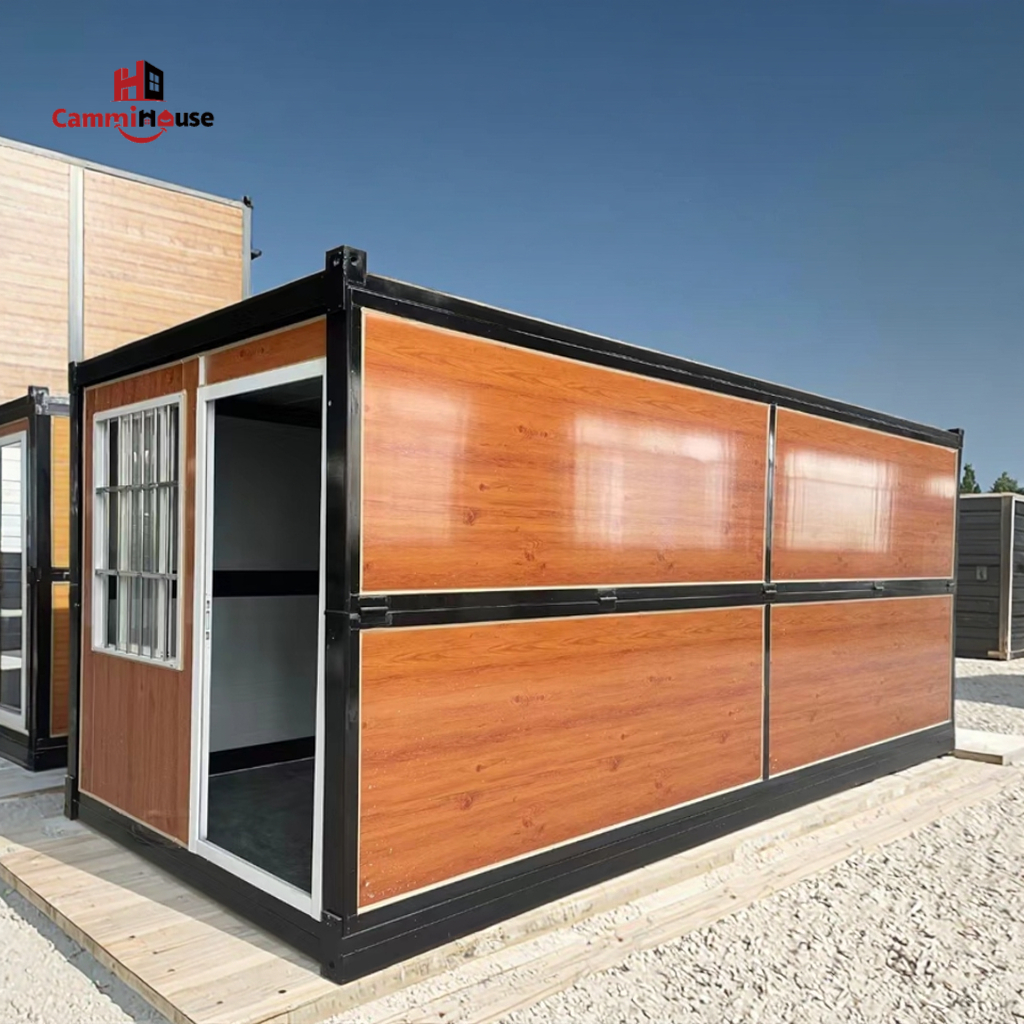
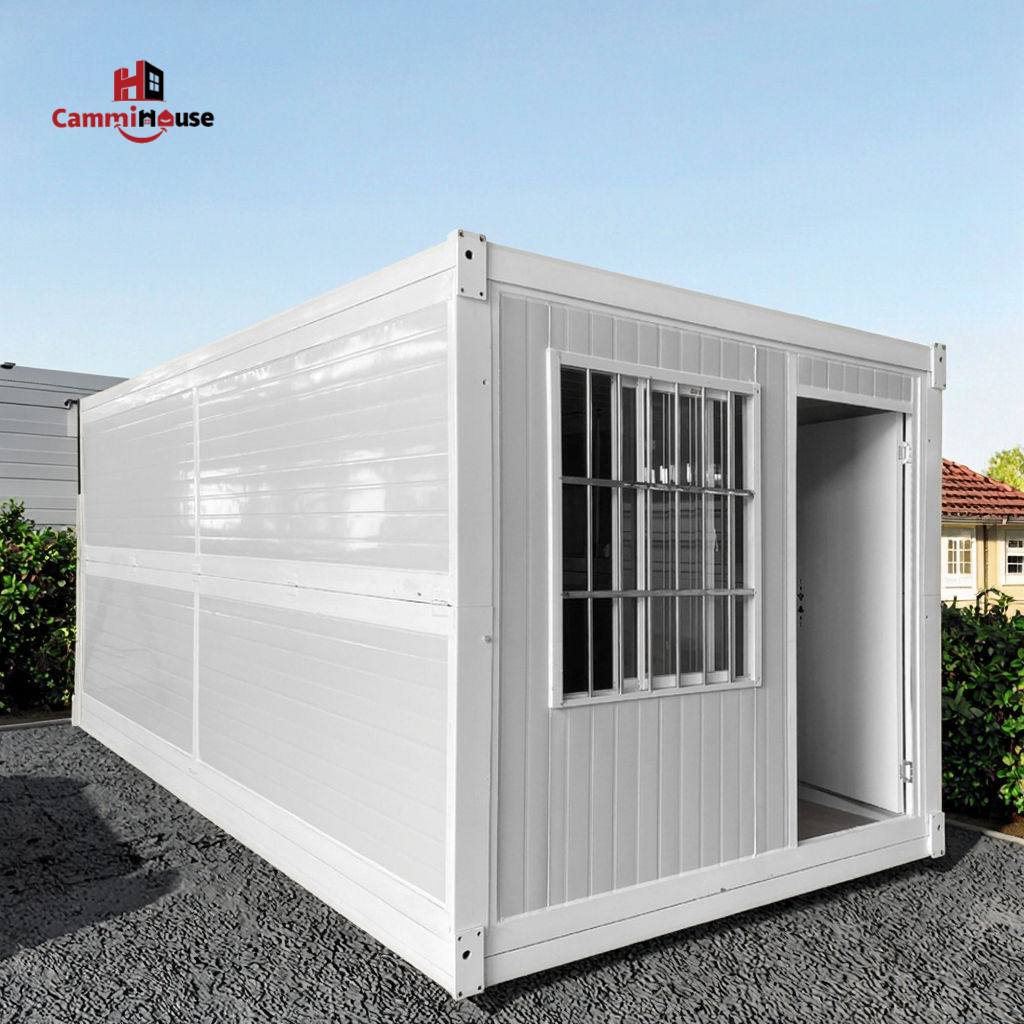
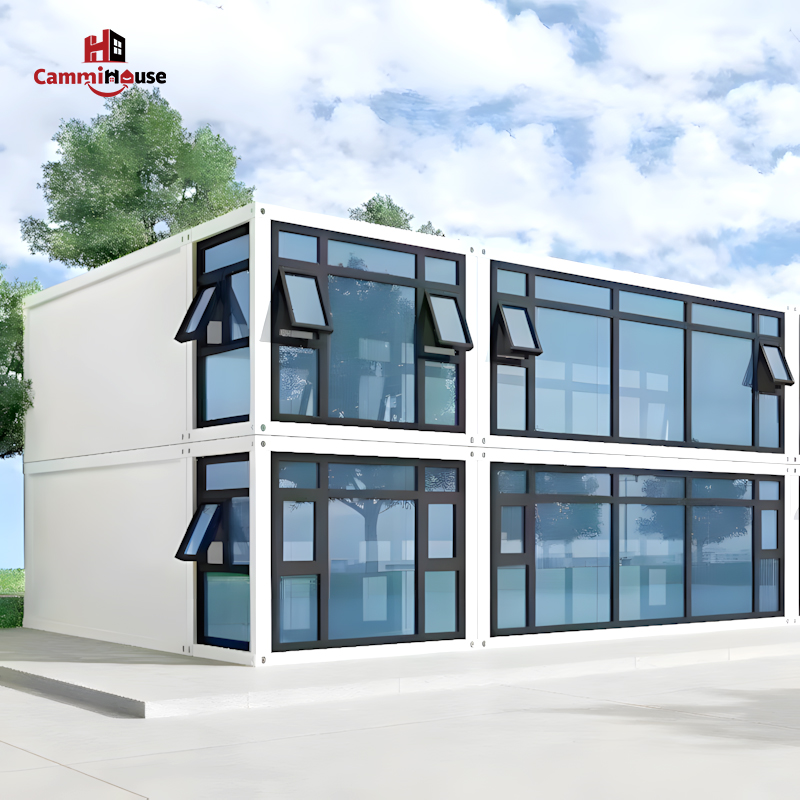
When shopping for a portable container house, one question matters more than price: will it hold up when the weather turns dangerous? Snow loads, desert heat, and hurricane-force winds all stress a structure in different ways. This article breaks down how a modern expandable container house performs against each threat, with hard specs and real-world context.
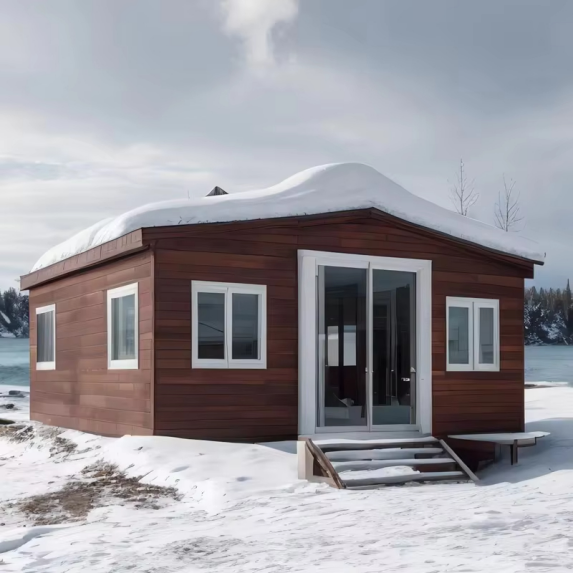
What Makes an Expandable Container House Different from Regular Construction?
A standard stick-built home uses wood framing and drywall. An expandable container home is built around a channel steel skeleton — the same grade of steel used in standard shipping containers. That structural choice is the starting point for understanding its weather resistance.
Channel Steel Frame and Corner Castings
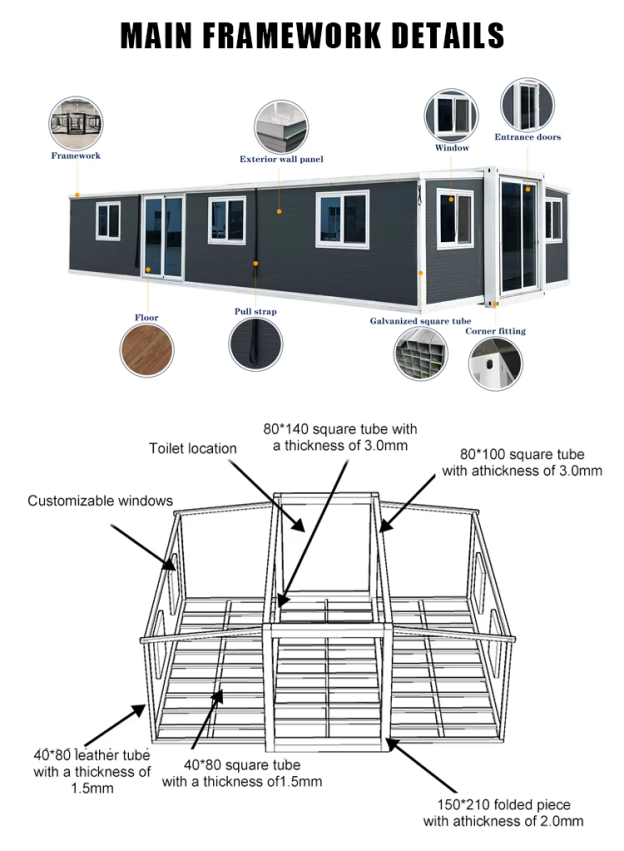
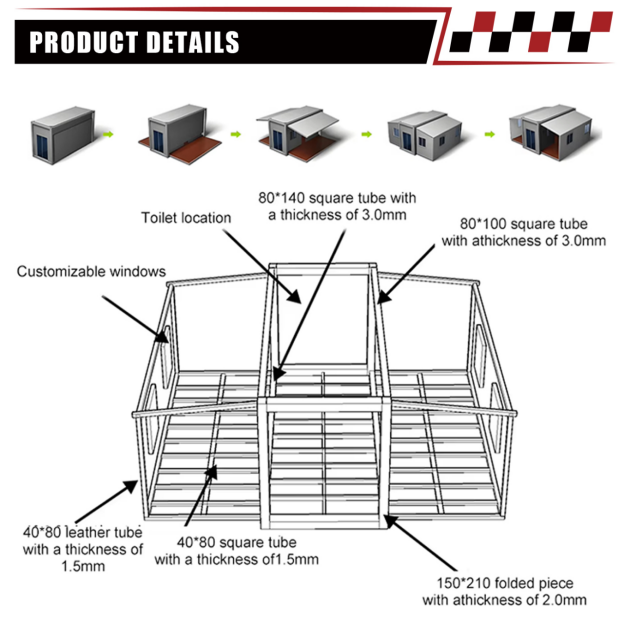
The main beams in a Cammihouse unit use national-standard channel steel. Corner fittings follow standard ISO shipping container specifications. This means the frame distributes load evenly across four points, the same way a container survives ocean freight stacking. The result is a structure that does not rely on interior walls or floors for rigidity.
Insulated Sandwich Panel Walls
Ceiling and wall panels are filled with insulation cores — EPS foam, rock wool, glass wool, or PU foam, depending on the climate requirement. All panels carry a B1 fire rating. This insulation layer is the primary defense against both extreme heat and cold. It also acts as a vapor barrier, reducing condensation that can weaken lesser structures over time.
Hurricane Resistance: How a Container Home Handles High Winds
Hurricane damage to buildings usually comes from two sources: direct wind pressure on walls and uplift force on the roof. A hurricane-proof container home must resist both simultaneously.
Wind Resistance Rating: Grade 12+
Cammihouse steel frame container houses are rated to withstand wind speeds at or above Beaufort Scale Grade 12 — that is sustained winds of 117 km/h (73 mph) or higher. Grade 12 is the threshold for a Category 1 hurricane on the Saffir-Simpson scale. The ISO corner castings lock the entire box into a single rigid unit, which prevents the racking failure common in wood-frame structures under lateral wind load. (Source: Beaufort Wind Scale, WMO; Saffir-Simpson Hurricane Wind Scale, NOAA)
Anchoring and Foundation
Wind resistance depends on more than the structure itself — anchoring to the ground is equally critical. A properly anchored prefab container home on a concrete pad or screw-pile foundation transfers wind uplift directly into the ground. Cammihouse recommends specific anchor bolt patterns for high-wind zones, available in the installation guide.
Snow Load Performance: Designed for Cold Climates
Snow accumulates on flat and low-pitch roofs faster than on steep roofs. Most modular container homes have near-flat rooftops, so the structural load capacity of the roof deck becomes the determining factor.
Roof Structure and Load Capacity
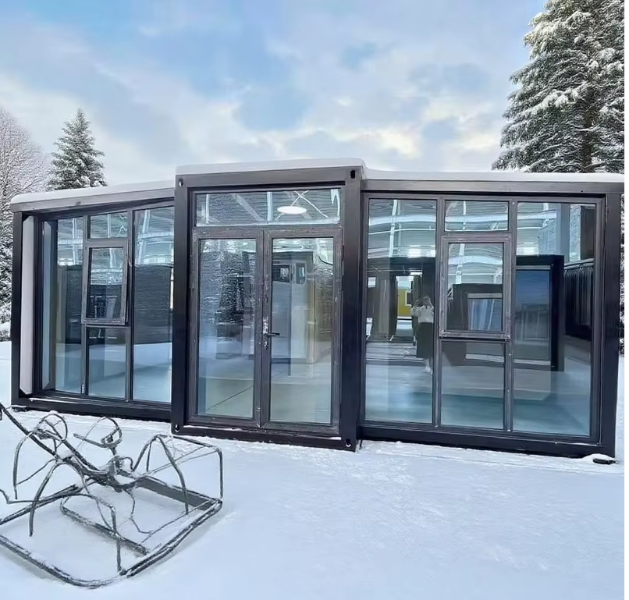
The channel steel roof frame on Cammihouse units distributes snow load to the four corner columns rather than to interior walls. The panels themselves use rigid foam or rock wool cores that do not absorb moisture or compress under sustained load. In regions with heavy snowfall, buyers can specify thicker insulation cores (up to 150 mm) to prevent heat loss that would otherwise cause uneven snow melt — a common cause of ice dam damage. According to ASCE 7-22, ground snow loads in northern U.S. states can reach 50–100 psf; buyers in those zones should confirm site-specific load requirements with a local engineer before installation.
Heat Resistance: Staying Livable in Hot Climates
Steel conducts heat. Without the right insulation, a bare steel container becomes an oven in summer. A well-designed heat-resistant container house breaks that thermal bridge at every point where steel meets the interior.
Insulation Options for Hot Climates
For desert and tropical climates, PU (polyurethane) foam panels offer the highest R-value per centimeter of thickness — typically R-6 to R-7 per inch, compared to R-3.8 for EPS foam. Cammihouse offers all four core materials (EPS, rock wool, glass wool, PU) so the spec can be matched to local building code requirements and climate zone. Roof panels with reflective foil facings further reduce radiant heat gain by reflecting solar energy before it reaches the insulation layer.
Long-Term Durability: The 15–20 Year Serviceability Promise
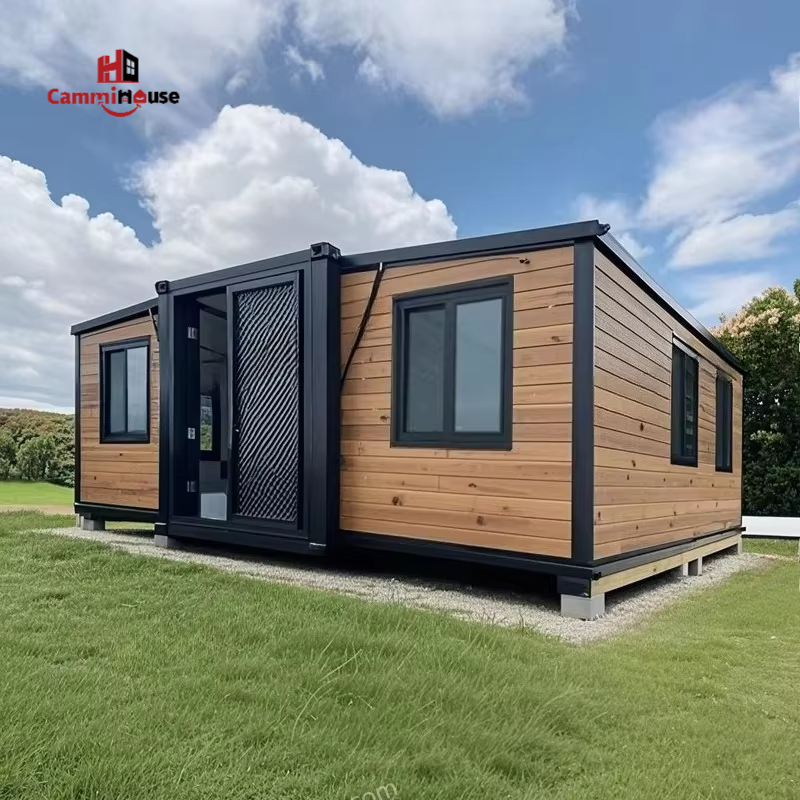
Weather resistance is not just about surviving a single storm. A container home needs to maintain structural integrity across decades of seasonal cycling. Cammihouse units are rated for 15–20 years of service life with a minimum of 120 open/close cycles for the expandable sections. That serviceability number comes from steel fatigue testing on the hinge and lock mechanisms, not from marketing assumptions. The expandable sections convert the unit from 1 room to 3 rooms (from 1 standard container footprint to approximately 27–35 m² of interior space), and the mechanism must hold its tolerances throughout that service life.
Cammihouse Expandable Container Homes: Spec Summary
To make comparison straightforward, here are the core weather-related specs for a standard Cammihouse unit:
Wind resistance: Grade ≥12 (≥117 km/h sustained)
Seismic resistance: Intensity ≥9 (Modified Mercalli Scale)
Wall system: B1-rated sandwich panels with choice of EPS / rock wool / glass wool / PU core
Frame: National-standard channel steel, ISO-spec corner castings
Open/close cycles: ≥120 (structural testing verified)
Service life: 15–20 years
Interior area: 27–35 m² (expanded)
Setup time: 4 workers, 10 minutes per unit
These figures position the expandable container house as a viable permanent or semi-permanent structure, not just a temporary shelter.
FAQ
Q1: Can an expandable container house withstand a Category 2 hurricane?
A standard Cammihouse unit is rated to Grade 12 wind (117 km/h), which corresponds to the lower end of Category 1 on the Saffir-Simpson scale. Category 2 starts at 154 km/h. For higher-wind zones, buyers should confirm local building code requirements and consider additional anchoring or structural upgrades. The steel frame and corner casting system provides a strong baseline that can be reinforced with site-specific engineering.
Q2: What insulation should I choose for a hot desert climate?
PU (polyurethane) foam panels deliver the highest thermal resistance per unit thickness, making them the practical choice for hot, dry climates. A 75 mm PU panel provides roughly the same insulation value as a 100 mm EPS panel. Pairing PU panels with a reflective foil roof facing further reduces solar heat gain. Cammihouse offers all core materials; specify PU when ordering for desert or tropical regions.
Q3: How does a container home perform in areas with heavy snowfall?
The channel steel roof frame distributes snow load to four corner columns rather than to interior walls, which is the load path that matters in heavy-snow regions. Buyers in high-snowfall areas (ASCE 7-22 ground snow loads above 40 psf) should verify that the unit's roof rating meets or exceeds the site-specific design load, and should consider specifying thicker insulation cores to prevent uneven snow melt and ice dam formation at the roof edge.
