

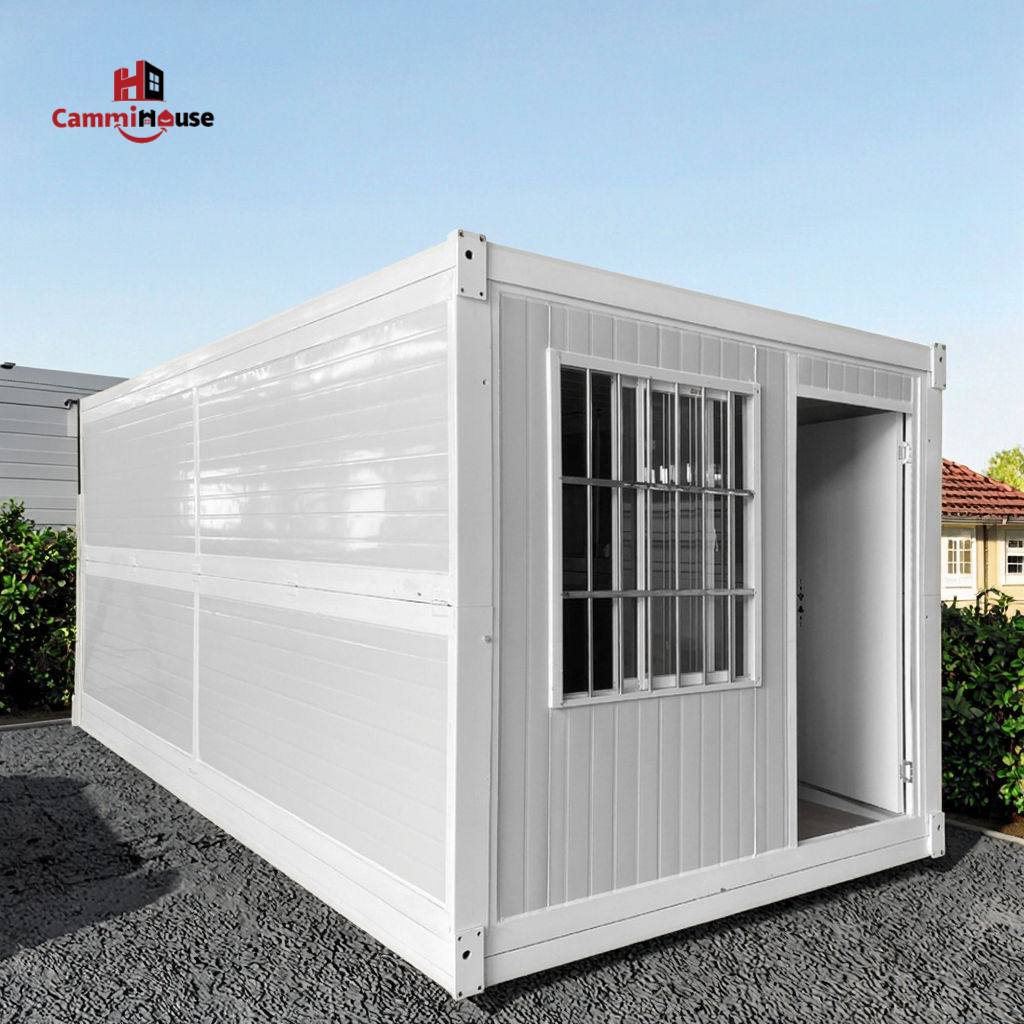
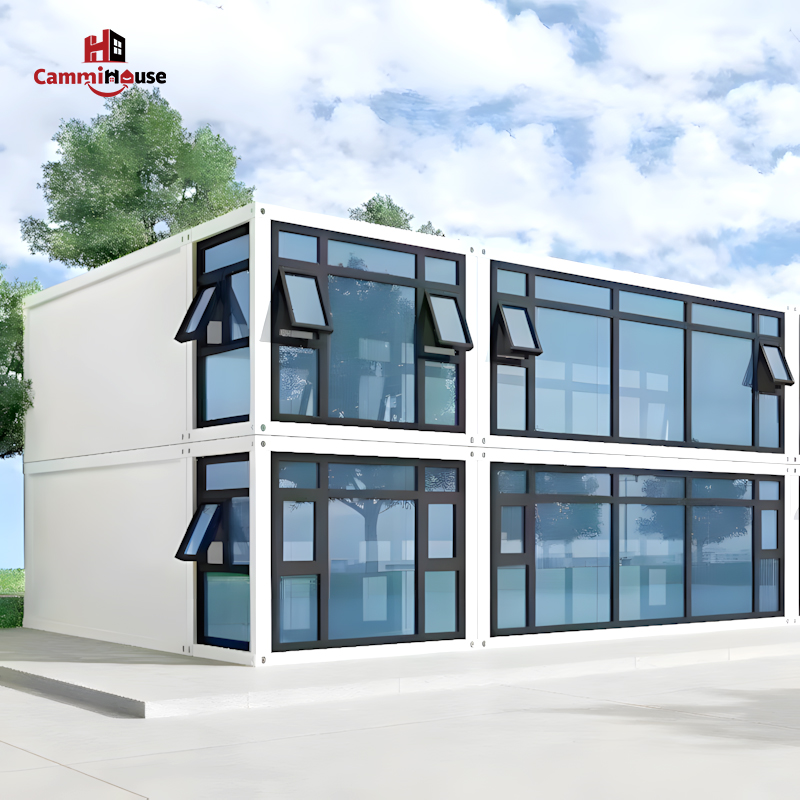
Most buyers spend weeks comparing floor plans and finishes. Very few ask the questions that actually determine whether their custom container house will still be standing — and comfortable — a decade later. After reviewing over 300 projects across North America, the Middle East, and Southeast Asia, here are the six things I wish every buyer knew before signing a contract.
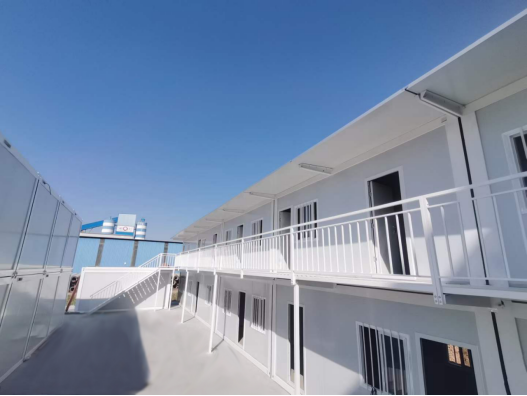
1. The Container Grade You Choose Changes Everything
Not all containers are equal — and the grade you select directly affects structural lifespan, insulation performance, and resale value. There are three grades used in residential builds: One-Trip (used once for cargo), CW (cargo-worthy), and WWT (wind- and watertight). One-Trip units retain 90–95% of their original yield strength, which matters when cutting openings for windows and doors. WWT containers may have stress fatigue from 10+ years of ocean transport — the IICL sets minimum wall thickness at 1.6 mm for residential use, and older WWT units sometimes fall short.
"In a 2024 project survey of over 80 Cammihouse builds, One-Trip containers showed 40% fewer post-delivery structural corrections compared to WWT units. When clients ask me where to spend the extra money upfront, the answer is almost always: start with the right container." — Justin Mercer, Structural Engineer, Cammihouse |
How to Verify Grade Before Purchase
Request the CSC (Container Safety Convention) plate and cross-reference the manufacturing date. A reputable supplier will always provide this documentation without hesitation. If they hesitate, treat it as a red flag and walk away.
2. Insulation Is Where Most Budgets Get Ambushed
Steel conducts heat 400 times faster than timber — skimping on insulation turns your modern container home into an oven in summer and a freezer in winter. According to the U.S. Department of Energy (2021), inadequate thermal insulation accounts for up to 30% of residential energy loss. For a shipping container home, this figure can be significantly higher because Corten steel has a thermal conductivity of ~50 W/m·K, compared to timber framing at ~0.12 W/m·K. Closed-cell spray foam with a minimum R-value of R-19 for walls is the baseline I recommend for USDA hardiness zones 4–7.
"We had a client in Qatar — construction camp, 45°C peak summer. They initially spec'd fiberglass batt to cut costs. After we switched to 75 mm closed-cell foam, peak interior temperature dropped by 14°C without changing the HVAC unit. That number speaks for itself." — Justin Mercer, Structural Engineer, Cammihouse |
The Condensation Problem Nobody Mentions
Condensation forms when warm interior air contacts cold steel walls. Without a continuous vapor barrier, this leads to rust from the inside out — invisible until significant structural damage has occurred. Proper container home insulation spec should always include a vapor retarder rated at ≤1 perm per ASTM E96. This single line item prevents the most common long-term failure mode I see in the field.
3. Permit Timelines Are Longer Than Your Contractor Claims
In most U.S. counties, a container-based structure is classified as a non-traditional build — expect 30–90 additional days compared to conventional residential permits. McKinsey (2022) noted that modular container home and prefab container house construction reduces on-site build time by 20–50%, but regulatory approval timelines remain a persistent bottleneck. Zoning codes in many rural counties still lack explicit provisions for container-based structures, requiring variance applications.
"I've seen projects in Texas and Arizona add 60–75 days purely due to fire egress reclassification. The fix is simple but nobody does it: engage a local permit expeditor before finalizing your site selection, not after." — Justin Mercer, Structural Engineer, Cammihouse |
What Engineers Can Do to Speed Approval
Stamped structural drawings from a licensed PE reduce back-and-forth with building departments by an average of three review cycles (NAHB, 2023). Ask your supplier whether engineering documentation is included in the contract scope — it often isn't, and the omission can cost more in delays than the document itself.
4. Foundation Choice Affects Both Cost and Future Flexibility
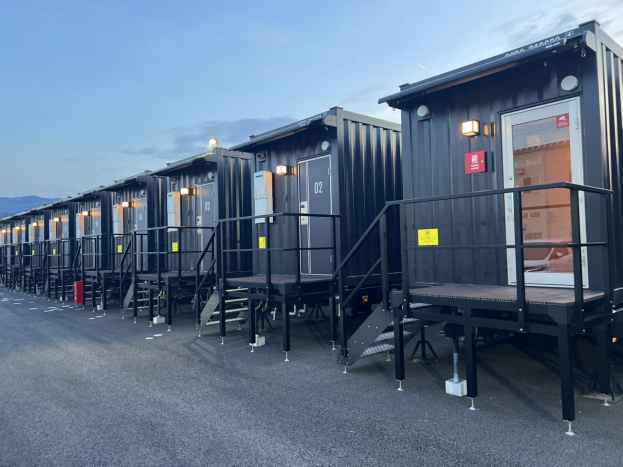
The right foundation depends on soil bearing capacity, local frost depth, and whether you want the option to relocate the structure later. A container house design placed on a concrete perimeter foundation is cheaper upfront ($8–15/sq ft vs. $15–30/sq ft for a full slab), but eliminates future mobility. For mining camp deployments in Western Australia and oil-field projects in Alberta, we specify adjustable steel pier systems — they add roughly 12% to foundation cost but allow the entire structure to be relocated within 48 hours using standard equipment.
"Soil bearing capacity below 1,500 psf requires pile foundations regardless of what the design renders look like. I always say: the prettiest floor plan in the world doesn't matter if the ground underneath it hasn't been assessed." — Justin Mercer, Structural Engineer, Cammihouse |
Frost Line Rules That Catch Buyers Off Guard
In USDA Zone 5 and colder, footings must extend below the local frost depth — 42 inches in Chicago, 60 inches in Minneapolis (per IRC Table R301.2). Foundations poured above frost depth will heave seasonally and void most structural warranties within three winters.
5. Stacking Changes the Structural Equation Significantly
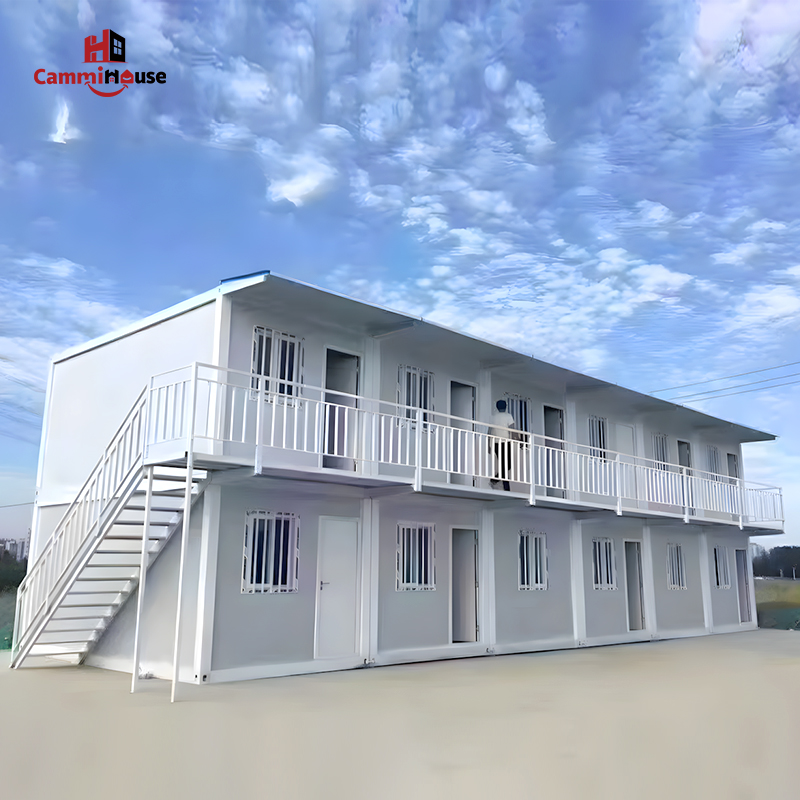
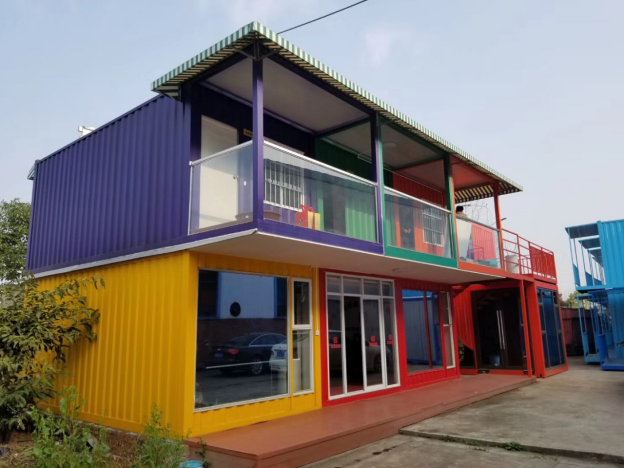
A standard 20ft ISO container is designed to stack nine units high when loaded — but residential modifications can reduce corner post capacity by up to 60%. Every opening cut into the corrugated steel panel removes lateral load-bearing area. A minimalist container house with a full-width window wall may look striking in the renders, but an opening spanning more than 40% of a side panel requires a full structural header and column reinforcement. ASTM A588 Corten steel has a yield strength of 345 MPa — that number means nothing without the right reinforcement around your modifications.
"For any two-story container home design, independent structural analysis per ASCE 7-22 is not optional. I've reviewed builds that skipped this step and had second-floor settling start within 18 months. The engineering review costs $800–$2,500. The remediation costs 10 to 20 times that." — Justin Mercer, Structural Engineer, Cammihouse |
When to Request an Independent Structural Review
If your design includes any span cut exceeding 1.2 meters, a second story, or cantilevered sections, commission an independent structural engineer — separate from your supplier. This is the one item I tell every client is non-negotiable, regardless of budget constraints.
6. Manufacturer Transparency Is the Only Real Quality Indicator
Factory-built quality cannot be fully verified on delivery — the only reliable proxy is documentation depth and factory audit access before production begins. The container home design industry has no universal residential build standard equivalent to the IRC. That means the difference between a well-built and a poorly built unit often comes down to whether the manufacturer proactively shares weld inspection reports, paint spec sheets (typically G90 galvanized or equivalent), and QC sign-off checklists.
"The manufacturers I trust are the ones who invite third-party inspection during production — not just at the delivery gate. Cammihouse, for instance, provides pre-shipment reports with photographic documentation of structural welds and insulation at each production stage. That's the standard I now use as a benchmark when I'm advising clients evaluating other suppliers." — Justin Mercer, Structural Engineer, Cammihouse |
5 Documents to Request Before Signing Any Contract
(1) CSC plate data for each unit (2) ISO 1496 compliance test report (3) Insulation material spec sheet with stated R-value (4) Steel grade mill certificate (5) QC photographic log from production. If any of these are declined or unavailable, factor the risk accordingly — or walk away.
Frequently Asked Questions
Q: How long does a properly built shipping container home last?
A: A One-Trip container used as a structural base, with correct container home insulation, vapor barrier, and surface treatment, has a design lifespan of 25–50 years in temperate climates. Corten steel forms a stable oxide layer that self-limits further corrosion. Annual inspection of sealants and roof coatings is the single highest-impact maintenance task (U.S. DOE, 2021).
Q: Is a custom container house cheaper than a traditional build?
A: A basic prefab container house shell typically runs 15–25% below equivalent stick-frame cost, but once insulation, fit-out, and site work are included, the gap narrows to 5–10% (McKinsey, 2022). The real advantage is speed: factory fabrication compresses build time by 30–50%, reducing financing carry costs and enabling earlier occupancy.
Q: What is the best insulation method for a modular container home in a hot climate?
A: Closed-cell spray polyurethane foam (ccSPF) applied at 75–100 mm to interior walls is the most effective method in high-heat environments, achieving R-19 to R-26 per 100 mm while acting as a built-in vapor barrier. In a 2023 Middle East deployment, ccSPF-insulated modular container home units maintained interior temperatures 12–16°C below ambient without supplemental HVAC during shoulder seasons.
About the Author
Justin Mercer is a structural engineer with the Cammihouse Technical Team, specializing in modular and container-based construction systems. With over a decade of project experience across North America, the Middle East, and Oceania, he focuses on structural integrity, thermal performance, and regulatory compliance for prefab and container home builds.
